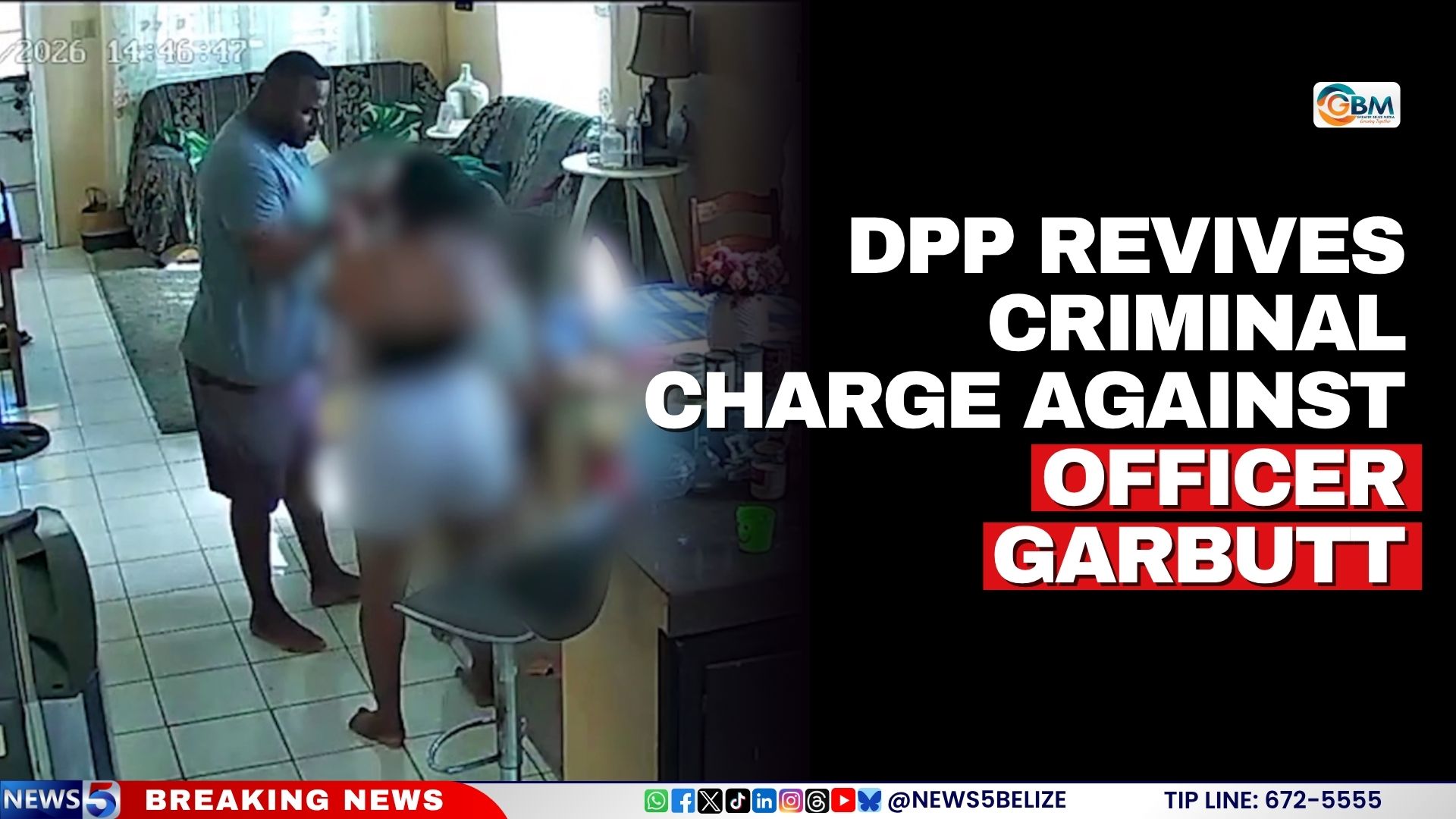
In a significant legal development unfolding in Belize that raises core constitutional questions, the Office of the Director of Public Prosecutions (DPP) has secured a court ruling to reinstate a criminal harm charge against serving police constable Phillip Garbutt, more than two months after the original case was thrown out.
The charge against Garbutt centers on allegations of harm against the minor son of his common-law wife. The case first reached the Belize City Magistrate’s Court in April 2026, when a sitting magistrate dismissed the charge entirely, resulting in Garbutt being cleared of wrongdoing in the initial proceeding.
Prosecutors led by DPP Cheryl-Lynn Vidal challenged the April dismissal, arguing that the original magistrate had overstepped their legal authority by striking the charge from the court docket. Vidal emphasized that reactivating the case is a critical step to uphold justice for the child at the center of the allegations, stating that the earlier dismissal had no standing in law and the proceeding must move forward to a full hearing.
Garbutt’s defense attorney, Alifah Elrington, mounted a fierce opposition to the DPP’s motion, framing the reinstatement as a violation of Belize’s constitutional protections against double jeopardy — the legal principle that bars a person from being tried twice for the same offense. Elrington argued that the April dismissal amounted to a full acquittal, so any renewed prosecution would contravene fundamental legal rights.
After hearing arguments from both sides, Chief Magistrate Deborah Rogers ruled in favor of the DPP, determining that the April dismissal was a “complete nullity” because the original magistrate did not hold the legal power to dismiss the charge in the first place.
In the immediate aftermath of the ruling, Elrington confirmed that the defense will pursue the next step in the legal process: seeking a case stated, a procedural mechanism that will ask Belize’s High Court to review the question of law at the heart of the dispute and issue a binding ruling on the legality of the charge’s reinstatement. The outcome of the upcoming High Court review will set a key precedent for procedural authority and double jeopardy protections in Belize’s lower court system.