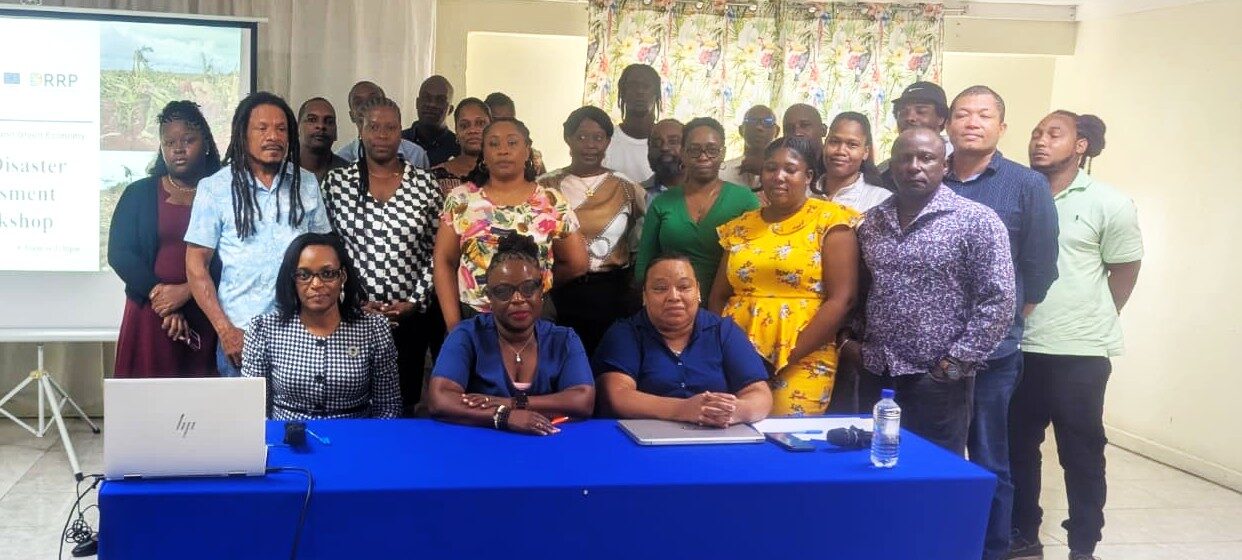
As a small island developing state highly vulnerable to the growing frequency and intensity of climate-driven natural disasters, Dominica is taking a proactive step to reinforce its agricultural sector’s ability to withstand and recover from extreme weather events. The nation’s Ministry of Agriculture, Fisheries, Blue and Green Economy has launched a two-day specialized training initiative focused on building technical capacity for agricultural damage assessment before and after disaster events.
Held on July 7 and 8 at Prevo Cinemall in the capital city of Roseau, running from 8:30 a.m. to 3:30 p.m. daily, the Pre- and Post-Disaster Damage Assessment Training Programme forms a core component of the government’s long-term strategy to shore up disaster preparedness and boost long-term resilience across the country’s agricultural landscape. According to an official press release from the Ministry, the training is delivered under a broader technical assistance project titled ‘Enhancing the Sustainability and Resilience of the Agriculture Sector in the Commonwealth of Dominica.’
This larger resilience-building project receives financial backing from the Caribbean Development Bank (CDB) through the bank’s Caribbean Action for Resilience Enhancement (CARE) Programme. The CARE Programme itself is funded by the European Union, operating under the African, Caribbean and Pacific–European Union Disaster Risk Reduction Programme, a regional framework designed to reduce climate and disaster vulnerability across participating nations.
The core objective of the training is to upskill technical officers who lead disaster preparedness, emergency response, and post-disaster recovery work across the agricultural sector. Participants drawn from a wide cross-section of national stakeholders have been invited to take part, including representatives from multiple government ministries, statutory organizations, national emergency response agencies, private sector actors, local farmer organizations, and other entities involved in Dominica’s national disaster risk management ecosystem.
Over the course of the two-day program, attendees receive hands-on, practical training in standardized industry methodologies for assessing disaster-related agricultural damage and production losses. The curriculum also covers critical skills including field data collection and analysis, compilation of formal damage assessment reports, and application of assessment data to develop evidence-based post-disaster recovery plans. Beyond individual skills development, the initiative is designed to strengthen institutional preparedness and improve inter-agency coordination between government bodies and non-government partners.
Ministry officials emphasized that improved coordination and standardized assessment practices will enable more timely, data-driven decision-making in the aftermath of natural disasters, a key improvement that will ultimately support faster, more effective recovery for farming communities and the broader sector. In the long term, the capacity building is expected to contribute to systemic, sustained improvements in the agricultural sector’s ability to adapt to and withstand disaster shocks.
The Ministry reaffirmed its ongoing commitment to strengthening the country’s national capacity to anticipate, prepare for, respond to, and recover from natural climate hazards. It noted that continuous investment in targeted training and strategic multi-stakeholder partnerships is a critical driver of progress toward building a more resilient, sustainable, climate-smart agricultural sector for all of Dominica.