A contentious late Video Assistant Referee (VAR) decision that disallowed a second Egyptian goal has reignited fierce debate over procedural integrity and potential outside influence at the 2026 World Cup, coming just weeks after a separate controversy involving political interference rocked the tournament. The drama unfolded following Argentina’s dramatic 3-2 comeback win over Egypt in their round of 16 clash in Atlanta, a result that sent Mohamed Salah’s side packing from the competition and left Egyptian officials and football analysts questioning the motives behind the call. This latest row comes on the heels of a previous scandal that saw former U.S. President Donald Trump successfully lobby FIFA to reverse a red card suspension for American striker Folarin Balogun – a move that left lingering questions over how political pressure can shape tournament outcomes, even after Belgium’s 4-1 win over the U.S. did little to fully extinguish those concerns.
In the aftermath of the knockout defeat, Egypt’s head coach Hossam Hassan has directly alleged that tournament organizers prioritized keeping defending champion Argentina and star forward Lionel Messi in the competition through biased refereeing. “Maybe they wanted Messi to stay in the race,” Hassan told beIN Sports. “The world champion got support at every level.” Hassan’s claims have been echoed by a number of high-profile football figures, with former Chelsea and Tottenham manager José Mourinho famously describing the result as “daylight robbery” across his social media channels.
Sports industry experts warn that growing overlap between political interests and top-tier football is making it increasingly difficult to distinguish legitimate refereeing calls from biased decision-making. Simon Chadwick, a professor at Emlyon Business School and leading scholar on sports geopolitics, notes that the close political alignment between Argentina’s President Javier Milei and former U.S. President Trump has added an extra layer of sensitivity to the controversy. Chadwick also points out that Hassan’s very public advocacy for the Palestinian people may have created implicit bias among some tournament officials, noting that the coach dedicated a significant portion of his post-match press conference to calling for support for Palestinians, a stance that is unlikely to have gone unnoticed by governing body stakeholders.
Beyond broader questions of bias, Chadwick highlights clear inconsistencies in how VAR was applied during the critical moments of the match. The disallowed Egyptian goal in the 58th minute came after an unusually delayed VAR review that ultimately ruled out the score for a marginal offside. At the same time, a clear foul by an Argentine player in the build-up to the Egyptian attack was completely overlooked by VAR. Additional inconsistencies abound: Salah appeared to be impeded by Argentine defenders in the build-up to Argentina’s match-winning third goal, but no review was called. A minor shirt pull by Egypt’s Marwan Attia on Lisandro Martinez was heavily scrutinized to invalidate the Egyptian goal, despite far more impactful fouls going unpunished at the other end of the pitch. “Refereeing standards were inconsistent,” Chadwick summarized.
Not all analysts have backed Egypt’s claims of outright match-fixing, however. Egyptian football analyst Ali El Garni offered a more nuanced take, acknowledging that the disallowed Egyptian goal met the letter of the law for being ruled out, but questioned whether the same level of scrutiny would have been applied if the goal had been scored by Argentina. “50/50 calls went Argentina’s way across the board,” El Garni noted.
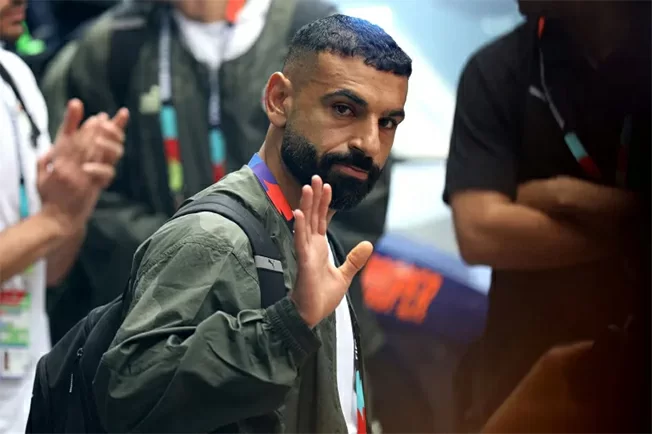
Chadwick stopped short of confirming deliberate match-fixing to keep Messi in the tournament, but acknowledged the star forward’s unrivaled commercial draw for global football’s governing body. “There is no doubt that Messi is a box office draw that the World Cup cannot afford to lose,” he said. He has called for sweeping reforms to increase transparency around VAR decisions, arguing that the technology was designed to eliminate doubt and deliver consistent outcomes, but has instead eroded fan trust and created unintended psychological and competitive disruptions for players. In the wake of the controversy, Egyptian captain Mohamed Salah was photographed waving to hundreds of distraught fans who gathered outside the team’s Atlanta hotel after the elimination, capping a night of disappointment that has left one of the World Cup’s biggest upsets instead mired in debate over the tournament’s legitimacy.