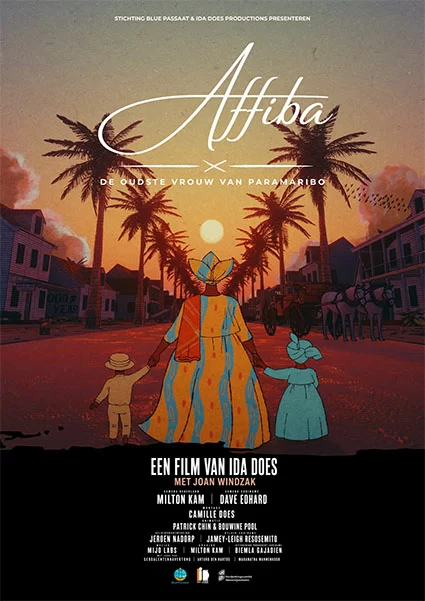
On the eve of Keti Koti, the annual commemoration of the abolition of slavery in the former Dutch colonies, Surinamese director Ida Does’ deeply personal documentary *Affiba, de oudste vrouw van Paramaribo* celebrated its world premiere at Amsterdam’s iconic Rijksmuseum, closing the evening to a thunderous standing ovation from an audience of invited guests, researchers, descendants and cultural leaders. Now, the production team is finalizing plans for a domestic premiere in Paramaribo, Suriname, slated to take place later this year, with exact dates and venues set to be announced in the coming months.
The 54-minute feature follows the journey of developmental psychologist Joan Windzak, a direct descendant of Affiba, as she embarks on a years-long search to untangle her family’s hidden history. What begins as a personal quest for genealogical clarity evolves into a groundbreaking historical investigation: Windzak’s research does not only reconstruct the life stories of four generations of women in her family line, it also reshapes public understanding of one of the most recognizable photographs in Suriname’s archival history.
Affiba, born into chattel slavery, was granted her manumission in 1827. At the age of 104, in 1889, she was photographed alongside three generations of her female descendants. For more than a century, the image sat in archival collections, but in recent decades it has emerged as a powerful cultural symbol of intergenerational resilience, Black family identity, and the push for historical recognition of Suriname’s enslaved community. The documentary weaves together archival deep dives, intimate personal recollections, and newly uncovered historical research to bring this long-overlooked family story to mainstream audiences.
Filming took place across two continents, on location in both the Netherlands and Suriname, with shoots in Paramaribo and Meerzorg. Cinematography was split between Milton Kam, a Dutch camera operator, and Surinamese filmmaker Dave Edhard. Beyond Windzak’s personal narrative, the film features interviews with archival researchers, museum specialists, and Surinamese secondary school students, framing the legacy of slavery not as a closed chapter of the past, but as a living history that continues to shape communities and identities in the present day.
In remarks following the premiere screening, director Ida Does shared that she was first drawn to the project after encountering the 1889 photograph at the Rijksmuseum, where the original print is held in the permanent collection. She recalled being immediately struck by the quiet, unwavering dignity radiated by the four women in the frame. For Does, the project extends far beyond one family’s story: it is a meditation on human dignity, the fight for historical justice, and the erasure of Black voices from mainstream historical narratives.
The choice to host the world premiere at the Rijksmuseum carried unique symbolic weight, as the institution has cared for Affiba’s iconic photograph for decades. Following the screening, a panel discussion was held featuring Taco Dibbits, the Rijksmuseum’s general director; lead curator Eveline Sint Nicolaas; John Leerdam, director of the Dutch National Slavery Museum; director Ida Does; and Joan Windzak, the documentary’s central subject. Attendees included multiple generations of Affiba’s descendants, leading scholars, representatives from major cultural institutions, and other invited guests.
Ida Does is an award-winning documentary filmmaker, author and producer with a decades-long career centering underrepresented stories from the Caribbean and Surinamese diaspora. Her previous work explores the lives of iconic figures including anti-colonial activist Anton de Kom, Nobel Prize-winning poet Derek Walcott, and critical race scholar Philomena Essed. Her films have screened at international festivals and earned major industry honors across the globe. As work continues on the Surinamese premiere, the production team plans to expand distribution for the documentary to reach broader audiences across the Netherlands and the Caribbean in 2027.