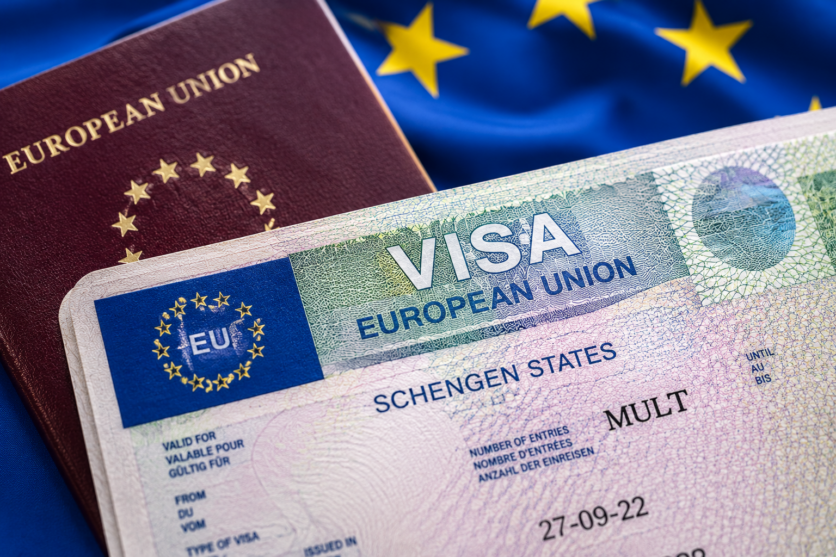
The Caribbean nation of Antigua and Barbuda is facing a critical diplomatic challenge, after Prime Minister Gaston Browne confirmed the European Union has issued a warning that the country could forfeit its visa-free travel access to the Schengen Area by the end of 2024. The core of the EU’s objection centers on scrutiny of Antigua and Barbuda’s long-running Citizenship by Investment (CBI) Programme, a policy that grants citizenship to foreign individuals in exchange for qualified economic investment in the country.
Speaking during an interview with local radio outlet Pointe FM over the weekend, Browne outlined that his administration is moving swiftly to ramp up high-level diplomatic outreach, with the explicit goal of arranging a direct meeting with EU officials to reverse the proposed policy change. “The European Union has threatened that they could withdraw their visa-free access, potentially by the end of the year,” Browne told listeners. “We don’t know for sure they will, but we’re trying to have a high-level engagement with them to see if we can actually reconsider their position.”
The prime minister put forward a compromise proposal that he argues balances the EU’s stated security concerns with preserving the decades-long visa-free arrangement Antigua and Barbuda has enjoyed. Rather than eliminating visa-free access entirely, Browne said his government believes implementing an electronic travel authorization system would address European security needs while maintaining the current travel arrangement. “We have the view that an electronic travel authorization should be sufficient,” Browne said. “We think that it’s a sensible thing to do to maintain the good relations that we’ve had over the years and not to throw the baby out with the bath water.”
Browne emphasized that the EU’s scrutiny is not isolated to Antigua and Barbuda, noting that other Eastern Caribbean states that run similar investment migration programmes are also facing the same threat of restricted travel access. He pointed to a recent precedent, where Ireland ended visa-free travel arrangements for a number of Caribbean nations, and acknowledged that even with intensive diplomatic work, a total discontinuation of Schengen visa-free access remains a possible outcome. “We can anticipate that, despite our best efforts, these visa-free arrangements may be discontinued,” he said.
However, even if the worst-case scenario comes to pass, Browne made clear that the CBI Programme will remain a core part of the country’s economic strategy, describing it as an indispensable pillar of Antigua and Barbuda’s public finances. “What I will say here, under my leadership and certainly under the Labour Party’s governance of this country, with or without those visa-free arrangements, our CIP programme continues,” Browne stated. “It is too important a source of non-tax revenue to give it up.”
Addressing questions about the integrity of the country’s CBI Programme, Browne pushed back against criticism, arguing that while no global immigration system can claim to be 100 percent free from abuse, Antigua and Barbuda’s due diligence processes are on par with, and in many cases stronger than, those used by much larger developed nations. “We are pretty sure that we have strengthened our programme and that it does not represent any significant risk to any country,” he said. “Nothing is foolproof… I believe that our programmes are better run than theirs.”
Browne also rejected the widespread claim that Caribbean investment migration programmes represent a unique global security risk, pointing out that many of the same European countries that criticize the region’s programmes operate their own investment-based immigration pathways for foreign nationals. “I can say definitively in the case of Antigua and Barbuda, our programme is run with integrity,” he said. “I’ve never once overturned any case that was actually rejected by the CI Unit. We have allowed the unit and the board to operate independently.”
He added that Antigua and Barbuda’s small geographic size and close-knit population actually makes it far harder for individuals with criminal intent to hide within the country, compared to larger nations. “If anything, our CIP programmes are helping these larger countries to unearth the criminals,” Browne said. He also noted that legitimate high-net-worth individuals seeking to travel to Europe are already able to secure direct visas from European nations regardless of their Caribbean citizenship status.
The prime minister also called out what he described as a clear double standard in how the international community treats Caribbean CBI Programmes, arguing that the region is unfairly tarred with a broad brush when any concerns about investment migration arise. “The unfortunate thing about it is that they keep dubbing us with the same brush,” he said.
Looking forward, Browne reaffirmed Antigua and Barbuda’s commitment to strengthening international security cooperation, saying the country is willing to introduce additional targeted safeguards to address EU concerns. These proposed measures include mandatory biometric screening for all CBI applicants and expanded information sharing agreements with foreign governments. “If we can collaborate and make sure that we have the biometric exam for these CIP citizens and that we can share information, if anything, it will help them to unearth these criminals,” he added.