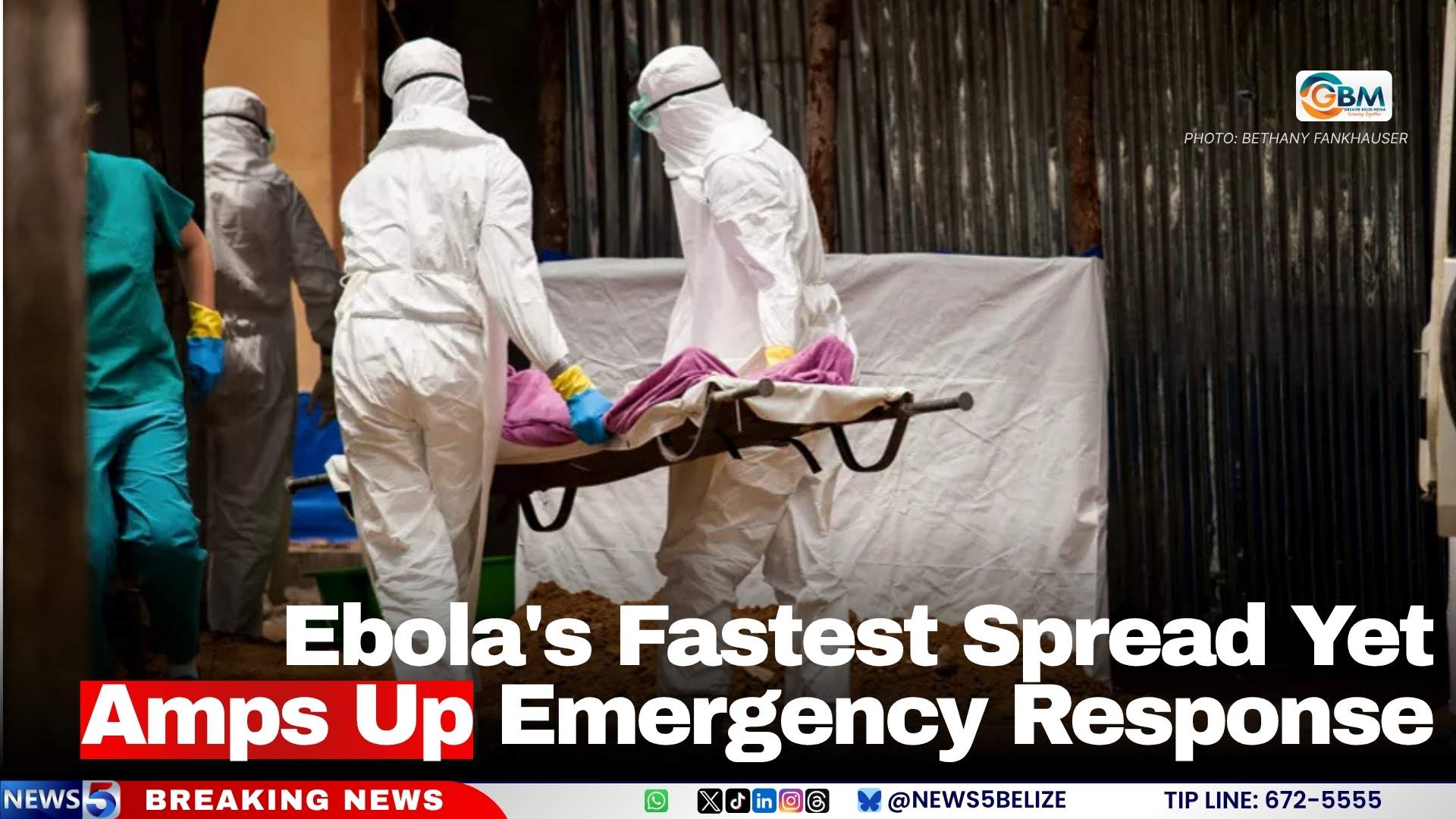
In a development that has elevated global public health concerns, a rapidly expanding Ebola outbreak spreading across the Democratic Republic of the Congo (DRC) and Uganda has prompted the United States Centers for Disease Control and Prevention (CDC) to activate its highest tier of emergency response. As of June 28, 2026, public health experts confirm this outbreak marks the fastest first-month spread of Ebola ever recorded, and the virus has for the first time in this crisis reached European territory.
According to reporting from Reuters, the CDC elevated its emergency activation status to Level 1 this past Friday. This highest alert classification has only been used for the most severe public health and disaster events in recent U.S. history, including the aftermath of Hurricane Katrina, the 2009 global swine flu pandemic, and the devastating 2014 Ebola crisis that swept West Africa. The outbreak is being driven by the Bundibugyo strain of the Ebola virus, which has already infected more than 1,200 people across the DRC and an additional 20 people in neighboring Uganda. Official counts have confirmed 321 deaths linked to the virus so far.
To ramp up global containment efforts, the White House has formally requested more than $1.4 billion in emergency funding from U.S. Congress. Of that requested allocation, $800 million is earmarked for the construction and operation of a dedicated regional quarantine facility in Kenya, which would serve as a hub for treating patients and stopping cross-border spread across East and Central Africa.
In a development that underscores the outbreak’s global reach, French health officials confirmed the first Ebola case diagnosed in Europe earlier this week. BBC reporting confirms the patient is a medical doctor who had recently returned from a humanitarian aid deployment working on the outbreak response in the DRC. The doctor is currently receiving care in a specialized isolation facility and is listed in stable condition. French public health authorities emphasize that the patient was placed into immediate isolation upon returning, and they maintain that the overall risk of wider spread across Europe remains “very low.”
The World Health Organization (WHO) has echoed that assessment, noting that while the outbreak’s rapid spread demands urgent coordinated action, the overall risk to the rest of the global population remains low. “There is no need to panic,” WHO Director-General Tedros Adhanom Ghebreyesus stated in comments reported by the BBC, calling for targeted investment in response efforts rather than widespread public fear.