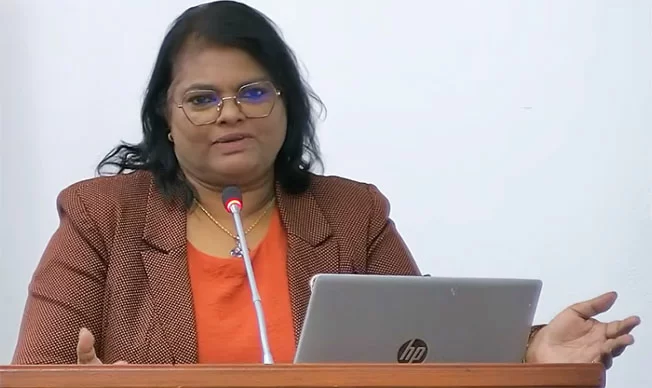
During ongoing budget debates in Suriname’s national legislature, ruling VHP party parliamentarian Krishna Mathoera has launched sharp criticism of the current fragmented structure of the country’s national budget, calling for sweeping administrative reforms to create a more transparent, efficient public sector. Mathoera, a former defense minister, argues that the current system spreads public funding for identical policy priorities across multiple ministries and special funds, creating critical barriers for the National Assembly to properly oversee how taxpayer money is actually spent.
At the core of Mathoera’s proposal is a push for an integrated national budget, where full responsibility for every policy area is clearly assigned to a single government ministry. She notes that Suriname has debated the need for public sector reform, modernization, and more efficient governance for years, but these goals have yet to be reflected in the structure of the national budget. “The current budget is fragmented and almost impossible to properly audit,” Mathoera told the assembly. “Funding is split across dozens of unrelated line items and separate funds, making it incredibly difficult for both the National Assembly and the Surinamese public to track how public money is really being spent.”
To back up her critique, Mathoera outlined three clear examples of counterproductive budget fragmentation that she has identified in the current proposal. First, for anti-poverty programs, the Finance Ministry’s budget allocates 44 million Surinamese dollars (SRD) to poverty reduction efforts, while the Ministry of Social Affairs and Housing has an additional 200 million SRD earmarked for the same policy goal. “Why do we not have a single, integrated plan for poverty reduction, instead of splitting funding across two separate budgets?” she asked.
Her second example focuses on the energy sector: the combined Finance and Planning ministry budget sets aside 2.4 billion SRD in subsidies for the national state-owned energy utility Energie Bedrijven Suriname, while the Ministry of Natural Resources holds an additional 700 million SRD in energy-related funding. For housing development, she adds, a 260 million SRD national housing fund is held under the Finance Ministry’s budget, even though public housing policy falls explicitly under the mandate of the Ministry of Social Affairs and Housing.
Mathoera stresses that this fragmentation creates systemic ambiguity: it becomes impossible to clearly assign accountability to individual ministries, and the public cannot easily track what tangible outcomes are being delivered with public funding.
In place of the current fragmented system, the former defense minister proposed consolidating all budget allocations under the ministries that hold actual operational responsibility for delivering the relevant policies. This restructuring, she argues, will allow ministries to set and deliver on concrete, measurable, specific policy results. She added that the current budget is dominated by vague general policy statements, with no clear performance indicators to track whether public funds are being used effectively.
Beyond administrative reform, Mathoera also called for significantly higher public investment in Suriname’s tourism sector, which President Jennifer Simons recently identified as a strategic economic priority in her annual address to the nation. Mathoera points out that the current budget only allocates 87 million SRD to tourism development, a figure she calls far too low to meet the sector’s potential.
She argues that Suriname should set the ambitious goal of doubling annual tourist arrivals from the current roughly 100,000 visitors to 200,000 within the next few years. Meeting that target, she says, requires a comprehensive national plan with targeted investments in air connectivity, public safety, core infrastructure, international marketing, hospitality sector development, and expanded tourist attractions across all districts of the country.
To fund this national tourism development program, Mathoera proposed reallocating a portion of the 2.5 billion SRD that the current budget reserves for special unspecified projects under the Finance Ministry to the new integrated tourism initiative.
Mathoera: Begroting is versnipperd en daardoor moeilijk controleerbaar