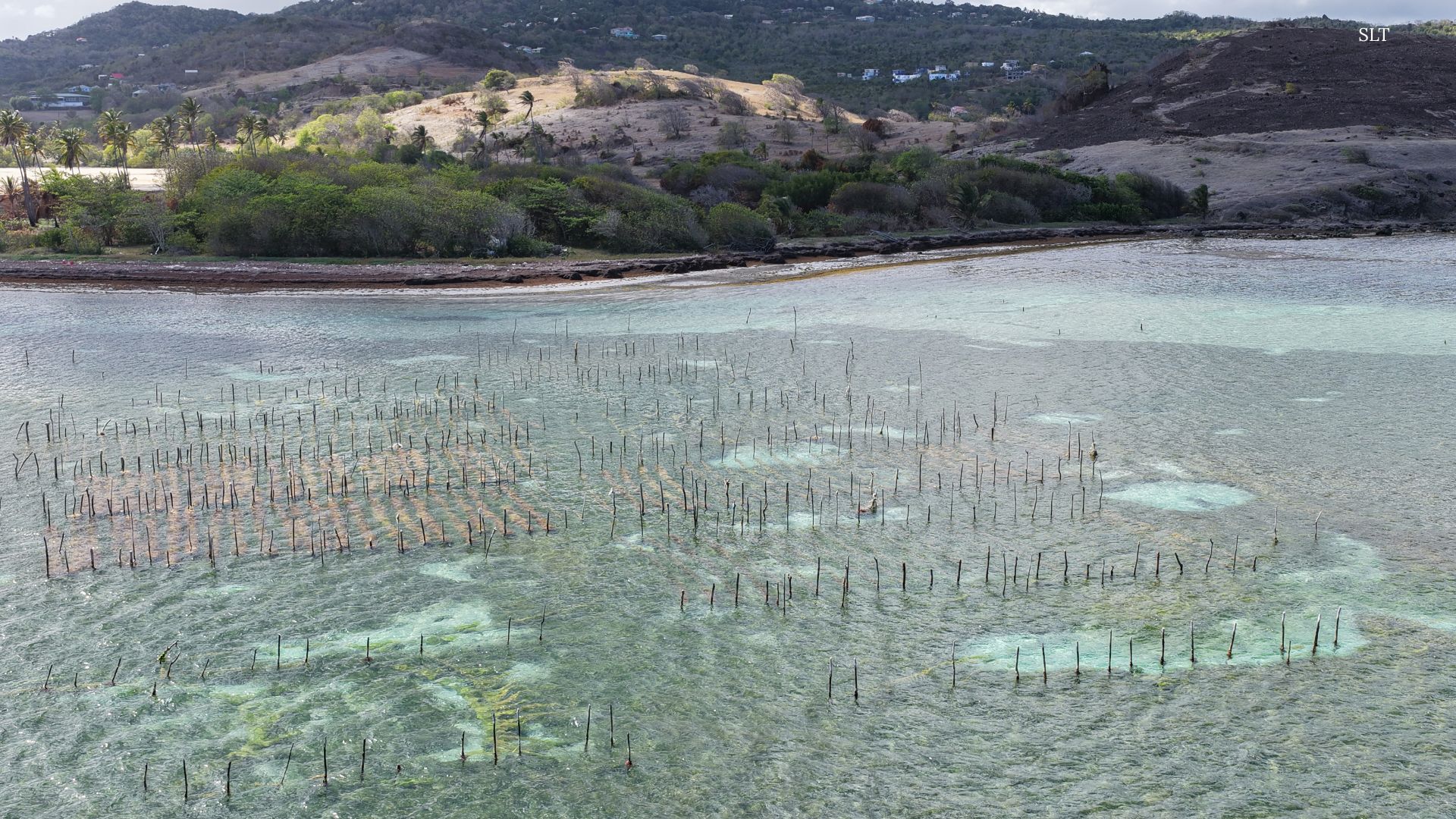
The Caribbean island nation of Saint Lucia is rolling out a targeted new initiative to address the lingering challenges of its boom-and-bust edible seamoss industry, combining marine conservation with long-term sector sustainability. Back in 2021, the sector saw an unexpected surge: amid widespread Covid-19 lockdowns that left thousands out of work, hundreds of newly unemployed workers turned to small-scale seamoss farming, pushing export revenues from 4.3 million Eastern Caribbean dollars to 6.4 million EC dollars in just one year. That rapid growth, however, was never built to last. As pandemic restrictions lifted and traditional jobs returned, many new temporary farmers exited the sector, leaving behind scattered, abandoned farm sites across key growing regions, most notably Savannes Bay—one of the country’s most important seamoss cultivation hubs. Today, dozens of disused operations dot the inlet’s coastline, leaving discarded farming infrastructure that poses risks to boat traffic, marine ecosystems, and recreational users of the bay.
To tackle this problem, the Saint Lucia National Conservation Fund (SLUNCF) and the country’s Department of Fisheries have partnered to launch the Marine Debris Removal and Deployment of Sustainable Raft Systems Project, a 215,000-dollar initiative funded by the Agence Française de Développement through the Caribbean Biodiversity Fund’s Caribbean Regional Architecture for Bioversity Project. The multi-faceted program has three core goals: clear abandoned fishing and farming gear from affected coastal waters, map and zone designated priority growing areas to streamline industry regulation, and pilot a more eco-friendly cultivation method that reduces environmental harm while boosting output.
For long-time seamoss producers, the project has already earned widespread support. Vincent “Jeg” Clarke, a third-generation farmer who has cultivated seamoss since 1986 and now leads the Eau Piquant Agriculture and Seamoss Producers association, explained that traditional growing methods have long created hidden environmental costs. Under the dominant local approach, farmers drive dozens of wooden stakes into the seabed to support growing lines, then attach floating plastic bottles to keep lines buoyant. The wood for these stakes is often harvested from nearby coastal forests, contributing to local deforestation, while abandoned plastic waste leaches microplastics into nearshore ecosystems. “What you all have just seen is a forest in the sea, we’re trying to take this method out,” Clarke noted during a June 23 media field visit to Savannes Bay, adding that the project aims to “curb deforestation and go to more environmentally friendly practices.”
Drawing on insights from a regional industry exchange program in Belize, the project will pilot a new PVC floating raft system across Savannes Bay and nearby coastal areas in Vieux Fort, including Boreil Beach and Bois Chadon. Unlike traditional setups, this alternative method uses parallel floating PVC rods secured by just a handful of wooden stakes, with seamoss growing lines stretched between the rods. SLUNCF Chief Executive Officer Craig Henry explained that the system delivers multiple benefits beyond lower environmental impact: the floating design adjusts naturally to tidal movements, simplifies harvesting and cultivation processes, and allows farmers to grow more seamoss per square meter of coastal area than traditional methods. “What we are trying to do is support the department of fisheries and other agencies in continuing the effort to bring some manner of regulation and order to how seamoss is cultivated, but also reducing the environmental pressures related to traditional methods of cultivation,” Henry said.
Vaughn Serieux, head of the Agriculture Unit at the Department of Fisheries, added that sustainability is at the core of the entire project, which is designed not just to clean up current damage but to lay the groundwork for a stable, long-term seamoss sector that can coexist with healthy marine ecosystems. The initiative also directly engages 45 local farmers and fishers, 37% of whom are women, and incorporates regular feedback channels for nearby coastal communities to raise concerns and shape project implementation.
For veteran farmers like Petuna Joseph, who has grown seamoss for more than 14 years, the project offers a much-needed path forward for a sector that has struggled with labor demands and shifting weather patterns in recent years. While Joseph cited physical challenges of cultivation and climate impacts as ongoing hurdles, she expressed cautious optimism about the initiative, saying: “I like what I’m seeing happening, I like it, I just hope it goes in a positive way.” Project organizers have emphasized that they are working closely with both current and former farmers to ensure the program delivers long-term benefits beyond its initial pilot phase, laying the groundwork for a more resilient and sustainable seamoss industry for Saint Lucia.