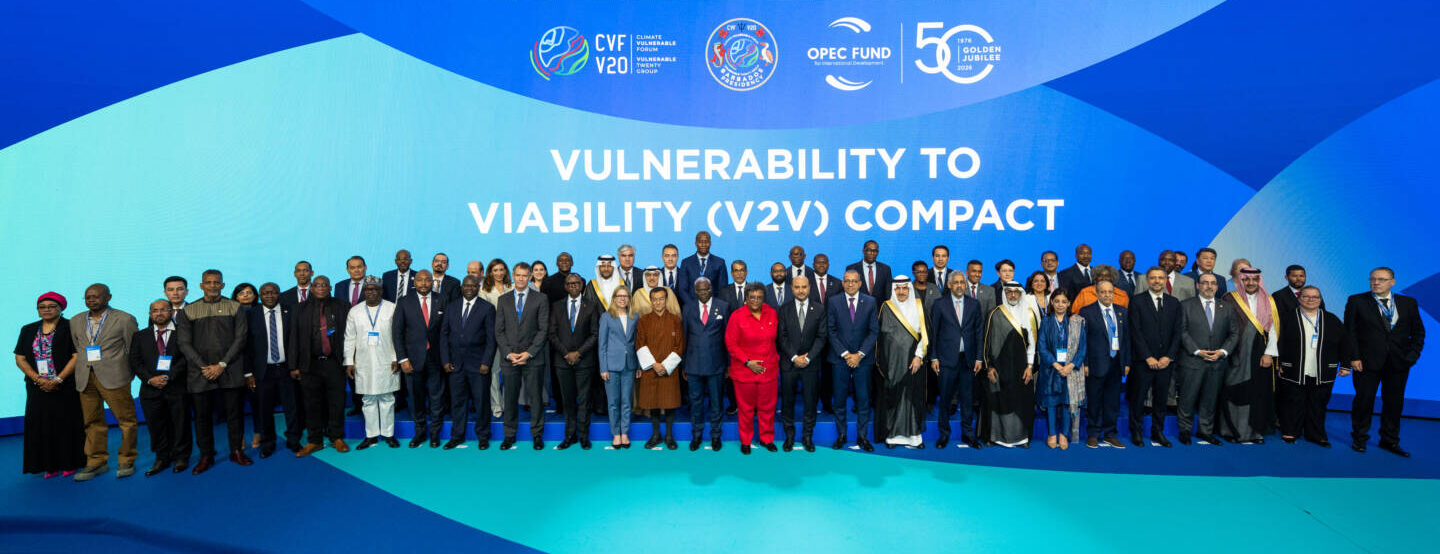
Grenada’s top finance official has embarked on an international diplomatic mission to one of Europe’s leading development policy gatherings, bringing the urgent priorities of climate-vulnerable small island nations to a global stage. On Sunday, June 21, 2026, Minister of Finance Dennis Cornwall left the country, accompanied by Tonia Adams Samuel, head of the Ministry of Finance’s Macroeconomic Policy Unit, to represent Grenada at the 2026 OPEC Fund Development Forum hosted in Vienna, Austria.
Scheduled to take place June 23 at Vienna’s iconic Hofburg Palace, this year’s forum convenes a diverse cross-section of global stakeholders: heads of state, cabinet ministers, senior policymakers, leaders from multilateral development finance institutions and top private sector executives. The gathering is framed as a collaborative space to design actionable, real-world solutions to the most intractable development challenges confronting low-income and climate-vulnerable nations worldwide.
Organized under the overarching theme “A Transition That Empowers Our Tomorrow”, the forum’s core working agenda centers on three foundational goals: fortifying cross-border collaborative partnerships, unlocking large-scale capital flows for high-priority development projects, and advancing progress toward sustainable, inclusive growth that builds resilience against climate shocks. At the top of the discussion list is the widening development financing gap that disproportionately impacts countries most exposed to climate change, with critical sectors including water access, public education, and healthcare bearing the brunt of insufficient funding. For many of these nations, persistent structural barriers including exorbitant borrowing costs, constrained fiscal policy space, unsustainable sovereign debt loads, and inflexible financing frameworks that fail to account for climate vulnerability continue to stall progress.
Another key agenda item is moving forward negotiations on the Vulnerability to Viability Compact, a landmark joint initiative led by the OPEC Fund for International Development, the Government of Barbados in its capacity as chair of the Climate Vulnerable Forum (V20), V20 finance ministers, and a cohort of participating development finance institutions. The compact is specifically designed to improve access to affordable, predictable and effective development financing for all 74 nations that make up the CVF-V20 bloc. Its work is structured around four central pillars: expanding access to concessional, low-interest financing; catalyzing new investment from private sector and philanthropic sources; strengthening national ownership of domestic development priorities; and scaling up debt and financing tools that can respond rapidly to climate and economic shocks.
Forum participants will also delve into a suite of innovative financing mechanisms designed to buffer vulnerable nations against crisis, including blended finance models, risk guarantees, local currency lending solutions, political risk mitigation tools, debt suspension clauses for disaster events, and emergency liquidity facilities. These tools are intended to help countries maintain access to core public services in the aftermath of natural disasters and sudden economic disruptions.
For Grenada, participation in the forum represents a critical opportunity to elevate the unique perspective of Small Island Developing States (SIDS), a group that faces disproportionately high risk of catastrophic climate disasters while operating with extremely limited fiscal flexibility and constrained borrowing capacity. The delegation’s engagement aligns with the Grenadian government’s ongoing priorities: securing affordable, long-term sustainable financing for national development projects, strengthening domestic fiscal and climate resilience, and building global partnerships to support investment in core public services and productive economic sectors.
Going into the forum, the Grenadian Ministry of Finance reaffirmed its longstanding commitment to advocating for reform of the international financial architecture, pushing for a system that acknowledges the unique structural vulnerabilities of small island states and delivers more equitable access to long-term development financing.