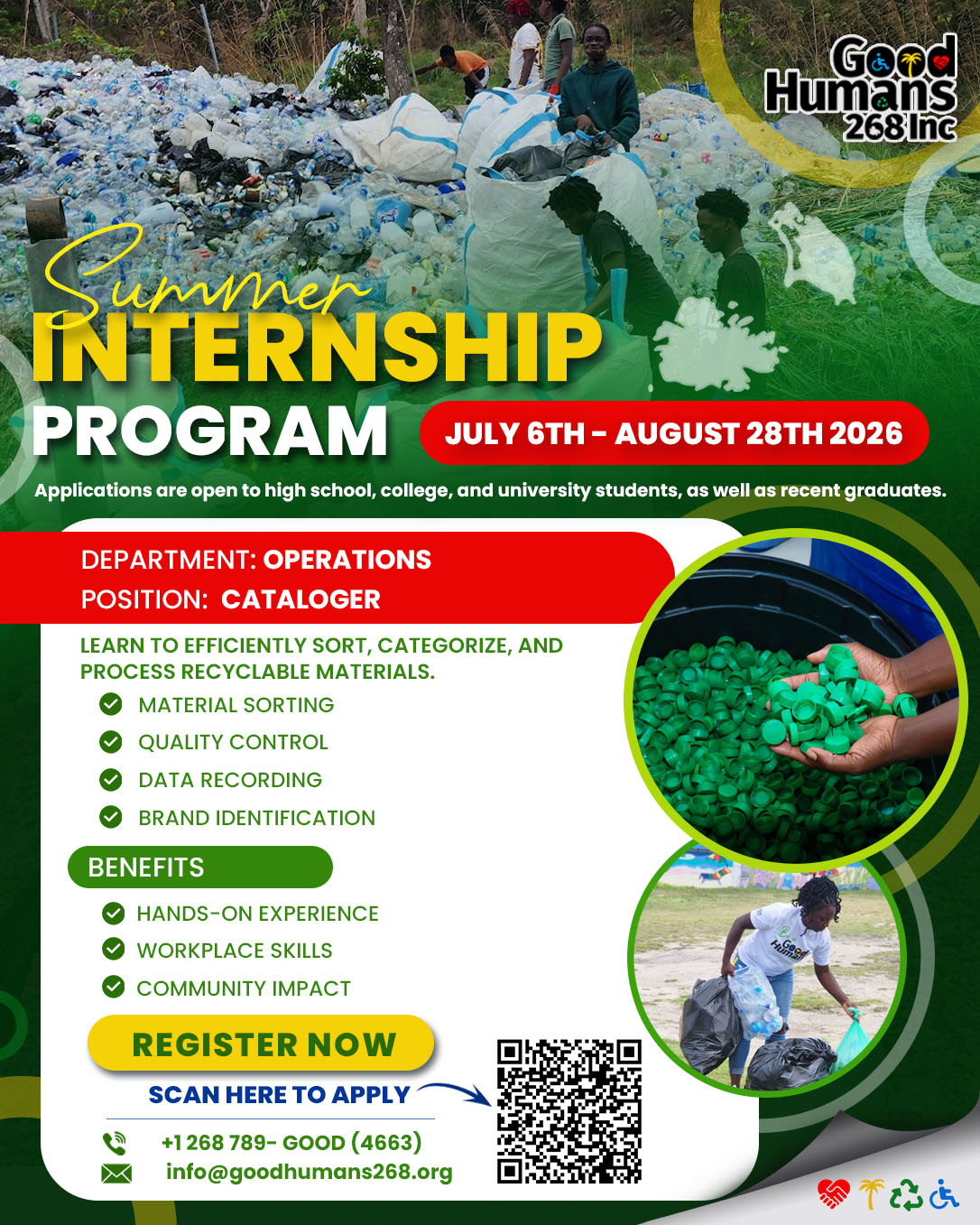
As small island developing states across the globe grapple with accelerating climate impacts, a local environmental nonprofit in Antigua and Barbuda is taking proactive action to equip young people with the skills they need to lead sustainability efforts. Good Humans 268 has officially launched a new summer internship programme that bridges the gap between academic learning and hands-on environmental work, aiming to cultivate a new cohort of climate and community leaders prepared to address the nation’s most pressing ecological challenges.
Joshuanette Francis, founder of Good Humans 268, emphasized that tackling complex environmental issues demands far more than theoretical knowledge gained in the classroom. In a public statement outlining the programme’s mission, Francis noted that on-the-ground experience fosters professional and personal growth that textbooks alone cannot deliver. “Real-world experience builds confidence in ways that textbooks cannot,” Francis said. “It teaches critical soft skills that every professional needs: adaptive problem-solving, personal accountability, flexibility, and professional work ethic.”
This new internship initiative builds on the organization’s existing three-year Student Community Service Recycling Project, which has already engaged thousands of local students. To date, project participants have diverted millions of recyclable materials away from Antigua and Barbuda’s overburdened landfills, cutting down on waste while helping students build core competencies in leadership, collaborative teamwork, and project organization.
Through these existing efforts, the Good Humans 268 team has observed that successful environmental action relies on skilled workers across a wide range of roles, not just field-based ecological work. Administrative management, daily operations coordination, and strategic public communications all play critical roles in keeping sustainability initiatives running effectively and driving broad public engagement, the organization confirmed.
As a low-lying small island developing state, Antigua and Barbuda faces disproportionate and growing environmental risks driven by the climate crisis. Rising global temperatures, more intense and frequent tropical storms, and steadily increasing domestic waste generation are placing growing strain on the nation’s ecosystems and infrastructure. Francis argues that investing in youth leadership must start long before students enter the full-time workforce, rather than waiting until after graduation. “The answer cannot be after graduation. It must begin now,” she stressed.
Over the course of the internship, participants will gain immersive, first-hand exposure to core areas including non-profit organizational management, environmental stewardship practices, cross-functional project coordination, and public outreach. The programme is also designed to help interns explore and clarify their own future career pathways in sustainability and community work.
By the end of their internship, Francis expects participants to leave with strengthened professional capabilities, greater self-confidence, and potentially a new, lasting passion for environmental management and community leadership. “Perhaps the next great climate leader, nonprofit executive, environmental educator, or community organizer is simply waiting for an opportunity to begin,” she said.
For Good Humans 268, this new internship programme is more than just a training opportunity—it is a reflection of the organization’s core belief: investing in young people is one of the most impactful strategies to strengthen global and local climate action, and build more resilient, sustainable communities for the future.