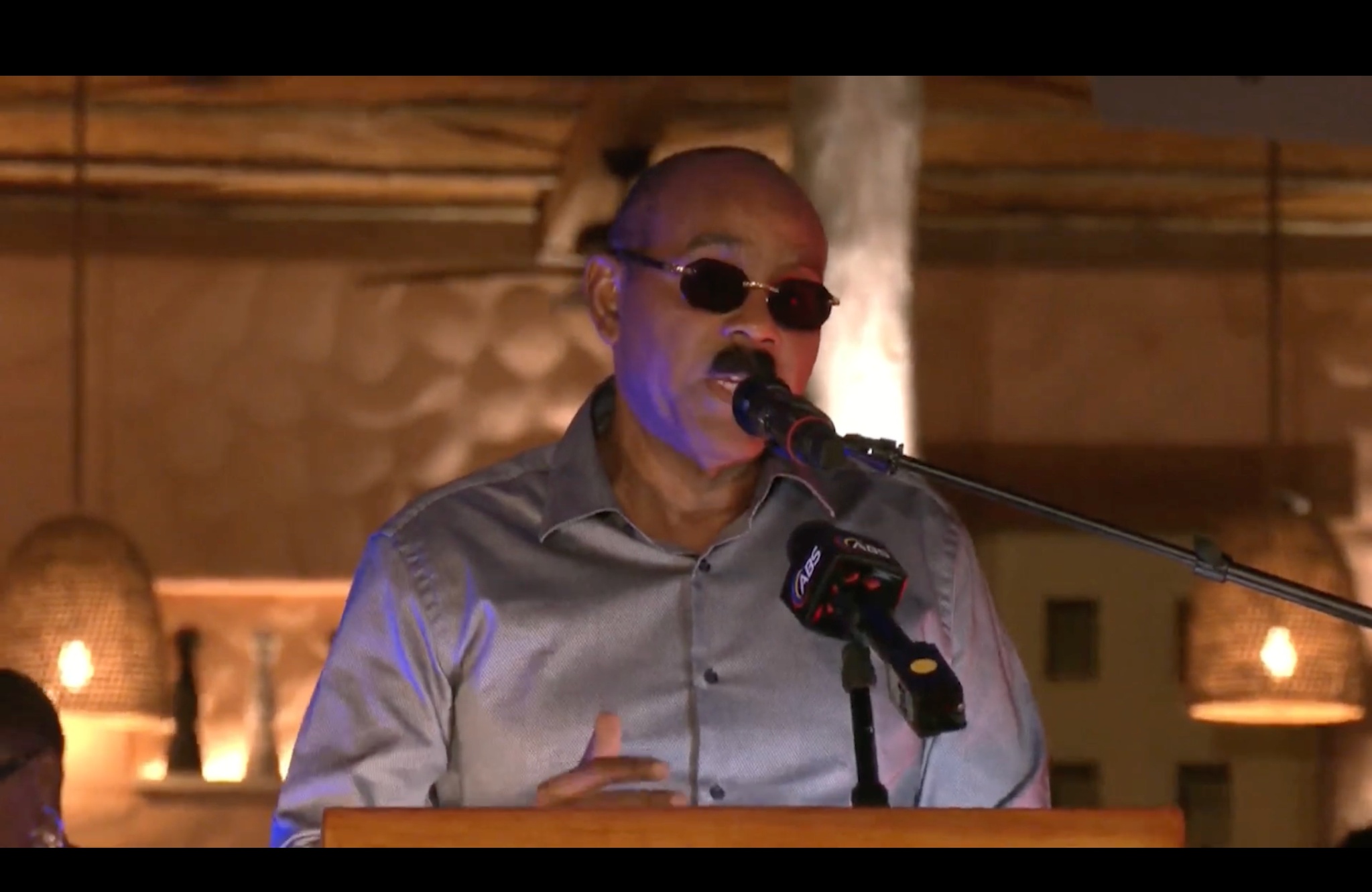
As diplomatic discussions between Antigua and Barbuda and the United States on accepting a restricted cohort of third-country nationals removed from U.S. territory progress, Prime Minister Gaston Browne has outlined the small Caribbean nation’s position: it is open to compromise on key terms, but will not backtrack on non-negotiable conditions that protect national sovereignty and public welfare.
Browne shared these remarks Tuesday evening during a celebratory reception hosted by the U.S. Embassy at Jumby Bay, an event held to honor the upcoming 250th anniversary of U.S. independence. In his address, the prime minister expressed confidence that both sides could finalize a mutually acceptable agreement in the near term.
Contrary to assumptions that the core sticking point in the negotiations is the volume of people to be accepted, Browne clarified that numbers are not the central barrier to a deal. He revealed that Antigua and Barbuda is willing to adjust its current annual cap, raising the limit from 10 individuals to as many as 14 – but only if comprehensive protective safeguards are built into the final arrangement.
Three non-negotiable conditions sit at the heart of the prime minister’s framework. First, any person accepted under the deal must have no criminal record. Second, migrants must bring marketable skills that can contribute positively to Antigua and Barbuda’s national economy. Third, they must not become a drain on the country’s limited public services and resources. Browne emphasized that as a small developing nation, Antigua and Barbuda lacks the capacity to absorb the social and economic burdens that much larger countries are seeking to offload onto regional partners. “If they come in here to be loafers, we don’t want them,” he stated bluntly.
Browne added a fourth critical requirement: all individuals accepted must hold fully valid travel documentation. The prime minister explained that the country wants to avoid being left in the position of hosting stateless people with no official documentation, a situation that would create intractable administrative and social challenges for the small island nation. “We don’t want anybody to come here and say that they don’t have any travel documents and they become stateless if we get stuck with them,” he said.
The negotiations have broader regional context, after media reports revealed that U.S. officials have reached out to multiple Caribbean governments to propose similar arrangements for relocating third-country nationals being deported from the U.S. The issue has since become a topic of widespread discussion across the Caribbean community, as small states assess their ability to accommodate external requests while protecting their own interests.
In closing his remarks, Browne reaffirmed that Antigua and Barbuda remains committed to collaborating with the U.S. to reach a pragmatic, “sensible agreement” – but will never compromise its core national interests to move a deal forward. Karin Sullivan, U.S. Embassy Chargé d’Affaires for Barbados and the Eastern Caribbean, was among the attendees at the Tuesday reception.