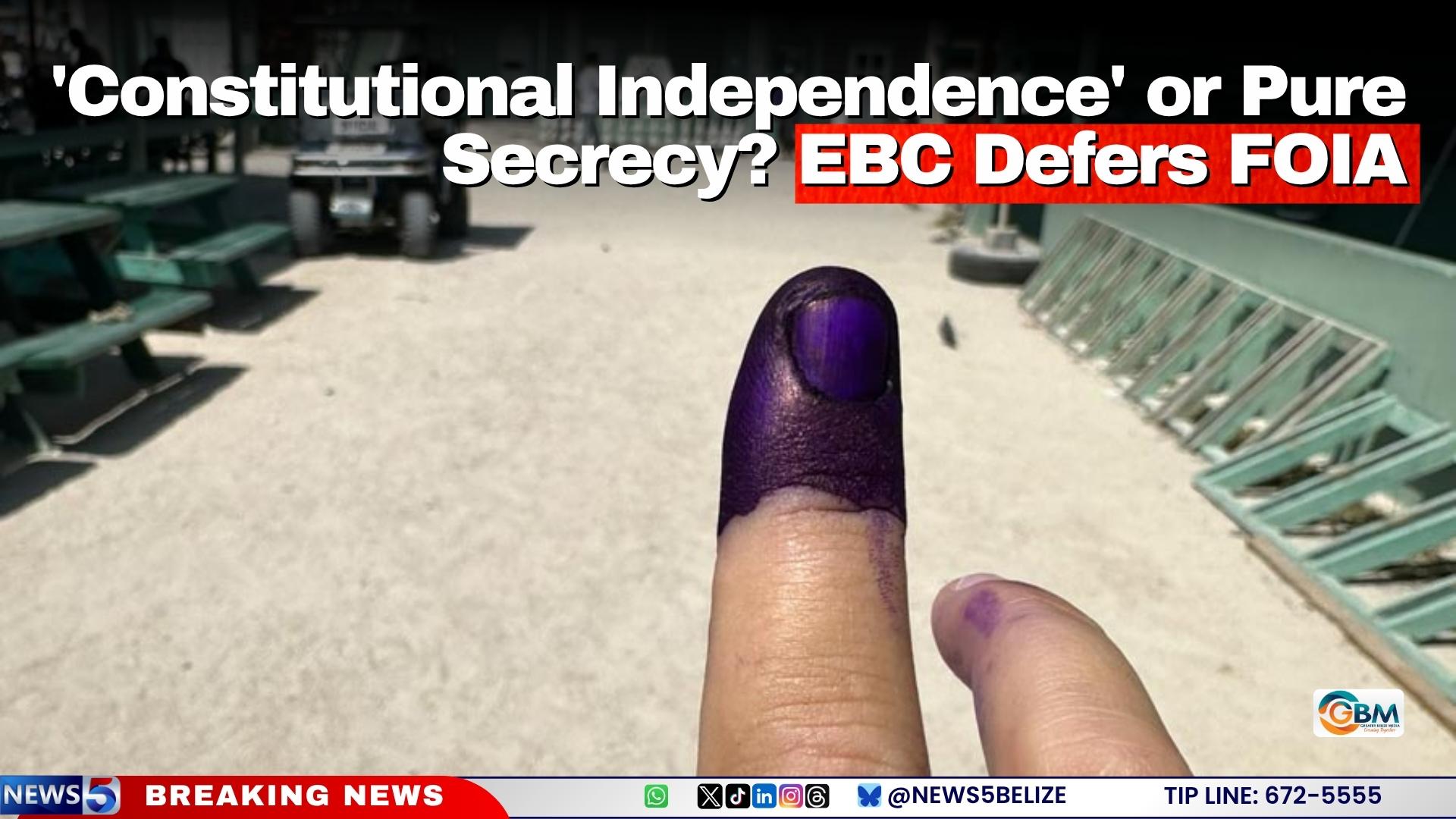
A growing transparency crisis has emerged in Belize’s electoral process, after the national Elections and Boundaries Commission (EBC) formally rejected a Freedom of Information (FOIA) request seeking critical details on the country’s long-overdue electoral redistricting effort. The request was filed by prominent social activist Jeremy Enriquez, who has accused the commission of intentionally stonewalling public access to information that directly impacts the democratic representation of all Belizean voters.
Enriquez submitted his formal FOIA application on June 8, 2026, asking for a full range of unredacted records related to the redistricting process. Among the materials he sought were timelines for the completion of the project, the methodology being used to redraw electoral boundaries, details of third-party consultants contracted for the work, all public and private expenditures associated with the process, draft boundary proposals, and official correspondence between EBC leadership and government officials. Two weeks after the request was filed, on June 22, the EBC delivered its formal response – a refusal to release any of the requested documents, backed by three layers of legal objection.
The response, signed by EBC Chairman Oscar Sabido, laid out the commission’s position. First, the commission claimed the total volume of records requested was unreasonably excessive. Second, it argued that releasing the documents could interfere with ongoing active litigation that lists Enriquez, the Attorney General of Belize, and the EBC itself as involved parties. Most notably, the EBC asserted that it is not legally required to comply with the FOIA at all, claiming it does not fit the legislation’s definition of a “Ministry” or “Prescribed Authority” bound by freedom of information rules.
To back up this core claim, the commission directly cited Section 88 of the Constitution of Belize, which states: “In the exercise of its functions, the Commission shall not be subject to the direction or control of any other person or authority and shall, subject to the provisions of this Constitution, act in accordance with the Representation of the People Act or any other law, rule or regulation relating to elections.” In its formal conclusion, the EBC stated it would defer any compliance with the access request under Section 17 of the FOIA until a court of law issues a formal ruling confirming the commission is legally required to provide the requested information. In plain terms, the EBC will not release any documents until it is compelled to do so by a judicial order.
The rejection leaves Enriquez with very few formal avenues to challenge the decision. The standard process for contesting an unlawful FOIA denial is to file a complaint with the Office of the Ombudsman, the independent body tasked with overseeing transparency and government accountability. However, that position has remained entirely vacant since December 2025, when the government declined to renew the contract of former Ombudsman Major (Ret’d) H. Gilbert Swaso. To date, no permanent replacement has been appointed, leaving the oversight body unable to process complaints.
For Enriquez and other transparency advocates, the entire situation underscores a pattern of excessive secrecy around an electoral process that carries profound constitutional implications. Redistricting, the process of redrawing electoral district boundaries, directly shapes whether Belizean voters receive equal representation in government, as population shifts can leave some districts overrepresented and others underrepresented without timely updates. In a pre-response interview on June 10, Enriquez already criticized the government’s approach to the process, stating, “No more of this secrecy with which this government tends to operate.” The Belizean government has made a public commitment to complete the full redistricting process by the end of 2026, but the lack of public access to internal process details has cast new doubt on the transparency and fairness of the upcoming final product.