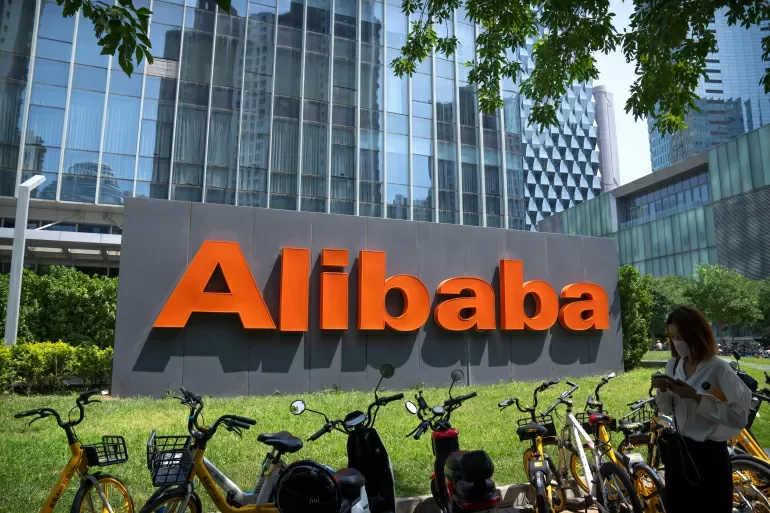
Chinese e-commerce multinational Alibaba Group has launched a federal lawsuit against the U.S. Department of Defense, challenging the agency’s recent decision to blacklist the firm as a supposed Chinese military-linked enterprise. The company has flatly rejected the designation, arguing it lacks any credible factual or legal foundation.
Alibaba confirmed the legal filing in a statement released Tuesday, noting the case has been submitted to the U.S. District Court for the Northern District of California, located in San Jose. At the core of the company’s challenge is its denial of any institutional or operational ties to the Chinese military, emphasizing that it operates as an independent, publicly traded commercial entity with no military connections.
“The [DoD’s] decisions are completely devoid of factual and legal basis,” Alibaba stated in its court filing. “Alibaba is governed by an independent board of directors, none of whom hold any military affiliations. Our core product and service lines focus exclusively on consumer retail, supply chain logistics, and enterprise information technology – we do not produce weapons, provide defense services, or support intelligence operations.”
The controversial designation dates back to June 8, when the U.S. government added Alibaba to its blacklist of companies alleged to collaborate with the Chinese military. The firm was joined by other major Chinese technology and manufacturing corporations, including electric vehicle giant BYD and search engine leader Baidu. This blacklisting forms part of a broader Washington-led strategy to curb the global expansion of Chinese tech firms, rooted in long-standing U.S. national security concerns.
Under new restrictions that took effect June 30, companies included on the list are barred from supplying any goods, services, or proprietary technology to the U.S. Department of Defense. Starting in 2027, the Pentagon will also be prohibited from awarding any contracts to these firms, even through third-party intermediaries. The restrictions carry significant commercial stakes, as U.S. federal government contracts represent valuable, high-revenue business opportunities for global corporations.
When the designation was first announced, an Alibaba spokesperson reaffirmed the company’s position, saying: “Alibaba is not a Chinese military enterprise, nor is it part of any national military-civil fusion strategy. We will utilize all available legal avenues to push back against attempts to wrongly misrepresent our company.”
The Chinese embassy in Washington has also publicly condemned the U.S. move as discriminatory. “Chinese companies operating overseas strictly abide by the laws and regulations of their host countries,” an embassy spokesperson noted. “The United States must end this wrongful practice and ensure a fair, non-discriminatory business environment for Chinese enterprises operating globally.”
The Pentagon justifies its blacklisting of Alibaba by claiming the company supports China’s military-civil fusion strategy, through alleged ties to China’s Ministry of Industry and Information Technology. Alibaba has repeatedly denied these claims in full.
The legal challenge comes at a moment of escalating bilateral friction between Washington and Beijing over technology trade and market access, as Western governments have grown increasingly vocal in scrutinizing the role of large Chinese firms in global digital and technology infrastructure. Legal analysts note the court’s ruling in this case could set a major precedent, shaping not only Alibaba’s future access to U.S. markets but also the broader framework of U.S. regulatory policy toward Chinese multinational companies operating internationally.