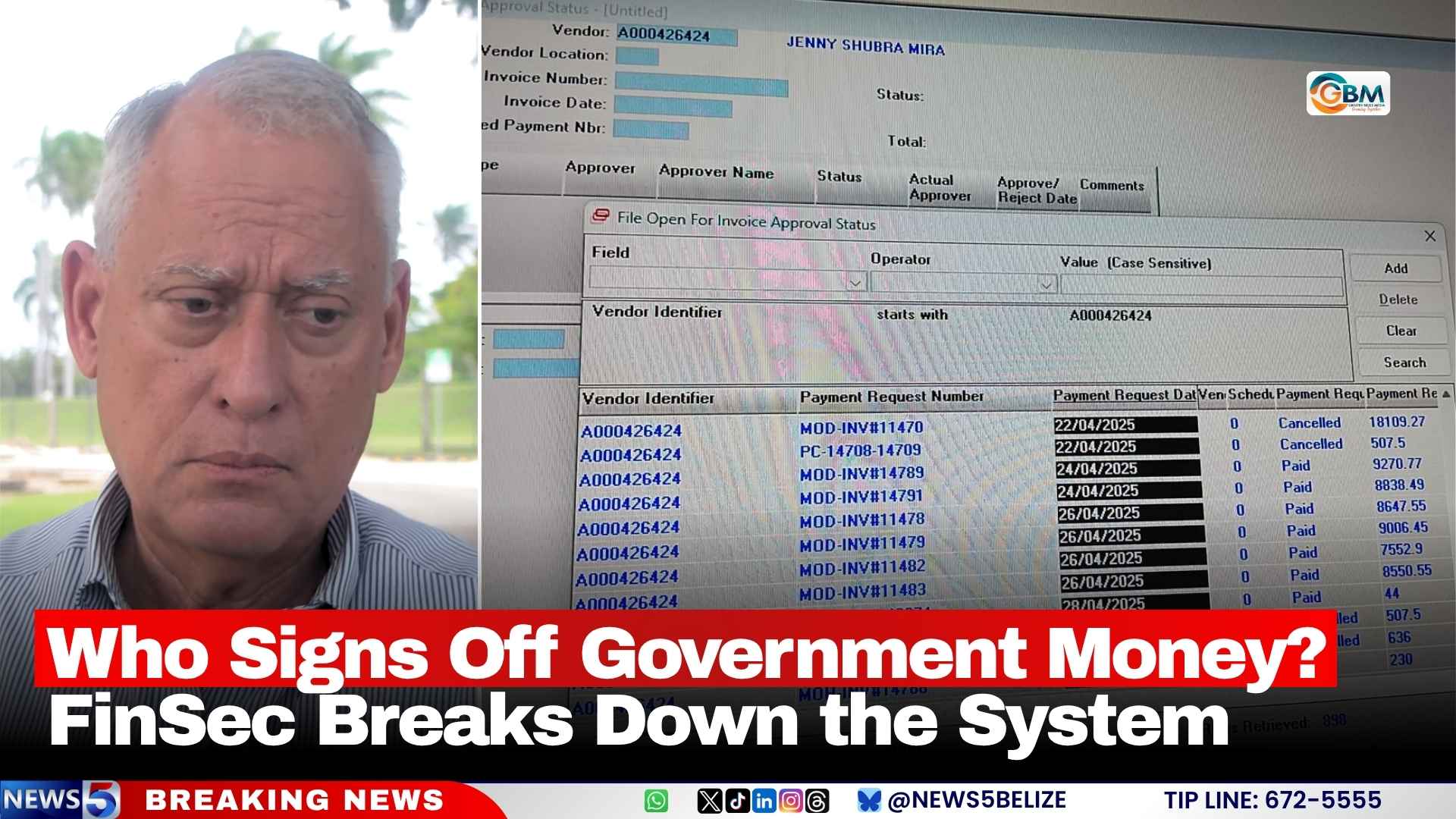
A formal audit into questionable procurement and payment practices at Belize’s Ministry of Defence, linked to the so-called “Mira millions” controversy, is now underway, and top financial officials have laid out the full chain of oversight for public spending to clarify how such transactions are processed. Speaking on the ongoing investigation, Financial Secretary Joseph Waight confirmed that any determination of personal liability for improper spending will wait for the independent audit process to reach its final conclusions.
Waight walked through the standard tiered approval process for all government payments, starting with the initial data entry phase. A junior government clerk is responsible for first inputting invoice details into the national SmartStream public payment management system. From there, a senior clerk reviews the entry to confirm its accuracy before passing it along to a ministry financial officer for a second, more rigorous check. That step is designed to verify that all supporting documentation for the transaction is complete and compliant with government rules.
The approval structure adds an extra layer of oversight for large transactions: any payment exceeding $10,000 requires a mandatory additional review and sign-off from the national Treasury before funds are disbursed. Contrary to common assumptions that political leaders sign off on every major transaction, Waight noted that minister involvement in individual payment approvals is extremely rare. The core function of reviewing tendering and procurement decisions, he explained, falls to internal committees, chief executives, designated accounting officers and dedicated financial teams, rather than political appointees.
When pressed about the status of the financial officer who oversaw approvals during the period under investigation, Waight said the government will hold off on any disciplinary action until the full audit results are published. He did acknowledge that the Mira millions controversy has shone a light on potential gaps in existing government financial oversight, signaling that targeted regulatory and procedural reforms are likely once the probe wraps up.
Two key reform proposals are already under discussion, Waight confirmed. The first is the creation of a centralized national procurement office, a policy initiative first proposed by Prime Minister John Briceño that would consolidate oversight of all government purchasing to reduce gaps in accountability. The second is the revival of random, unannounced spot checks of ministry financial accounts, a practice that Waight said was common in past decades but has fallen out of use. “In the old days, you used to have spot checks. Treasury used to send out surprise surveys,” Waight said. “We need to do those again.”
Waight also addressed calls for greater public transparency around SmartStream payment records. While he agreed that taxpayers have an inherent right to know how public funds are allocated and spent, he argued that reasonable privacy protections must remain in place for private suppliers and individual partners that participate in government contracts. On the broader question of whether similar oversight gaps exist across other large government departments that manage multi-million dollar budgets, Waight said only targeted investigation can uncover potential issues. “When you stay behind your desk for too long, you get a little detached from what is happening out there,” he said. “But it requires interrogation to find out. I don’t know if it’s going on in the rest of the government. Big ministries spend big money.”