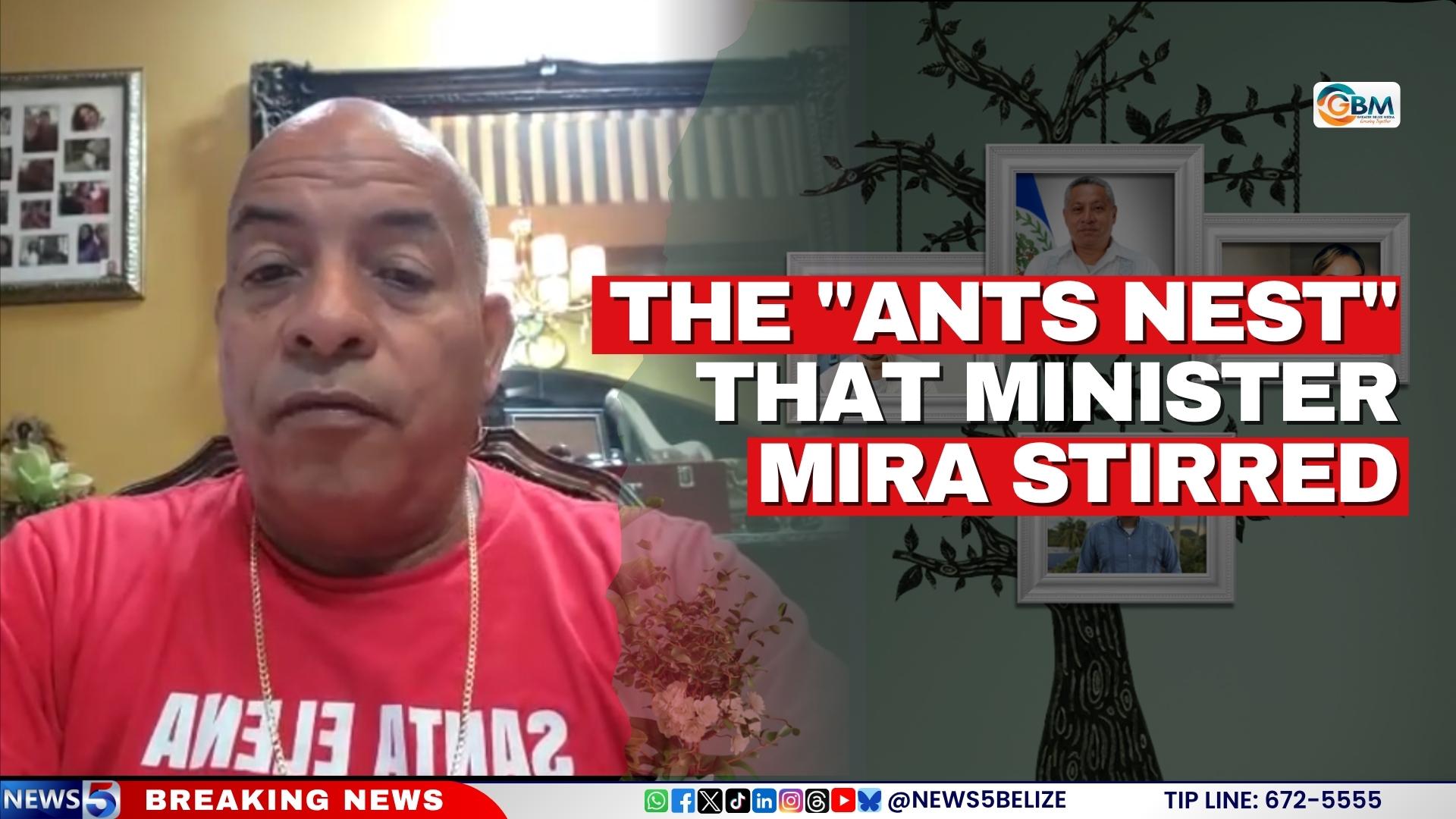
Nearly one month has passed since Belizean law enforcement seized two mobile phones from former United Democratic Party (UDP) chairman Alberto August during a court-authorized search of his Santa Elena residence, and the former party leader is still waiting for authorities to return his property. August is now publicly questioning the justification for holding the devices, which he maintains contain no evidence of criminal activity.
The search operation, carried out on May 30, was initiated under a High Court warrant that granted police permission to seize electronic devices from August’s home. The operation took an unplanned turn when officers located a firearm on the property; at the time of the search, August was temporarily unable to present the required license for the weapon. This discovery shifted the entire focus of the raid: officers departed the residence with August’s two personal mobile phones and the firearm, opting to leave all other electronic equipment on-site.
Following the seizure, August’s legal representative, Michael Peyrefitte, submitted a formal letter to the Director of Public Prosecutions calling for the immediate return of the phones. To date, no action has been taken on that request, leaving August without access to critical personal and professional data.
Notably, August has never attempted to deny authorship of the Facebook post that sparked the entire investigation in the first place. In a recent statement, he reaffirmed his position: “I told them yes, that I made the post and I will stand by that.” This open admission, he argues, makes the continued retention of his devices entirely unnecessary.
The prolonged absence of his phones has already caused tangible harm to August’s professional operations. All of his business contracts, digital payment systems, and financial receipts are stored on the devices, meaning every additional day the phones remain in police custody creates new losses for his work.
Beyond the financial harm, August has raised significant constitutional concerns over a growing rumor that authorities have sought technical support from the U.S. Embassy to unlock the encrypted devices. He pointed to a separate high-profile recent investigation in which Belizean police publicly acknowledged requiring American technical assistance to bypass device security, making the prospect of external involvement in his case far from speculative.
August pushed back hard against any implication of criminal ties, challenging authorities to produce even the smallest shred of evidence of wrongdoing. “There is absolutely nothing of a criminal nature in my phone,” he said. “If the police or the US Embassy can show me even an iota of evidence that I have been in communication with a cartel, a drug trafficker, a plane lander, human trafficking, kidnapping…then I will freely open the phone for them to examine it.”
In a striking political turn, August argued that the entire investigation stemmed from actions by Minister Mira, and that more thorough pre-raid investigation would have prevented Mira’s current political predicament: Mira has been sidelined from the Cabinet pending the outcome of an official audit into the matter. August summed up the situation bluntly, saying “the honorable minister stirred an ants nest.”
Despite the political upheaval, August framed the ongoing controversy as a beneficial moment for the people of Belize, calling the revelations a “blessing in disguise.” He closed with a direct appeal to the officials leading the Cabinet audit, urging them to prioritize uncovering the full truth, no matter what political fallout may follow.