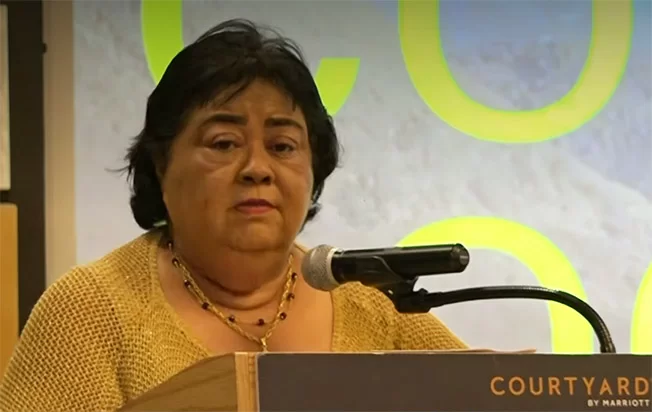
On a Friday in mid-June, prominent Surinamese jurist Jennifer van Dijk-Silos officially launched Stichting Passie voor Land en Volk (Passion for Land and People Foundation), a new independent civil society organization designed to steer Suriname toward equitable, sustainable national development as the country enters a transformative era driven by its emerging oil and gas sector.
The foundation has outlined five core priorities: cultivating responsible leadership across all sectors, strengthening active civic participation, advancing inclusive nation-building, expanding a progressive local content policy, and building a targeted strategy to leverage the global Surinamese diaspora for national growth. At the launch event, van Dijk-Silos, who serves as the foundation’s chair, emphasized that Suriname stands at a historic crossroads. The projected economic windfall from new hydrocarbon resources should not only boost state revenues but deliver tangible, widespread benefits to every segment of Surinamese society, she argued.
“The critical question is not how much natural wealth a country holds, but how much of that wealth actually reaches and improves the lives of ordinary people,” van Dijk-Silos stated during her launch address.
Rejecting the narrow common definition of local content that limits the framework to contract and procurement requirements, van Dijk-Silos called for a much broader, more inclusive approach to the policy. Under her vision, local content should ensure that Surinamese small and medium business owners, local workers, and national knowledge institutions directly capture meaningful gains from the country’s oil and gas expansion. “Local content is fundamentally about how Surinamese people can actively participate in building the economic future of their own nation,” she explained.
The foundation chair stressed that long-term sustainable development cannot be achieved through natural resource extraction alone. True national prosperity depends on intentional investment in people: through accessible high-quality education, support for domestic entrepreneurship, continuous knowledge development, and the strengthening of inclusive public institutions. “Countries do not become wealthy from natural resources alone – they grow wealthy from investing in their people,” van Dijk-Silos noted.
A key pillar of the foundation’s work is targeted engagement with the global Surinamese diaspora. With hundreds of thousands of Surinamese migrants living across the globe, the community holds untapped potential in the form of specialized skills, professional experience, capital, and international networks that can accelerate national development, van Dijk-Silos argued. Instead of framing the diaspora as people who left Suriname, the foundation reframes them as Surinamese citizens who have simply expanded their sphere of influence, and invites them to contribute to national progress. “We must see the diaspora not as those who abandoned our country, but as Surinamers who have extended their reach across borders,” she said.
Structured as an independent cross-sector platform, the foundation will facilitate open dialogue between diverse stakeholders: ordinary citizens, domestic entrepreneurs, young people, civil society groups, academic institutions, and national government. Planned activities include public discussion forums, guest lecture series, leadership training programs, and independent research projects on key national challenges. A top priority for the organization is developing the next generation of ethical, effective young leaders, as van Dijk-Silos argues that sustainable leadership is a non-negotiable foundation for good governance, social stability, and long-term economic growth.
Beyond economic development, the foundation is committed to advancing inclusive nation-building in Suriname, a country known for its deep cultural, ethnic, and religious diversity. Van Dijk-Silos emphasized that this diversity is not a barrier to national unity, but one of Suriname’s greatest strategic strengths. Instead of centering divisions of origin, religion, or political affiliation, the foundation calls on all Surinamers to embrace shared responsibility for the country’s future. “A strong nation is built on shared values: integrity, respect, solidarity, justice, and active civic responsibility,” she said.
Closing her launch address, van Dijk-Silos framed the foundation’s creation as more than just the launch of a new civil society organization. It is, she said, an open invitation to all Surinamers – both those living in the country and those part of the global diaspora – to collaborate on building a future where economic growth goes hand in hand with broad social progress, shared national identity, and sustainable, people-centered leadership. “Suriname’s future will not be defined by oil alone,” she concluded. “It will be defined by the quality of our institutions, the resilience of our entrepreneurs, the potential of our people, and our willingness to work together toward a common goal.”