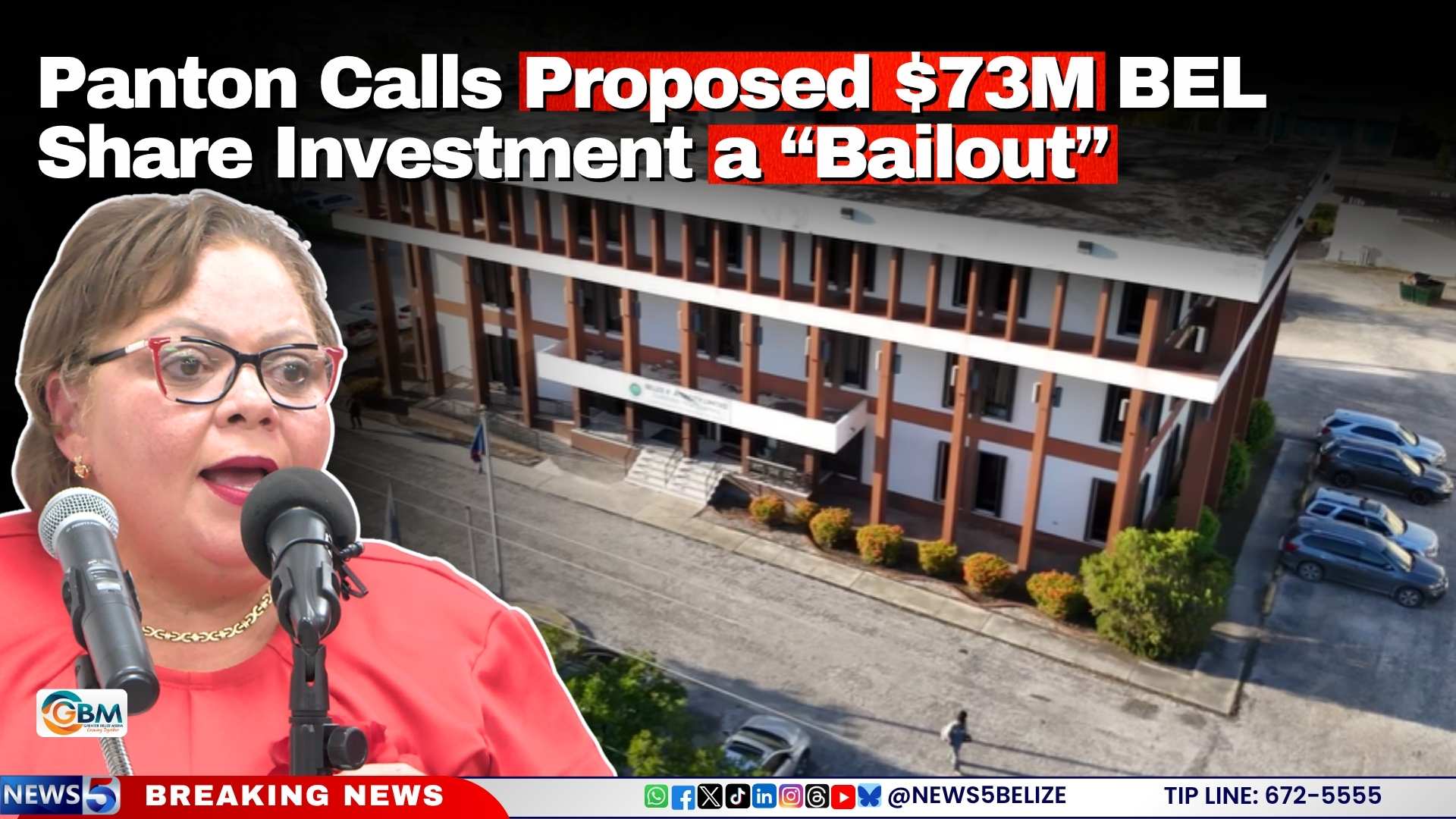
A planned $73 million government investment into Belize Electricity Limited (BEL) has ignited sharp political debate in Belize, as the opposition lashes out at the proposal framing it as an underdisclosed bailout that will ultimately burden ordinary taxpayers.
The initiative, put forward by Prime Minister John Briceño’s administration, asks for legislative approval to acquire just over 8.1 million newly issued shares of BEL at a price point of $9 per share. In defending the plan, Briceño has emphasized that the core goal of the investment is to reinforce national control over Belize’s critical electricity infrastructure, strengthening domestic ownership of the country’s core power supply network.
But the proposal has quickly drawn fierce scrutiny from the country’s political opposition. Tracy Panton, leader of the United Democratic Party, is leading the charge against the plan, questioning both the source of the $73 million in funding and the ultimate impact on public finances. During a press briefing held by her party on June 16, 2026, Panton publicly labeled the share acquisition nothing more than a bailout for the state-linked power provider.
Panton raised concerns specifically about whether the government intends to draw funds from Belize’s Social Security Board (SSB) to cover the cost of the purchase, a move she argues would put retirement and social welfare funds at risk. Ahead of a scheduled House of Representatives committee meeting set to discuss the proposal the following day, Panton warned she would immediately make the information public if there was any confirmation of SSB funds being tapped for the investment.
The opposition leader also noted that while she had directly raised the funding question to a member of the ruling People’s United Party (PUP) during a visit to Belmopan, she did not receive a clear response. The ruling party member did, however, deny that SSB funds would be used for the share purchase.
Despite that denial, Panton maintained her position that no matter what funding stream the government chooses to use, the full cost of the $73 million investment will eventually be passed on to the Belizean public. She added that while Belizeans would likely be far more open to supporting public spending on the power sector if it translated to lower monthly electricity bills or more reliable service, she remains deeply skeptical that the proposal will deliver any such tangible benefits for ordinary citizens.
The upcoming House committee meeting is expected to be the first major legislative step for the proposal, where further details on funding and policy goals will likely be debated publicly.