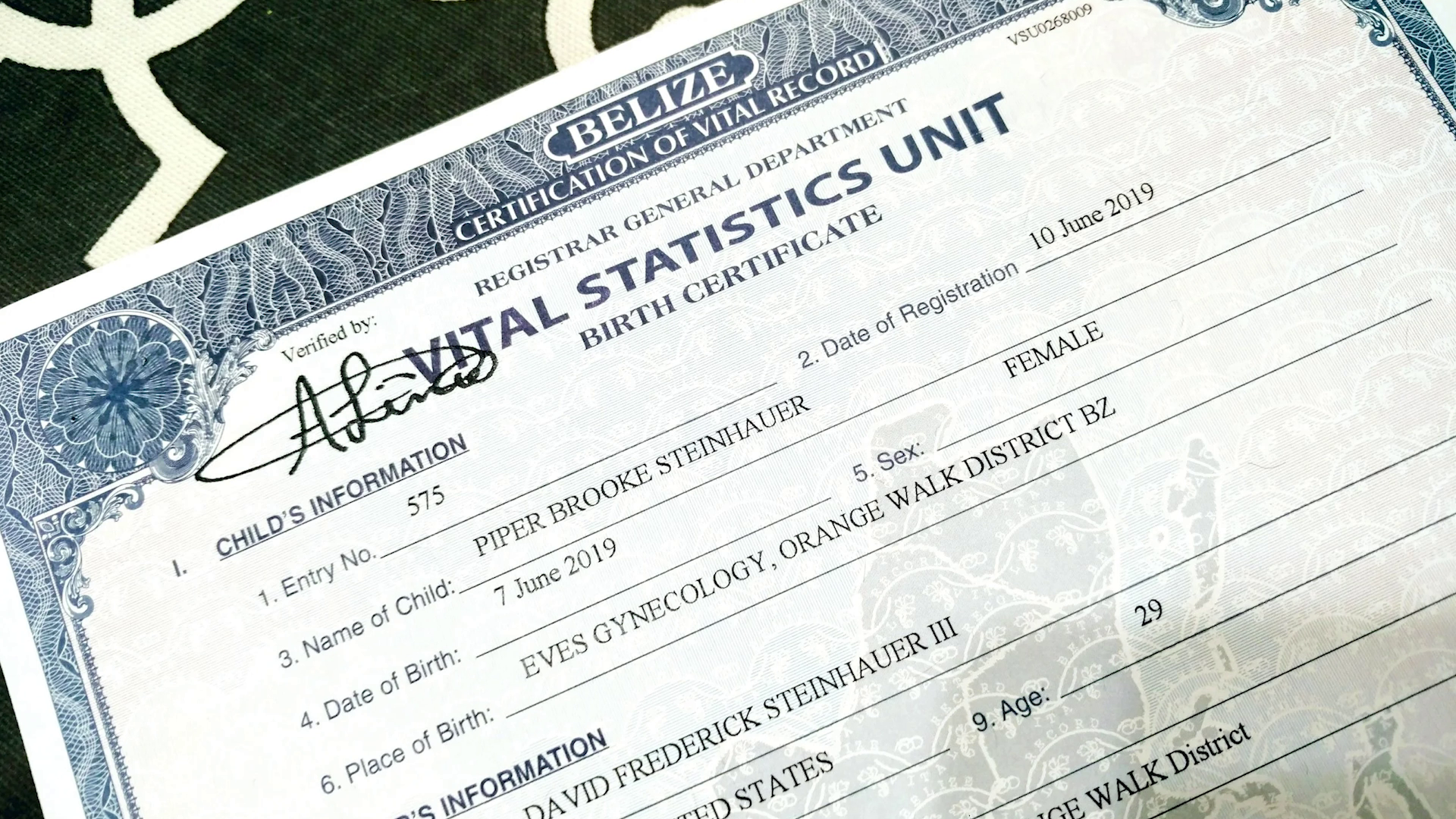
A controversial policy shift surrounding one of Belize’s most essential civil documents has sparked widespread public pushback, just months after the government rolled out the new system. As of December 2025, the country replaced its long-standing, intricately designed official birth certificates with a plain, digitally-issued format that allows citizens to print the document from any location on any paper of their choosing. The change, introduced alongside the launch of Belize’s upgraded digital Civil Registry and Vital Statistics system, has left many residents confused and frustrated, with widespread calls from the public to reverse the policy and bring back the familiar, secure official document generations have trusted.
Public frustration centers on concerns over document legitimacy, potential confusion for institutions processing official paperwork, and the loss of a formal, government-issued document that many view as a core marker of legal identity. In response to growing public outcry, Attorney General Anthony Sylvestre defended the government’s decision in an interview with local reporters, framing the shift as a deliberate step to expand access to vital document services for all Belizeans.
Sylvestre explained the practical challenges that shaped the policy change, noting that the old system relied on pre-printed, secured stock with unique serial numbers that had to be produced and stored in government offices in advance. Under the previous process, every birth certificate had to be printed directly onto this specialized stock at a government facility, requiring in-person visits and limiting access for residents living in remote areas far from civil registry offices.
The new digital-first model eliminates that barrier, Sylvestre argued: after accessing the civil registry service and obtaining an official electronic copy of their birth certificate, citizens can print the document on any paper they choose, whether that is plain printer paper or a decorative heavy stock purchased by the user. When pressed by a reporter on whether citizens could opt to use their own decorative paper to replicate the old format, Sylvestre confirmed that no rule prohibits residents from using whatever paper they prefer for their printed copy.
Addressing concerns over potential confusion, Sylvestre acknowledged that maintaining two parallel systems — one for the old pre-printed official certificates and one for the new print-at-home format — would create far more significant administrative challenges for key government agencies. Institutions including the Social Security Board and the Department of Immigration and Nationality, which regularly process birth certificates as part of their core work, would face unnecessary complexity verifying two distinct document formats, he explained. For that reason, the government has decided to move forward with the unified print-your-own model at this time, despite public dissatisfaction, to align with the broader rollout of the new digital civil registry system.