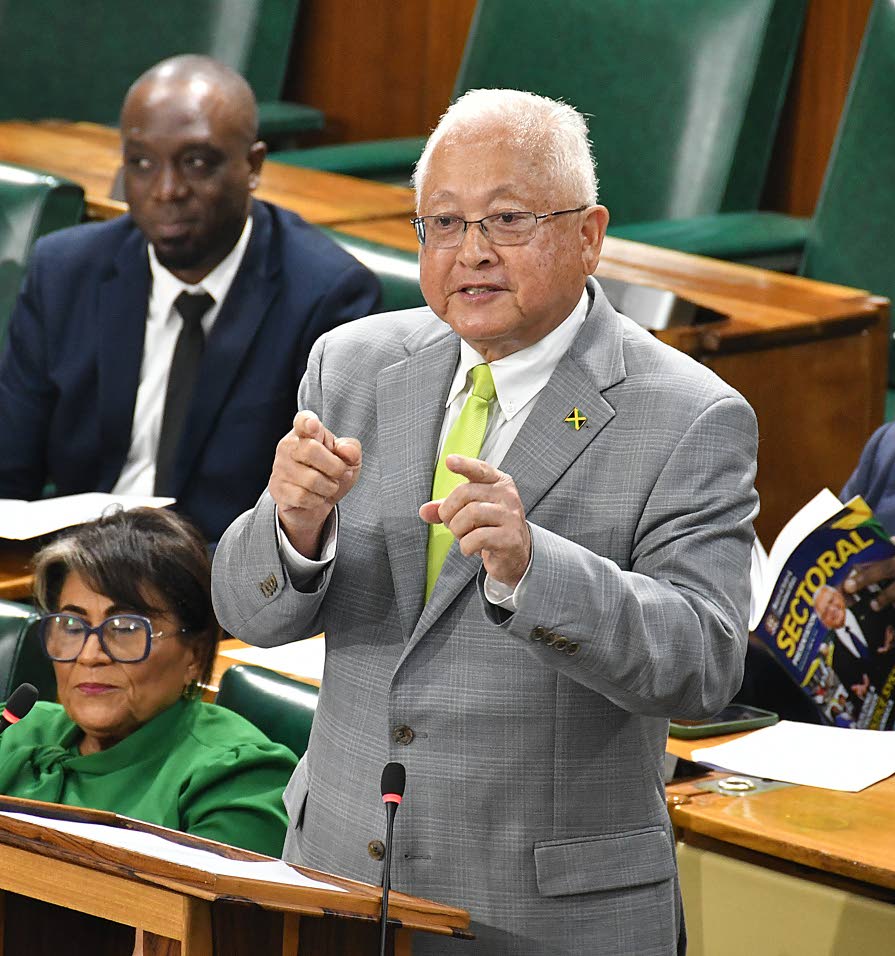
KINGSTON, Jamaica — In a major update delivered to Jamaica’s House of Representatives on June 10 during the annual Sectoral Debate, Justice Minister Delroy Chuck has announced that the government disbursed a total of $680 million in outstanding judgment debt payments to claimants across the country over the 2025/2026 fiscal year.
Speaking to lawmakers, Chuck framed the full disbursement of allocated judgment debt funds as a critical step toward reinforcing the country’s justice system. He noted that meeting these court-ordered financial obligations will give judicial officers greater confidence to deliver timely rulings, moving the nation closer to the government’s core goal of accessible, equitable justice for all Jamaican citizens.
“As part of our unwavering commitment to delivering justice for every Jamaican, we are pleased to confirm that the Attorney General’s Chambers has fully utilized the budget allocated to cover all judgment debts submitted to the Ministry for disbursement,” Chuck told parliament.
Beyond judgment debt, Chuck outlined significant progress across the Ministry’s Social Justice Division, which oversees three core public initiatives: Restorative Justice, Child Diversion, and Victim Services. Despite widespread damage to parish-level Justice Centres and court facilities from recent extreme weather, including Hurricane Melissa, the division has maintained its full mandate to deliver alternative conflict resolution and support services to vulnerable communities.
The division has sustained ongoing training and outreach programs in partnership with faith-based organizations, schools, at-risk communities, and families in need across the island. Most notably, restorative justice tools were deployed to de-escalate conflict during a recent surge in violence in Jamaican schools, an effort implemented in close collaboration with the Ministry of Education, Youth, Skills and Information to educate the public on non-violent conflict resolution alternatives.
Last fiscal year, the program marked Justice Day with special peace education events in four schools across four parishes, reaching thousands of young students with messaging centered on non-violence and community harmony. The Ministry also partnered with the national judiciary to host a three-day targeted sensitization training for sitting judges on key social justice issues, an event that was widely deemed a success by participants.
In a key modernization push, full digital case management systems are currently being rolled out for both the Child Diversion and Restorative Justice programs. The Child Diversion digitization effort is backed by UNICEF, while the Restorative Justice system upgrade is supported by the Ministry of National Security and Peace through its Citizen Security Secretariat. Chuck explained that the digital overhaul will streamline case tracking, improve the accuracy and reliability of program data, and allow social justice officers to serve clients across a range of settings—from court rooms and office locations to police stations and community outreach sites. To support this shift, the Ministry has also upgraded its core digital infrastructure to enable remote, on-location service delivery.
Chuck emphasized that even after Hurricane Melissa disrupted operations at justice centers across the island, restorative justice and other social justice programs have continued to strengthen the country’s overall justice framework. Over the past fiscal year, the program’s outreach team trained more than 31,000 Jamaicans on restorative justice principles and hosted 101 hands-on restorative practices workshops, repeated the program’s core public message: “Talk It Out and Not Fight It Out.”
“ We are proud to report that our restorative justice interventions have resulted in almost 1,700 binding conflict resolution agreements signed by opposing parties, helping to strengthen community cohesion and build sustained peace across the island,” Chuck added.