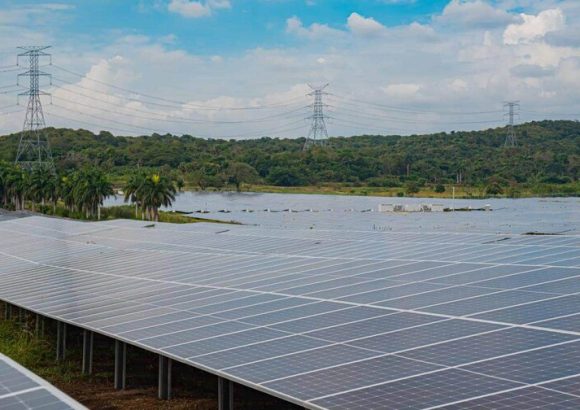
Renewable energy, derived from naturally replenishing, widely available sources ranging from sunlight to wind, has emerged as a critical solution to global energy insecurity and climate risks, with the Dominican Republic posting striking expansion of its solar generation capacity in recent years. New data from the country’s National Interconnected Electric System (SENI) reveals that between 2025 and June 2026 alone, the Dominican Republic added 100 megawatts (MW) of new installed solar capacity, boosting the share of clean energy in the national energy grid.
Over the longer six-year period from 2020 to June 2026, SENI figures show cumulative installed solar capacity has skyrocketed by 806.6%, cementing solar as the fastest-growing renewable technology in the country. This growth outpaces all other clean energy sources in the nation: wind energy recorded a far more moderate 30.2% capacity increase over the same period, while both biomass and hydroelectric power saw no growth in installed capacity at all. Across all renewable technologies combined, the Dominican Republic’s total installed renewable capacity has now crossed the 2,000 MW threshold, a milestone that comes amid ongoing geopolitical instability in the Middle East that has roiled global fossil fuel markets.
As the Dominican Energy and Mines Ministry notes, nations that remain heavily reliant on imported fossil fuels face acute vulnerability to global price swings, particularly during periods of geopolitical conflict and global economic uncertainty. Any disruption to global fossil fuel supply quickly translates to higher costs for electricity generation, domestic manufacturing, and transportation, putting sustained pressure on national economies. To insulate itself from these risks, the Dominican government has prioritized rapid expansion of renewable energy development, a policy that has already lifted the share of clean energy in the country’s total consumption to roughly 25%.
The Dominican Republic’s progress aligns with a broader global shift away from fossil fuels outlined by leading international energy bodies. United Nations data shows that roughly 80% of the global population—around 6 billion people—reside in countries that depend on imported fossil fuels, leaving billions exposed to the market volatility and supply risks triggered by geopolitical crises including the ongoing conflict in the Middle East. In response to this systemic risk, the International Renewable Energy Agency (IRENA) has set a target for 90% of global electricity to come from renewable sources by 2050, with the UN projecting that renewables could become the world’s largest source of electricity generation as early as 2030, supplying around 65% of total global electricity demand.
Currently, fossil fuels including coal, oil, and natural gas still account for more than 80% of total global energy production, though renewables have steadily gained market share and now supply 29% of global electricity. Beyond strengthening energy security, a full transition to renewables would allow the global energy sector to cut its carbon emissions by as much as 90% by 2050 through deep decarbonization, delivering a critical blow to slowing the progression of catastrophic climate change.
For Latin America and the Caribbean, the regional energy landscape retains a heavy reliance on fossil fuel production and exports, according to the Latin American and Caribbean Energy Organization (OLADE). The region accounts for 11% of global crude oil output and 6% of global natural gas production, with Brazil, Mexico, and Venezuela leading regional crude production, and Argentina, Trinidad and Tobago, and Brazil topping the rankings for natural gas output. Roughly 46% of the region’s oil production is exported: 22% goes to other markets within Latin America and the Caribbean, 31% to China, 18% to the United States, and 15% to the European Union.
As renewable capacity expands across the globe and the region, energy storage has emerged as the next critical growth market for the sector. Data from Solis Latam and the International Energy Agency (IEA) shows battery storage was already one of the world’s fastest-growing energy technologies in 2025, with total global installed capacity hitting 108 gigawatts, up from 2024 levels. Solis Latam projects that global energy storage capacity growth will match the 40% expansion seen in 2025 in 2026, positioning the storage sector as a key competitive arena for solar and renewable energy firms globally and across Latin America. Alba Min Ye, CEO of Solis Latam, notes that analysis from research firm Grand View Research projects the regional battery energy storage market will surge from $890 million in 2024 to more than $6.3 billion by 2030, underscoring the massive growth potential for clean energy infrastructure across the Americas.