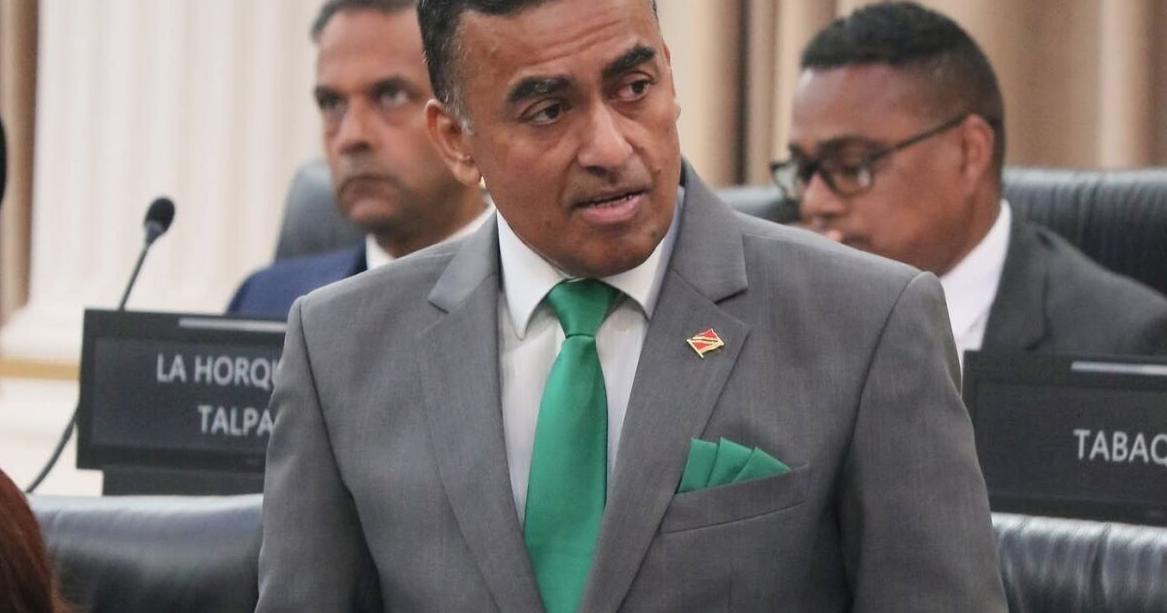
In a landmark parliamentary vote that underscored deep political divides between the ruling administration and the main opposition bloc, Trinidad and Tobago’s Finance Bill 2026 has been passed into law after Finance Minister Davendranath Tancoo firmly rejected opposition claims that the legislation would introduce new personal tax burdens for ordinary citizens. The final vote count delivered a lopsided result: 28 lawmakers supported the bill, no legislators voted against it, and all 13 opposition members from the People’s National Movement (PNM) chose to abstain from the final tally.
During floor debate on the bill, Tancoo launched a sharp rebuke of the PNM Opposition, accusing the party of spreading deliberate misinformation to the public by claiming the 31-clause legislative package would bring new taxes for individual taxpayers. He dismissed these claims entirely, emphasizing that the bill is not a tax-raising measure but a comprehensive set of fiscal reforms designed to improve regulatory compliance, unlock private sector investment, and deliver on key campaign commitments made by the current UNC administration.
While the bill includes no new personal income taxes, Tancoo confirmed that it does raise existing fines for tax and regulatory offenders to strengthen enforcement of fiscal laws. The only new fiscal structure introduced by the bill targets private companies operating drilling projects in marginal marine gas fields, requiring these firms to remit a set share of their production revenues to the national government. Beyond this energy-focused provision, Tancoo outlined that the legislation centers on four core priorities: delivering tangible tax relief for pensioners, expanding retirement benefits for frontline public safety officers, incentivizing charitable giving to national social causes, and boosting enforcement of existing tax regulations.
Turning to the benefits for public safety workers, Tancoo explained that the bill addresses decades of unaddressed grievances from officers in the Police Service, Prison Service, and Fire Service. Many officers have long complained that they served in higher-ranking positions for extended periods leading up to their mandatory retirement, but never received the enhanced pension and retirement benefits tied to those roles. The new legislation fixes this gap: any officer who served continuously in an acting higher position for between one and three years before retirement will now have their pensions, gratuities, and other retirement allowances calculated as if they were formally appointed to that higher rank permanently.
One of the most significant personal tax concessions included in the bill comes via an amendment to the Income Tax Act, contained in Clause 21(a). Starting January 1, 2026, all income earned from approved deferred annuity plans and approved pension fund plans will be fully exempt from income tax. To qualify for the exemption, deferred annuity policies must be purchased by a legal resident of Trinidad and Tobago and mature when the holder is between 50 and 70 years of age, and the exemption applies equally to all qualifying plans approved before, on, or after the January 1, 2026 implementation date.
To encourage greater charitable giving to national public interest initiatives, the bill amends three core pieces of legislation: the Exchequer and Audit Act, the Income Tax Act, and the Corporation Tax Act. Under the new rules, both individual taxpayers and registered companies that make contributions to government-established national-purpose funds will qualify for generous tax deductions. For individuals, the maximum deduction is capped at the lower of 20% of total annual income or TT$20,000, while for companies the cap is set at the lower of 15% of chargeable annual profits or TT$100,000. Tancoo specifically noted that these new incentives will directly support high-priority initiatives such as the national Women’s Health Fund, which works to address period poverty among women and girls across the country.
In a key move to stimulate new investment in the country’s critical energy sector, the bill creates an official classification for “marginal marine gas fields” — defined as offshore shallow water gas reserves that have no more than 300 billion cubic feet of recoverable contingent resources, carry an internal rate of return below 15%, are scheduled to begin production after January 1, 2026, and receive formal certification from the Minister of Energy. To encourage development of these smaller, previously undeveloped reserves, the legislation sets a moderate 8% royalty on net natural gas produced from qualifying fields, and offers investors a 130% capital allowance on all qualifying project expenditure, which can be claimed in 20% annual installments over a five-year period. Tancoo used the opportunity to criticize the former PNM administration, calling its energy negotiators “amateurs” who wasted millions in public funds on international travel and entertainment while failing to secure major investment deals. He countered that under the current UNC government, Trinidad and Tobago has attracted significant new investment from global energy giants including ExxonMobil, BP, Shell, and Perenco.
The bill also brings long-sought reforms to the controversial Landlord Business Surcharge introduced by the current administration, replacing what Tancoo called the former PNM’s “imaginary” property tax system based on hypothetical rental income. The new legislation clarifies that the one-time TT$2,500 registration fee for the surcharge is applied per landlord, not per individual rental property, meaning landlords with multiple properties will only pay a single fee. Additionally, any amount a landlord pays in Landlord Business Surcharge can now be fully credited against their annual personal income tax liability, reducing overall tax burdens for small property owners.
Following targeted consultations with domestic gaming operators, the government also made significant adjustments to the new gaming taxes rolled out in the 2026 national budget. The annual tax on non-roulette amusement games has been cut in half, from TT$25,000 to TT$12,500, while annual taxes on electronic roulette devices have been reduced from TT$200,000 to TT$120,000, bringing the rate in line with existing taxes on casino operations. To ease cash flow pressures for operators, the government has also scrapped the requirement to pay the full annual tax bill upfront, replacing it with equal quarterly installment payments. Any excess tax already paid by operators between April 1 and June 30, 2026, will be fully refunded. Finally, the bill raises the maximum number of amusement games permitted on certain licensed premises from 20 to 33, while imposing strict penalties — including a TT$25,000 fine, up to one year of imprisonment, and possible license revocation — for operators that exceed the legal limit.