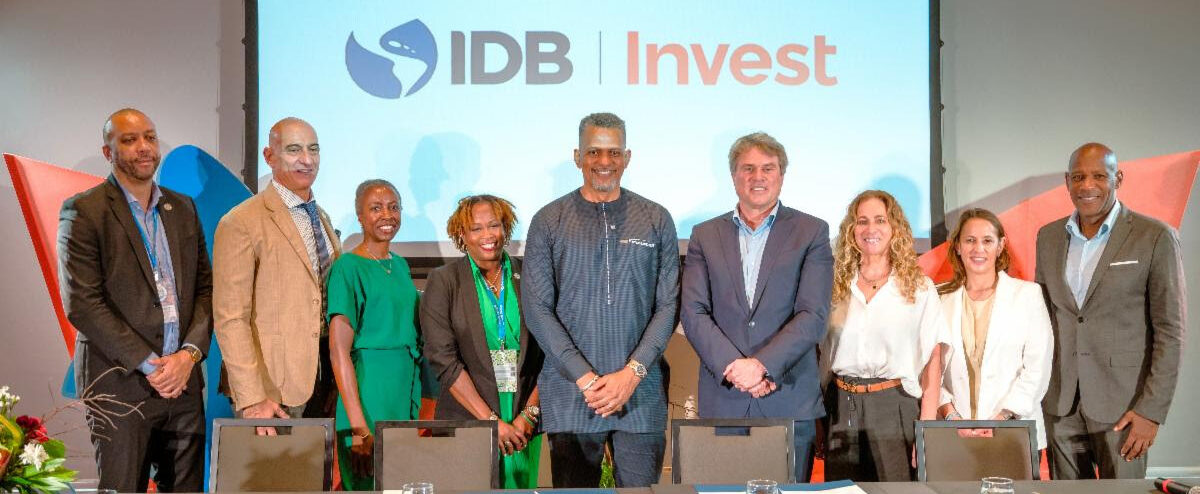
Against a backdrop of a persistent, crippling global trade finance shortfall that hits developing economies hardest, two leading regional development institutions have forged a new partnership to unlock critical trading capital for small and medium businesses across the Caribbean. IDB Invest and the Caribbean Development Bank (CDB) have signed a $25 million guarantee agreement, announced during 2026 Sustainability Week in Barbados, that is set to expand access to much-needed trade financing for enterprises across eight borrowing member countries of CDB.
The core challenge the new facility seeks to address is one that has held back Caribbean economic growth for decades: the inability of local businesses to secure sufficient funding to complete cross-border trade transactions. Under the terms of the deal, CDB will issue partial credit guarantees for trade transactions processed through IDB Invest’s long-running Trade Finance Facilitation Program (TFFP). This risk-sharing framework allows both institutions to deploy existing capital far more efficiently, boosting the total volume of trade financing available to local financial intermediaries that serve businesses on the ground.
The TFFP is not an untested new initiative. Over its 21 years of operation, which launched back in 2005, the program has emerged as a cornerstone of trade support across Latin America and the Caribbean. To date, it has backed more than 36,000 separate trade transactions with a total combined value exceeding $21 billion, including $4.8 billion raised through targeted resource mobilization efforts.
The timing of the new partnership could not be more urgent. While trade finance underpins roughly 80% of all global trade activity, a massive funding gap continues to restrict growth worldwide. Current industry estimates put the global trade finance shortfall at approximately $2.5 trillion, with developing and emerging market economies bearing the brunt of the shortage. For small island developing states across the Caribbean, this gap has been a particularly acute barrier to private sector expansion and regional economic integration.
James P. Scriven, Chief Executive Officer of IDB Invest, emphasized that the collaboration aligns with the institution’s core development mission. “This partnership with the Caribbean Development Bank reflects our commitment to expanding access to trade finance across the Caribbean while using innovative risk-participation instruments to maximize development impact,” Scriven said. “By working together, we can channel more resources to local financial institutions, support consistent trade flows, and help build more resilient and competitive economies in the region.”
The new facility will prioritize financial institutions operating in CDB’s Borrowing Member Countries, a roster that includes The Bahamas, Barbados, Belize, Guyana, Haiti, Jamaica, Suriname, and Trinidad and Tobago. By making trade financing more accessible and affordable, the initiative is expected to streamline cross-border imports and exports of essential goods and commodities, strengthening regional supply chains and supporting business growth.
CDB President Daniel M. Best noted that the partnership leverages each institution’s unique strengths: CDB’s deep on-the-ground regional expertise paired with IDB Invest’s established financial infrastructure. “Expanding trade finance in our markets demands both regional insight and the right instruments to reduce borrowing costs and unlock capital. This facility brings both to bear and is grounded in our drive to widen access to finance across our BMCs,” Best explained. “Working alongside IDB Invest, we are taking concrete steps to close the trade finance gap and advance sustainable economic growth across the Caribbean.”
The agreement was formally signed during 2026 Sustainability Week, IDB Invest’s flagship annual industry gathering hosted in Barbados this year. Event organizers confirmed that the conference drew more than 800 attendees from across the globe, including representatives from 350 private sector companies. The week’s agenda centered on identifying high-impact investment opportunities and advancing private sector-led sustainable development across the Latin America and Caribbean region.