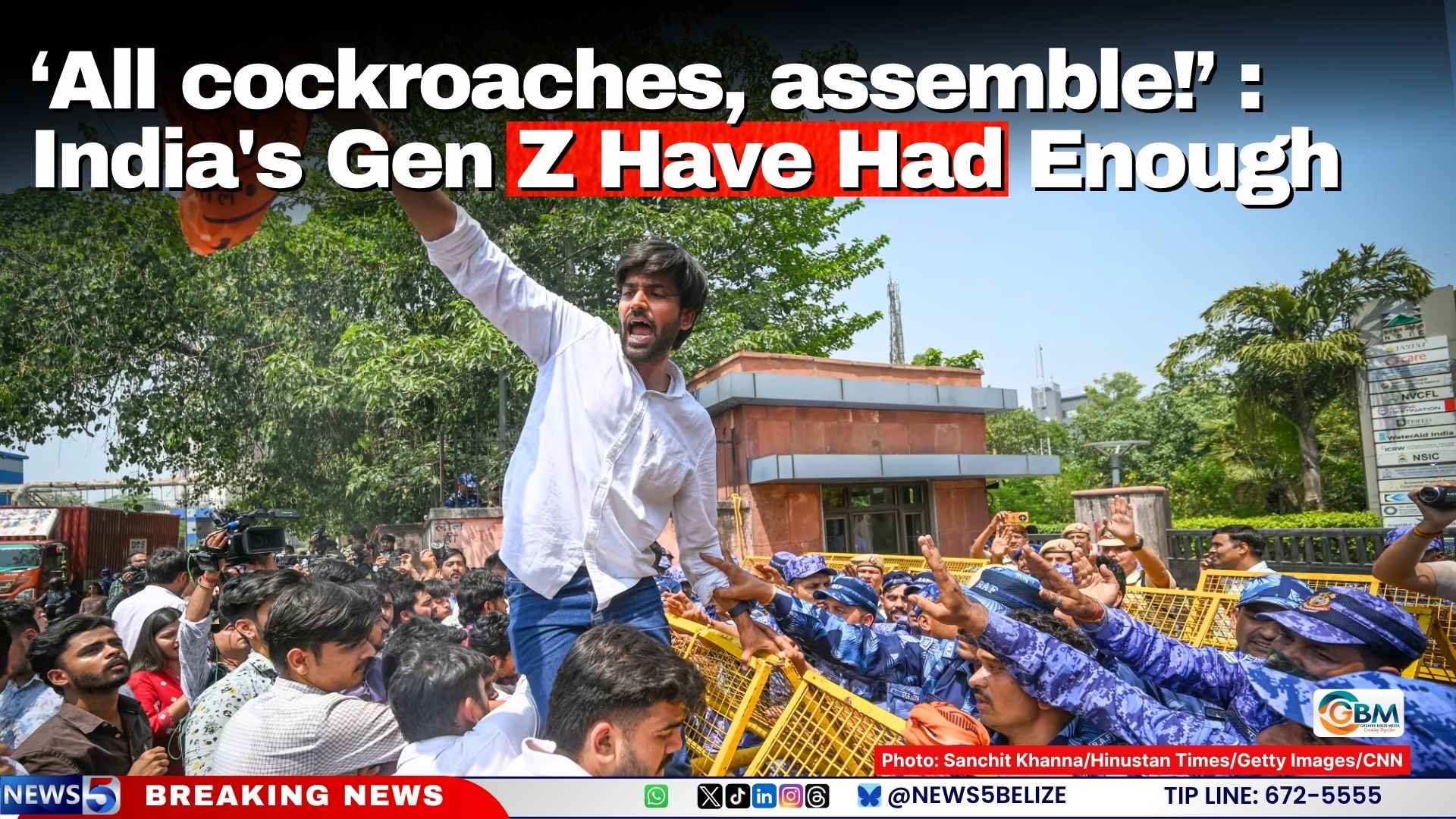
What started as a throwaway online joke has erupted into a full-fledged grassroots youth movement that is capturing national attention in India, as Generation Z takes to the streets of New Delhi to demand systemic change over persistent crises in education and sky-high youth joblessness. At the heart of the protest wave is the satirical political project dubbed the ‘Cockroach Janata Party’, the brainchild of 30-year-old Boston University graduate Abhijeet Dipke. In an extraordinary display of viral momentum, the movement gained more than 22 million Instagram followers in just seven days – a follower count that doubles that of Prime Minister Narendra Modi’s ruling Bharatiya Janata Party (BJP) on the platform.
The movement’s street debut was triggered by a widely criticized comment from India’s Chief Justice Surya Kant, whose recent remarks were broadly interpreted as comparing unemployed young people to ‘cockroaches’. That inflammatory comment proved to be the final straw for millions of young Indians who have carried simmering frustration for years over systemic failures: repeated exam paper leaks, a broken and rigged higher education entrance system, and crippling youth unemployment that has left a generation’s prospects hanging in the balance.
Recent data from Azim Premji University underscores the severity of the crisis: nearly 40% of all Indian graduates under the age of 25 are currently out of work. For millions more, the hyper-competitive, scandal-plagued university entrance exam system has already shrunk their career and life prospects, leaving many feeling abandoned and invisible to the country’s ruling political establishment.
Hundreds of protesters gathered in New Delhi for the movement’s first major public demonstration, many turning out in homemade cockroach masks, carrying symbols of their struggle: textbooks representing their stymied education futures and roses as a call for peaceful change. Even those tasked with policing the rally expressed quiet solidarity with the movement. A police officer stationed at the perimeter of the protest told reporters her own daughter was among the demonstrators, adding simply: ‘There comes a time when one needs to get on the streets, no?’
In his remarks to reporters from Al Jazeera, Dipke emphasized the core grievance driving the unprecedented youth backlash. ‘This country belongs not just to one party, but to all of us. Our future is getting ruined,’ he said. What began as satirical political commentary has quickly evolved into a loud, visible reminder of the deep generational disconnect between India’s political leadership and the hundreds of millions of young people who will shape the country’s future.