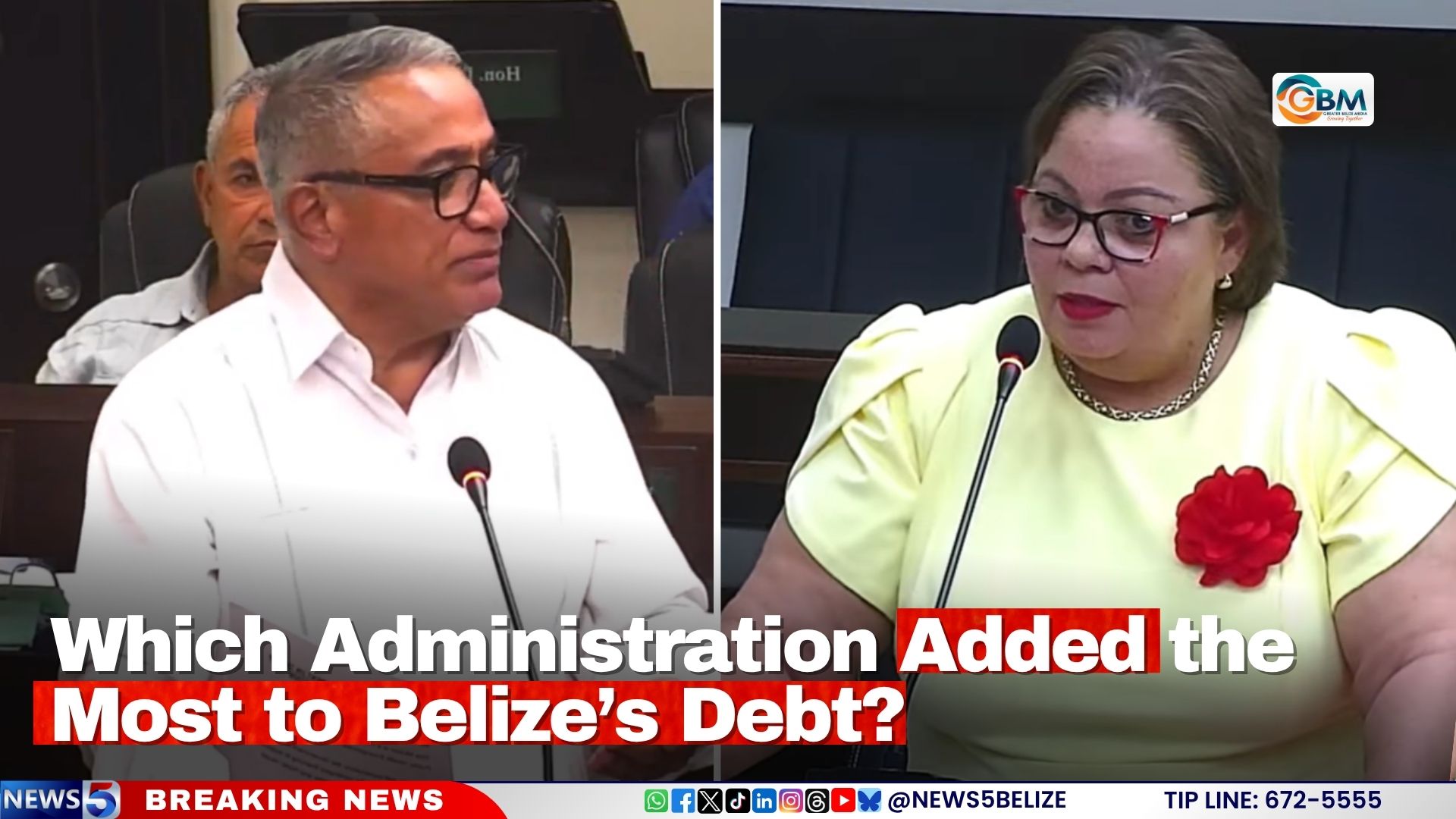
A routine debate over a $23 million development loan has ignited a fiery partisan confrontation in Belize’s House of Representatives, pitting Prime Minister John Briceño’s governing administration directly against opposition leader Tracy Panton and her bloc over competing claims of fiscal responsibility.
The conflict began when opposition lawmakers challenged the Briceño government’s borrowing strategy, leveling accusations that the current administration was accelerating the accumulation of national debt and pushing the small Central American nation toward greater fiscal instability. Briceño rejected the criticism outright, pushing back with economic data that he argued flipped the narrative entirely, placing blame for decades of stagnation and debt growth squarely on the previous United Democratic Party (UDP) administration.
In a scathing rebuke delivered from the House floor, Briceño pointed to per capita GDP trends between 2008 and 2020, a period when the UDP held national power. He noted that when the UDP took office from the People’s United Party (PUP) in 2008, national GDP per capita stood at $11,332. By the time the PUP returned to power in 2020, that figure had dropped to $10,418, representing an 8% economic contraction over 13 years. During that same period, Briceño highlighted, the UDP administration spent more than $13 billion in public funds. “You would have expected a high school kid could do better than that,” the prime minister quipped.
Briceño also mocked the opposition’s attempts to pin the UDP’s economic underperformance on the global COVID-19 pandemic, pointing out that the public health crisis only emerged in the final year of the UDP’s 13-year tenure. “Yes, we had COVID under the UDP. That is why nothing happened. Thirteen years of COVID,” he said sarcastically, calling out over a decade of what he labeled as excuses for poor governance.
Despite the heated exchange, the $23 million loan motion ultimately secured enough support to pass in the House on Thursday. The funds allocated through the borrowing will not go toward general operational costs, but rather to the construction and rehabilitation of early childhood education facilities across every district of Belize. The project is a core component of the Briceño administration’s broader policy agenda, which prioritizes expanding access to pre-primary education and creating new employment opportunities for women across the country.
Beyond the partisan back-and-forth, official fiscal data shows that the current government has made significant progress in stabilizing Belize’s debt profile since taking office in 2020. The country’s debt-to-GDP ratio has fallen sharply from 120% in 2020 to 68% as of 2026, marking one of the most dramatic debt reductions in Belize’s modern history.