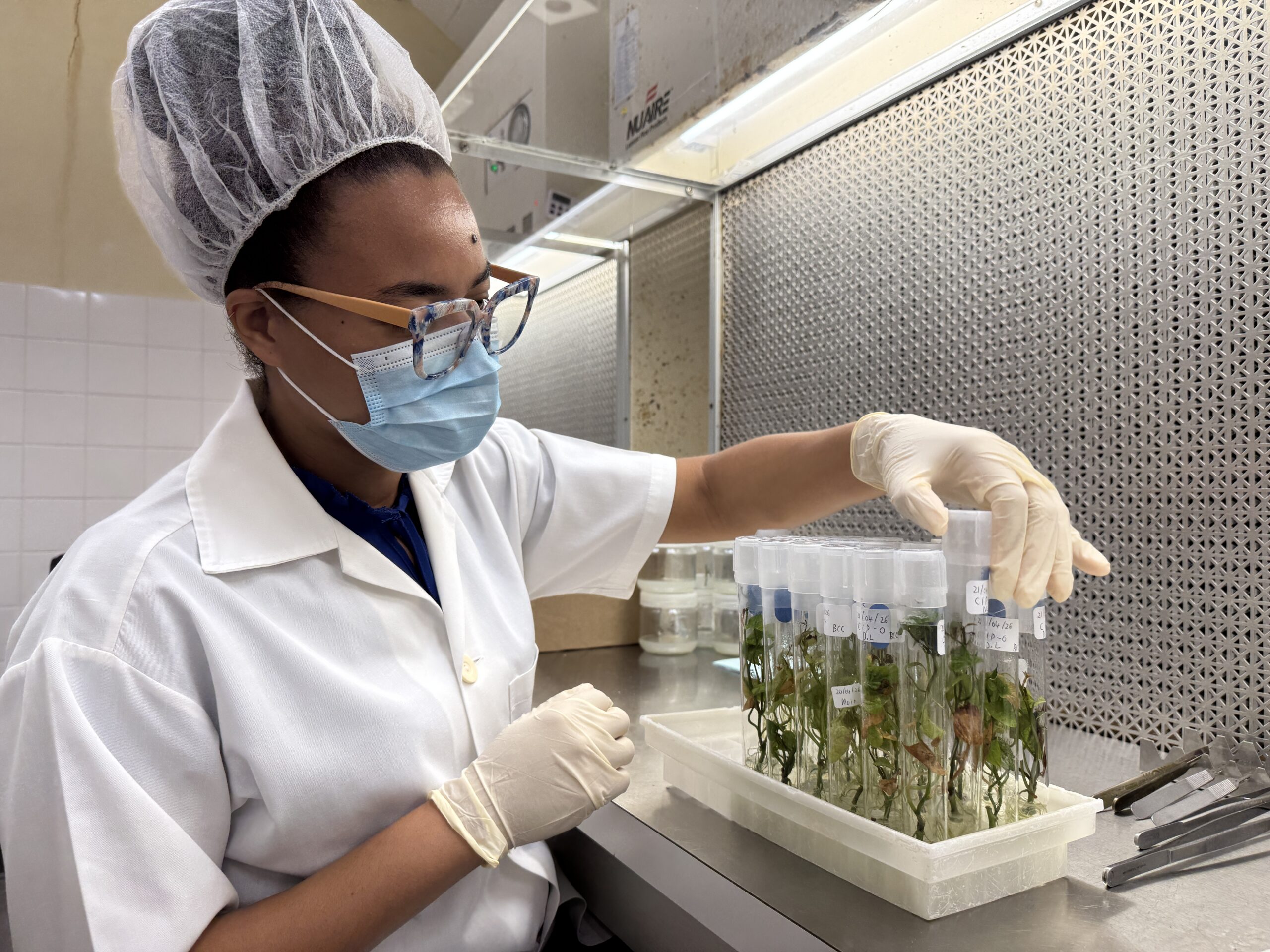
In a sunlit plant tissue culture facility in St. Philip, Barbados, an unexpected all-women support network has ignited a young scientist’s bold mission to advance Alzheimer’s disease treatment. What began as a post-graduation internship for 24-year-old Romelia Dabreo has evolved into a purpose-driven career rooted in mentorship, empowerment, and a growing passion for plant-based scientific research.
Dabreo, a recent biochemistry and microbiology graduate from the University of the West Indies, did not set out to work in plant science. Like many young students, she initially held aspirations of becoming a veterinarian, and walked into the St. Philip facility in June 2024 with just one goal: gaining practical lab experience after earning her degree. At the time, she had little knowledge of tissue culture techniques and no particular interest in crop research. What she found inside the lab walls, however, changed the trajectory of her career and her life’s ambition.
Led by facility head Dr. Sophia Marshall, the lab’s tight-knit team of women—including senior laboratory assistants Althea Grace and Deslyn Newton, and laboratory worker Sandra Alleyne-Belgrave—embraced Dabreo, openly sharing their expertise and creating a welcoming environment that let her curiosity bloom. “They make me feel comfortable and at home,” Dabreo said of her colleagues. That supportive culture transformed a temporary internship into a full-time role as senior agricultural assistant just two months after her arrival, a welcome outcome that caught Dabreo by surprise at a time when many young graduates struggle to secure stable employment.
“It was very exhilarating,” she recalled. “I didn’t really expect to get a position here. I just came into work focused on getting experience to build a science career down the line.”
As she immersed herself in the work of plant tissue culture, Dabreo’s interest grew far beyond the lab. Back at home, she has joined her naturally curious and creative mother in small-scale agricultural experiments, testing growing methods for staple crops. Her mother has even found success growing sweet potatoes and cassava in grass cuttings instead of traditional soil, a project Dabreo says has deepened her connection to plant science outside of her formal work.
Today, Dabreo is leveraging the tissue culture and phytochemical extraction skills she has mastered to pursue a groundbreaking goal: developing a potential Alzheimer’s treatment using compounds extracted from local staple crops including sweet potatoes and yams. She hopes her work will one day slow the progression of the neurodegenerative disease or even contribute to a long-sought cure.
Beyond her own research, Dabreo is working to shift negative perceptions of agriculture among young people. Too often, she says, the younger generation writes off agriculture as nothing more than backbreaking field work under the hot sun, failing to recognize the wide range of innovative career paths the sector offers—from apiculture to high-tech tissue culture, and even opportunities to integrate cutting-edge tools like artificial intelligence.
For Barbados, Dabreo notes, a career in agriculture also offers young people the chance to contribute to national progress beyond personal gain. “It’s contributing to something much greater than yourself,” she explained. “You’re helping Barbados become more food secure, as well as getting our local innovations out onto the international stage.”
Her journey stands as a testament to the power of female mentorship in STEM, proving that supportive work environments can turn unexpected opportunities into life-changing scientific ambition.