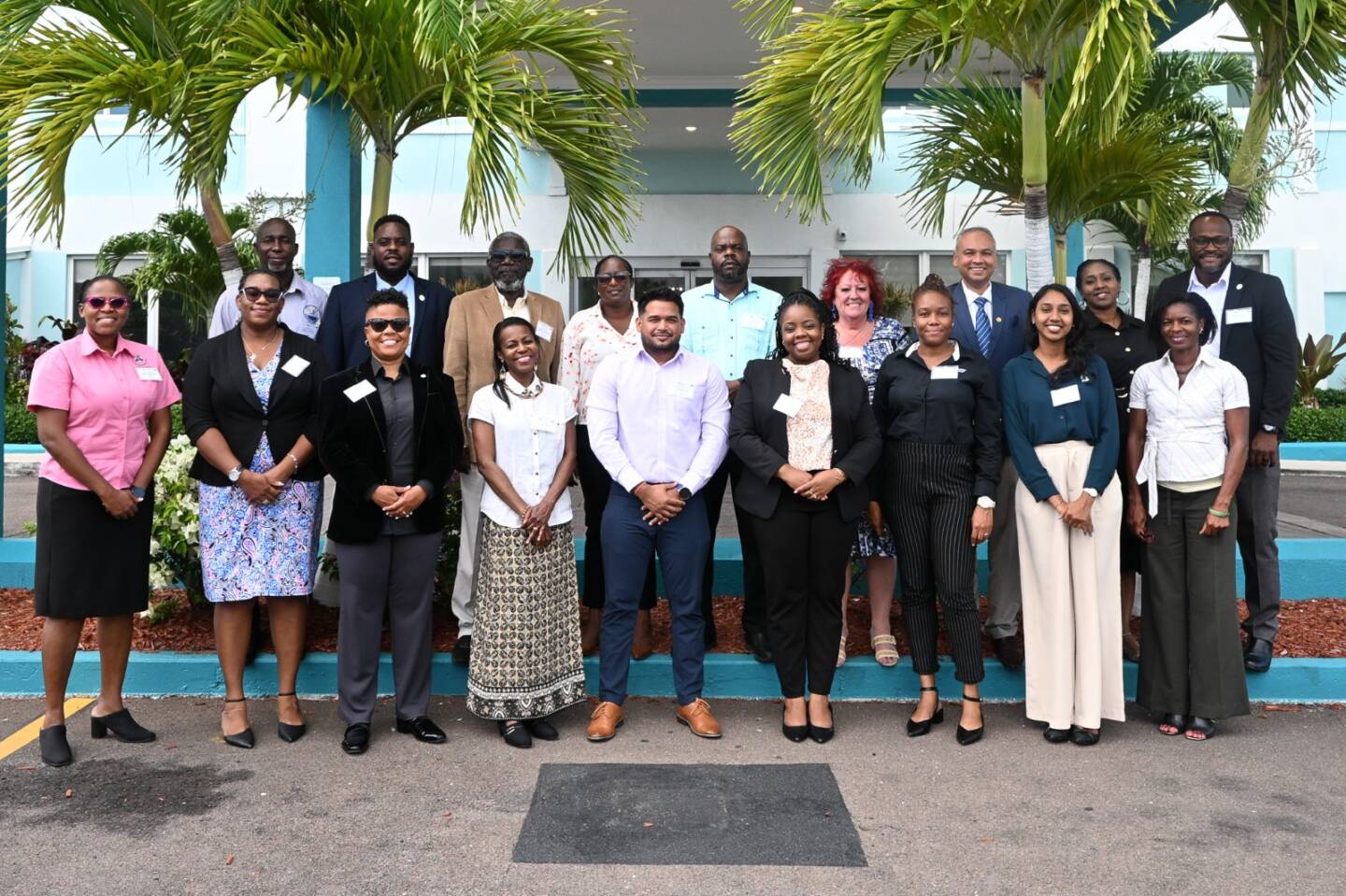
Against a backdrop of growing climate vulnerability for Caribbean Small Island Developing States (SIDS), two landmark regional climate-focused gatherings wrapped up in Nassau, The Bahamas, in late May 2026, uniting cross-sector stakeholders to scale up early warning systems, climate services, and collective climate resilience across the region. Dr. Roxanne Graham-Victor, Regional Coordinator of Global Water Partnership-Caribbean (GWP-C), played a central role in both events, bringing critical expertise on water security and integrated water management to the table.
The first gathering, the 14th Coordination Partners Meeting of the Consortium of Regional Sectoral Early Warning Information Systems across Climate Timescales (EWISACTs), ran from May 25 to 26, followed immediately by the 2026 Wet/Hurricane Season Caribbean Climate Outlook Forum (CariCOF) Stakeholder Forum, held May 27 to 28. Both events were convened by the Caribbean Institute for Meteorology and Hydrology (CIMH), with core financial and technical backing from the World Meteorological Organisation (WMO), the Climate Risk and Early Warning Systems (CREWS) Initiative, the ClimSA programme, and the European Union.
GWP-C has long held observer partner status within the EWISACTs Consortium, contributing specialized technical and strategic guidance on issues spanning water security, integrated water resources management, climate adaptation, and the integration of climate data into cross-sector policy and decision-making. At this year’s EWISACTs meeting, representatives from more than a dozen leading regional institutions and development partners spanning climate, water, disaster management, health, agriculture, tourism, and energy came together to advance shared resilience goals. Attendees included delegates from the Caribbean Disaster Emergency Management Agency (CDEMA), the Caribbean Public Health Agency (CARPHA), the Caribbean Water and Wastewater Association (CWWA), the Caribbean Tourism Organisation (CTO), the Caribbean Centre for Renewable Energy and Energy Efficiency (CCREEE), the Caribbean Agricultural Research and Development Institute (CARDI), and the Caribbean Meteorological Organisation (CMO), among other global development partners.
Over the course of the two-day EWISACTs meeting, participants reviewed progress on ongoing climate services rollout across the region, explored new avenues for collaborative resource mobilization, moved forward work on the expanding Caribbean Climate Impacts Database (CCID), and tightened coordination mechanisms between organizations working on discrete climate resilience initiatives. The meeting also dedicated focused discussion to the proposed Caribbean Climate Impacts Monitoring Network (CCIMNet) and mapped out next steps for ongoing collaboration under the ClimSA programme.
Following the conclusion of EWISACTs, Dr. Graham-Victor took on the role of chair for the final day of the CariCOF Stakeholder Forum, where participants delved into the emerging tools, cross-sector partnerships, and targeted investment needed to bolster weather, climate, and hydrological services across every Caribbean island nation. Sessions led by Dr. Graham-Victor featured detailed presentations on the existing Global Flood Awareness System (GloFAS) and the newly proposed Caribbean Flood Awareness System (CaribFAS), which would tailor global flood monitoring capabilities to the unique hydrological and geographic needs of the Caribbean. Attendees also explored specialized tools for disaster risk assessment tied to regional weather and climate patterns, and discussed pathways to secure sustainable funding for fit-for-purpose climate and hydrological services tailored to local needs.
Collectively, the forum sessions underscored a core truth for climate action in the Caribbean: stronger forecasting capabilities, expanded climate information services, reliable hydrological outlooks, and coordinated regional partnerships are non-negotiable foundations for effective disaster preparedness, sustained water security, long-term climate resilience, and evidence-based decision-making across the region’s SIDS.
In reflections shared after the gatherings, Dr. Graham-Victor emphasized that meaningful climate resilience requires sustained investment not just in technical climate information systems, but also in the regional institutions that translate raw data into actionable policy and on-the-ground action. “Water security, disaster risk reduction, agriculture, tourism, health, and infrastructure planning all depend on access to reliable climate and hydrological information,” she noted. “The EWISACTs and CariCOF meetings helped move this agenda forward by advancing regional collaboration, identifying practical opportunities for resource mobilisation, and strengthening coordination around the climate services needed to support informed decision-making and resilience-building across Caribbean SIDS.”
Looking ahead, GWP-C reaffirmed its longstanding commitment to supporting regional climate action, continuing to collaborate with Caribbean governments, regional specialized institutions, and global development partners to strengthen collective climate resilience, advance universal water security, and advance climate-informed sustainable development across the Caribbean region.