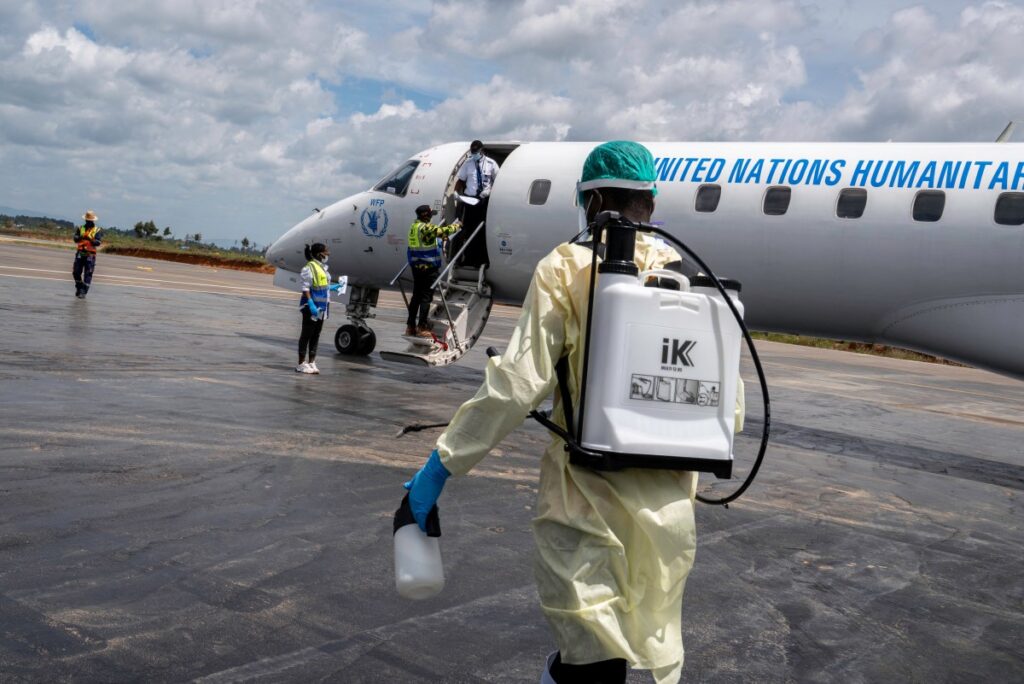
GENEVA, SWITZERLAND – In a coordinated response to a rapidly spreading Ebola outbreak that has triggered regional public health alarms, the World Health Organization (WHO) and the African Union’s Africa Centres for Disease Control and Prevention (Africa CDC) unveiled a $518 million joint intervention framework on Friday aimed at containing the virus and stopping cross-border spread.
The six-month initiative, which will run from June through November, targets the ongoing outbreak of the rare Bundibugyo Ebola strain first formally declared in northeastern Democratic Republic of the Congo (DRC) on May 15. Health officials confirm the virus had likely been circulating undetected in the region for an extended period before the formal declaration, allowing transmission to gain a foothold.
As of the WHO’s most recent official update, the outbreak has been linked to 381 confirmed cases and 64 fatalities across three DRC provinces. The epicenter of the crisis remains Ituri province, which Africa CDC data shows accounts for 90% of all confirmed infections and 76% of recorded deaths. The virus has already crossed the DRC’s northeastern border into Uganda, where 16 confirmed cases and one death have been recorded to date.
Addressing reporters at a press briefing, WHO Director-General Tedros Adhanom Ghebreyesus outlined the six core priorities of the new plan: coordinated emergency response management, enhanced disease surveillance, expanded laboratory testing capacity, universal infection prevention and control protocols, improved patient clinical care, and targeted community engagement to build trust and spread accurate public health guidance.
“This is a practical, time-bound and fully costed plan,” Tedros explained. “It lays out clear, shared actions we need to implement immediately to contain the current outbreak and cut the risk of further regional spread.” He added that the total budget for the six-month effort totals $518 million, covering all program activities across the response period.
Africa CDC officials note the current outbreak is already larger than the two previously recorded outbreaks of the Bundibugyo strain, which occurred in 2007 and 2012 respectively. A critical challenge facing response teams is the lack of any officially approved vaccines or targeted treatments specifically for this strain of Ebola, complicating clinical care and prevention efforts for frontline workers.