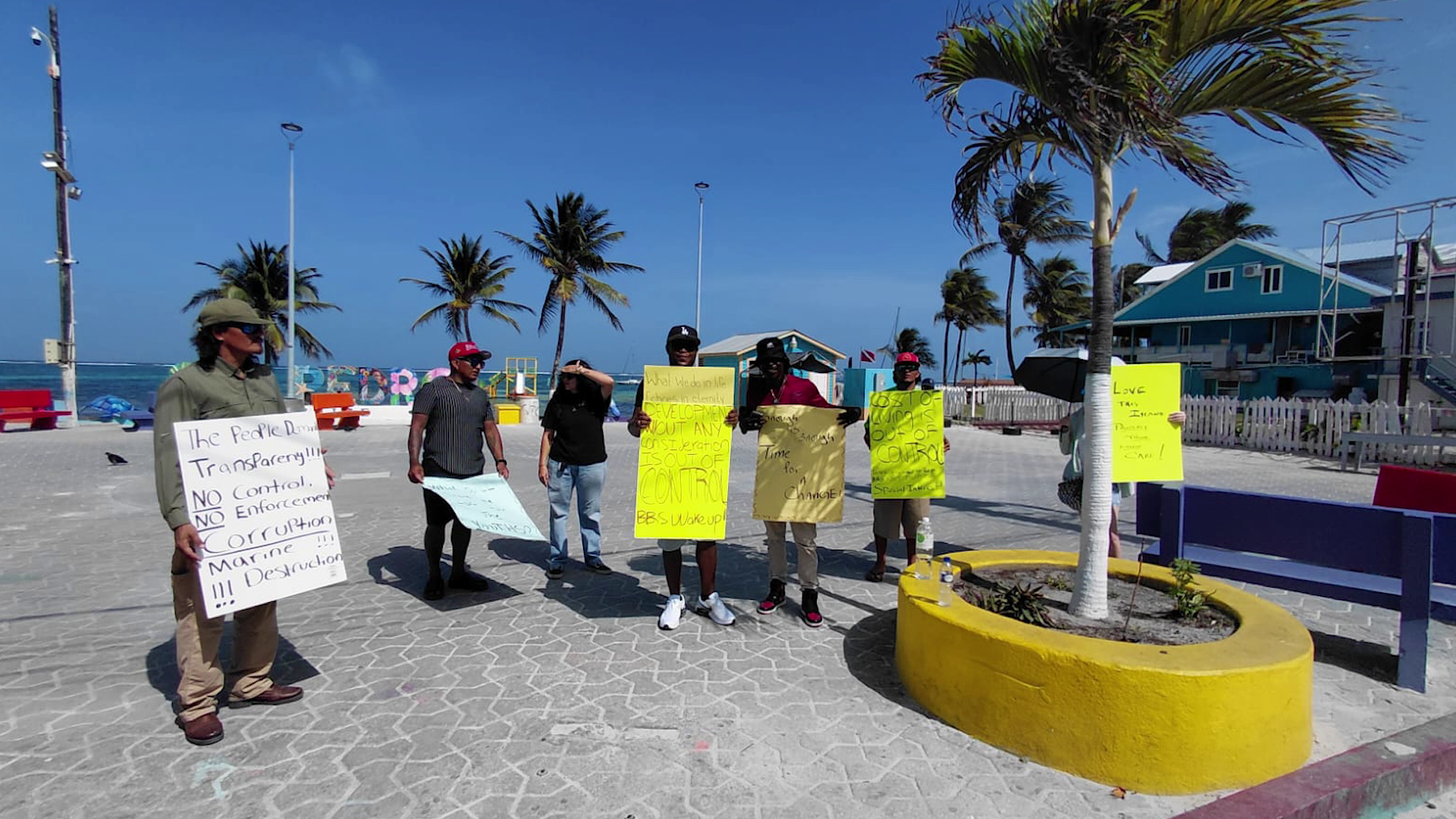
On June 3, 2026, a small but determined group of 30 demonstrators took to the streets of San Pedro on Ambergris Caye, Belize, to give voice to simmering public anger over two escalating crises: soaring living costs and unregulated large-scale development that threatens the island’s critical natural ecosystems. What began as a planned demonstration outside the office of local Area Representative Andre Perez was re-routed after the Belize Police Department denied approval for the original route, forcing organizers to shift the march path from Saca Chispas Stadium to the town’s Central Park.
Even though the final turnout was far lower than organizers anticipated, participants insist the low numbers do not reflect the depth of discontent across the island. Instead, they point to a pervasive culture of fear bred by systemic corruption and official intimidation that keeps many residents from speaking out publicly. Protest organizer Celestino Tzul, who has announced his 2027 candidacy for San Pedro mayor on a platform of local change, emphasized that the small crowd is a clear indicator of how widespread intimidation has become. “This is not a resemblance of where we stand,” Tzul shared in a phone interview. “This just shows that the people are living in fear, that the people are afraid to be victimized.”
Longtime San Pedro resident Abner Bacab echoed that sentiment, noting that while hundreds of residents vent their frustrations on social media platforms like Facebook, few are willing to attend public protests. “Everybody posts on Facebook. When it comes to show up, people are basically, I think they’re afraid, they’re intimidated because of what has been happening here in Belize because of the different corruptions in different system, no? So but again, if we don’t stand up for ourselves, who will, no?” Bacab said.
Two core demands anchor the protest movement. The first is urgent action to address the island’s collapsing cost of living, driven by skyrocketing fuel and diesel prices that have pushed household budgets to breaking point. Producers argue that Belize’s overreliance on foreign aid rather than domestic economic growth has compounded the crisis, and they are calling on the national government to implement proactive policies to boost local productivity and ease financial strain for working residents. “The government needs to figure out that. We need to work together and they have to figure out how we can become a country that is productive rather than a country that is just taking handouts,” Tzul said.
The second, equally pressing demand is greater transparency and public consultation for coastal dredging projects that have already caused widespread damage to Belize’s irreplaceable marine ecosystems – including the world-famous Belize Barrier Reef, mangrove forests, lagoons, and coastal habitats that underpin the island’s $1 billion-plus tourism industry. While the national government has announced a temporary pause on some dredging operations, residents remain skeptical and say no projects should move forward without full public input and independent environmental impact assessments. For local residents, protecting these ecosystems is not just an environmental issue – it is a fight to protect their livelihoods. “If all these ecosystems are damaged, then nobody will come here, right? So we’re actually fighting to protect our livelihood,” Bacab explained.
After the march concluded at Central Park, demonstrators stayed to continue voicing their demands and build momentum for future action. Tzul has already announced plans for a second, larger protest in the coming weeks, saying he hopes more residents will overcome their fears and join the movement. He stresses that the campaign is not rooted in partisan politics, but in a shared fight for the future of San Pedro and its youth. “This is not politics. This is about our livelihood. This is about our future. This is about our youth,” Tzul said. “The country itself is suffering. How much more can we take or how far are we gonna take this?”
Local correspondent Britney Gordon of News Five contributed on-the-ground reporting to this story.