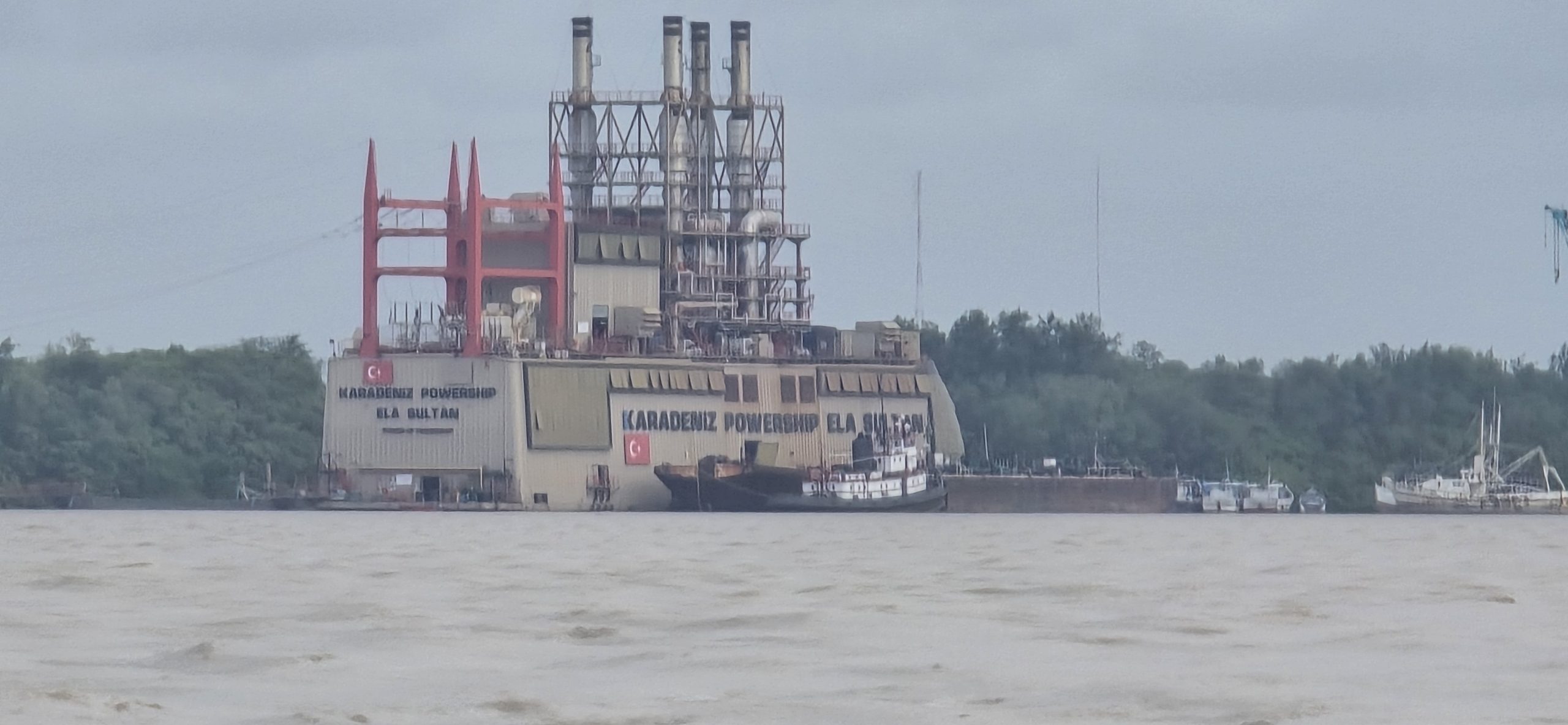
On the eve of a looming deadline that could trigger major electricity cuts across Guyana, top government officials have remained unresponsive to repeated requests for clarification on whether a last-minute deal has been struck to keep two floating Karpowership power plants operational. Multiple attempts to reach President Irfaan Ali, Vice President Bharrat Jagdeo, and Public Utilities Minister Deodat Indar for an update on the negotiations went unanswered on Sunday, May 31, 2026, just 24 hours before the existing contract is set to expire. When contacted, Alfonso de Armas, Director-General of the Ministry of Public Utilities and Aviation, directed all inquiries to Indar, who was accompanying the president on a public outreach trip to Region Seven (Cuyuni-Mazaruni).
The standoff stems from a formal notification Karpowership sent to the Guyanese government on May 25, 2026, warning that all operations from its two power-ships would cease if a new long-term agreement was not finalized by June 1. The Turkey-based energy provider had already granted a final extension of the existing contract to reach this deadline, a detail first confirmed when the privately-run Kaieteur News published the full correspondence, which was copied to GPL Executive Team Leader Kesh Nandlall. In the letter, Karpowership urged authorities to accelerate internal negotiations and approval processes between May 25 and May 31 to wrap up the new contract without further holdups. The firm stressed that updating and aligning commercial terms and pricing structures for all its operations across Guyana remains a non-negotiable requirement to continue supplying power to the national grid. “We trust the remaining matters can now be concluded promptly to avoid any interruption to operations,” the company wrote in the correspondence.
The potential shutdown carries major stakes for Guyana’s electricity supply. The two Karpowership vessels currently contribute a combined 96 megawatts to the national grid: the moored vessel at Meadow Bank on the Demerara River supplies 60 megawatts, while the second vessel at Everton on the Berbice River adds 36 megawatts. The country’s total peak electricity demand tops 220 megawatts, meaning the remaining supply from state-run Guyana Power and Light (GPL) and private partner Power Producers and Distributors Inc (PPDI) would fall far short of meeting consumer and industrial demand if both power-ships go offline. Beyond the immediate gap, the long-delayed Wales Gas-to-Energy facility – which is expected to add up to 300 megawatts of generation capacity once fully operational – will not come online before the end of 2026, leaving no backup source to offset the lost supply in the short term. As of Sunday afternoon, senior officials had not offered any public comment on whether alternative backup plans are in place, or whether GPL and PPDI have enough capacity to avoid widespread blackouts if the deadline passes without a deal.