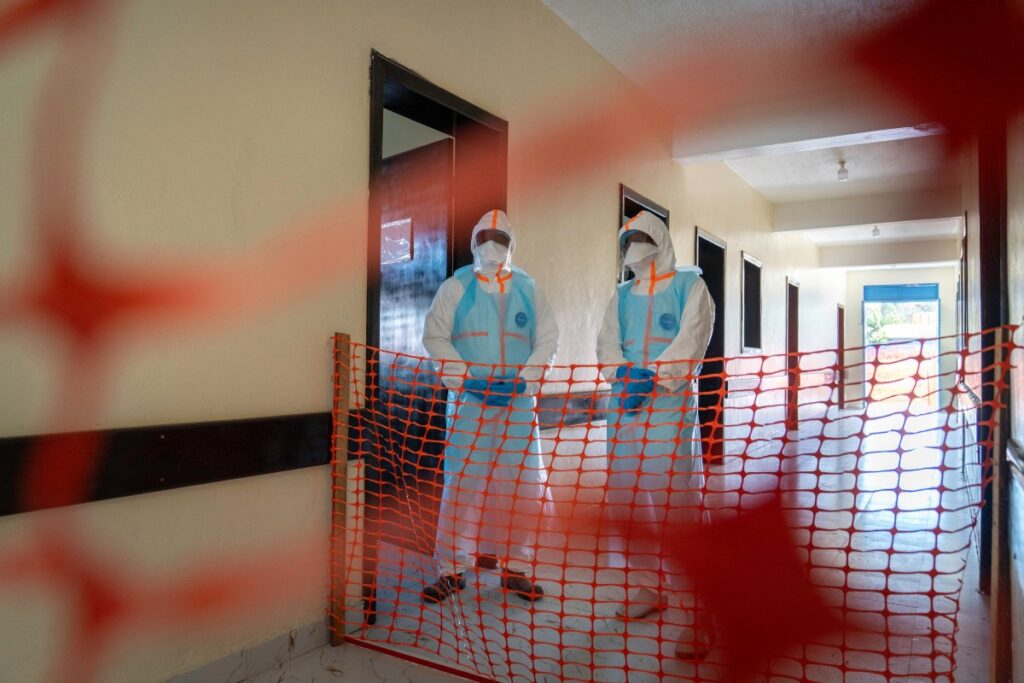
BRASÍLIA, Brazil – Public health authorities in Brazil have confirmed that two international travelers arriving from African nations have been placed in quarantine isolation after developing clinical symptoms consistent with Ebola virus disease, a development that has sparked global awareness of the potential for the deadly pathogen to spread beyond its current African epicenter.
The first suspected case involves a 37-year-old male who recently returned from the Democratic Republic of Congo (DRC), the ground zero of the ongoing Ebola outbreak. In a public statement released Saturday, the Sao Paulo state government noted the patient had developed Ebola-defining symptoms, including a high fever. He was immediately moved to a specialized isolation ward at the Emilio Ribas Institute of Infectious Diseases, one of Brazil’s leading infectious disease treatment facilities.
In a follow-up update released Sunday, health officials shared that initial diagnostics have identified a severe case of meningitis in the patient, but additional confirmatory testing for Ebola is still ongoing to rule out the viral infection.
A second suspected case is being monitored in Rio de Janeiro, where a male traveler who entered the country from Uganda on May 22 was placed in isolation after presenting a suite of viral symptoms including persistent cough, body chills, and diarrhea. Local Rio de Janeiro City Hall representatives confirmed to AFP on Sunday that the patient has already tested positive for malaria, though the case remains active under epidemiological investigation to exclude Ebola as a co-infection or alternative diagnosis.
The current Ebola outbreak in central Africa has already grown to alarming proportions. On Thursday, the Africa Centres for Disease Control and Prevention reported that since the outbreak was formally declared on May 15, the DRC has recorded more than 1,000 suspected Ebola cases, with the death toll nearing 250. Neighboring Uganda has also been impacted, with multiple confirmed infections and one recorded death attributed to the virus.
The World Health Organization has issued a stark warning that the actual scope of the outbreak is likely far larger than official counts indicate. Because the virus was circulating quietly in the DRC for some time before it was detected by surveillance systems, many cases are believed to have gone unreported.
Despite the triggering of precautionary measures for the two suspected cases, Sao Paulo’s state health department emphasized that the broader risk of Ebola establishing a foothold in Brazil and the wider South American region remains extremely low based on current technical risk assessments.