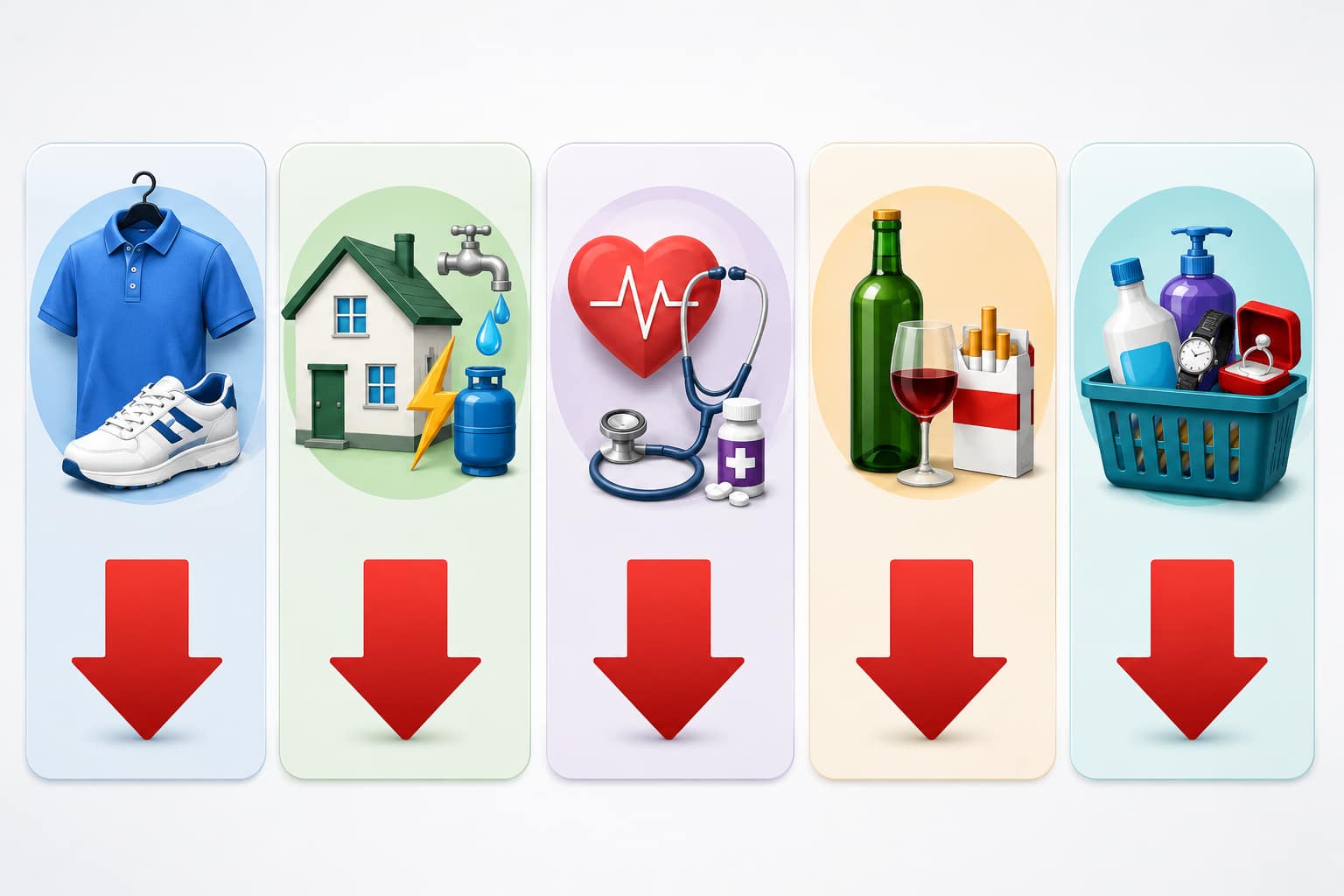
When the National Bureau of Statistics of Antigua and Barbuda released its latest Consumer Price Index (CPI) data for April 2026, the headline figure of 3.1% annual inflation told only part of the story. Far from a broad-based increase in consumer costs, the new report reveals a deeply split inflation landscape, with nearly half of the nation’s 12 core consumer spending categories actually registering year-over-year price drops, contradicting assumptions of universal cost growth across the economy.
Digging into the details of the CPI breakdown, two categories posted the steepest annual deflation, with both clothing and footwear, and miscellaneous goods and services recording a 4.4% price decline compared to April 2025. Health care costs followed with a 2.3% drop, while the broad housing, water, electricity and other fuels category saw a 1.3% overall reduction. Even alcoholic beverages, tobacco and narcotics posted a minor 0.2% price decrease over the 12-month period.
The downward shift in housing-related costs was not a random fluctuation: the trend was fueled in part by an 1.8% drop in electricity prices year-over-year, alongside a 1.4% decrease in actual rental rates for residential properties, bringing tangible relief to households’ largest recurring expense.
While falling prices in these sectors provided a counterweight to overall inflation, sharp spikes in other categories were large enough to push the aggregate inflation rate above the 1.7% recorded in March 2026, marking the second straight month of accelerating year-on-year price growth. Transportation saw the most dramatic jump among major categories, surging 18.8% annually. This increase was driven almost entirely by a staggering 60.3% rise in transport services, as regional and international airline fares pushed travel costs sharply higher.
Recreation and culture followed with an even steeper 30.2% annual cost increase, while education costs climbed 13.3% and prices at restaurants and hotels rose 4.5%. For the closely watched food and non-alcoholic beverages category, the overall annual increase clocked in at a modest 1.2%, with core food prices alone rising just 0.3% thanks to falling costs for many staple goods. Consumers saw fruit prices drop 12.9%, milk, cheese and egg products fall 6.5%, and meat products decline 5.2%—offsets that kept overall food inflation muted even as vegetable and seafood prices rose.
Breaking down the full CPI structure, five of the 12 top-level expenditure categories recorded price decreases, seven posted increases, and at the more granular sub-group level, 12 categories had higher prices, 10 had lower prices, and one held steady from 2025.
This fragmented inflation landscape means the cost of living impact varies dramatically for different households across Antigua and Barbuda, the statistics office noted. Families that allocate a large share of their monthly budget to travel, leisure activities and education are facing significantly steeper expenses than a year ago, while households whose spending is concentrated on housing, health care and staple food items like fruit and meat have actually seen their cost burdens ease in these key areas.