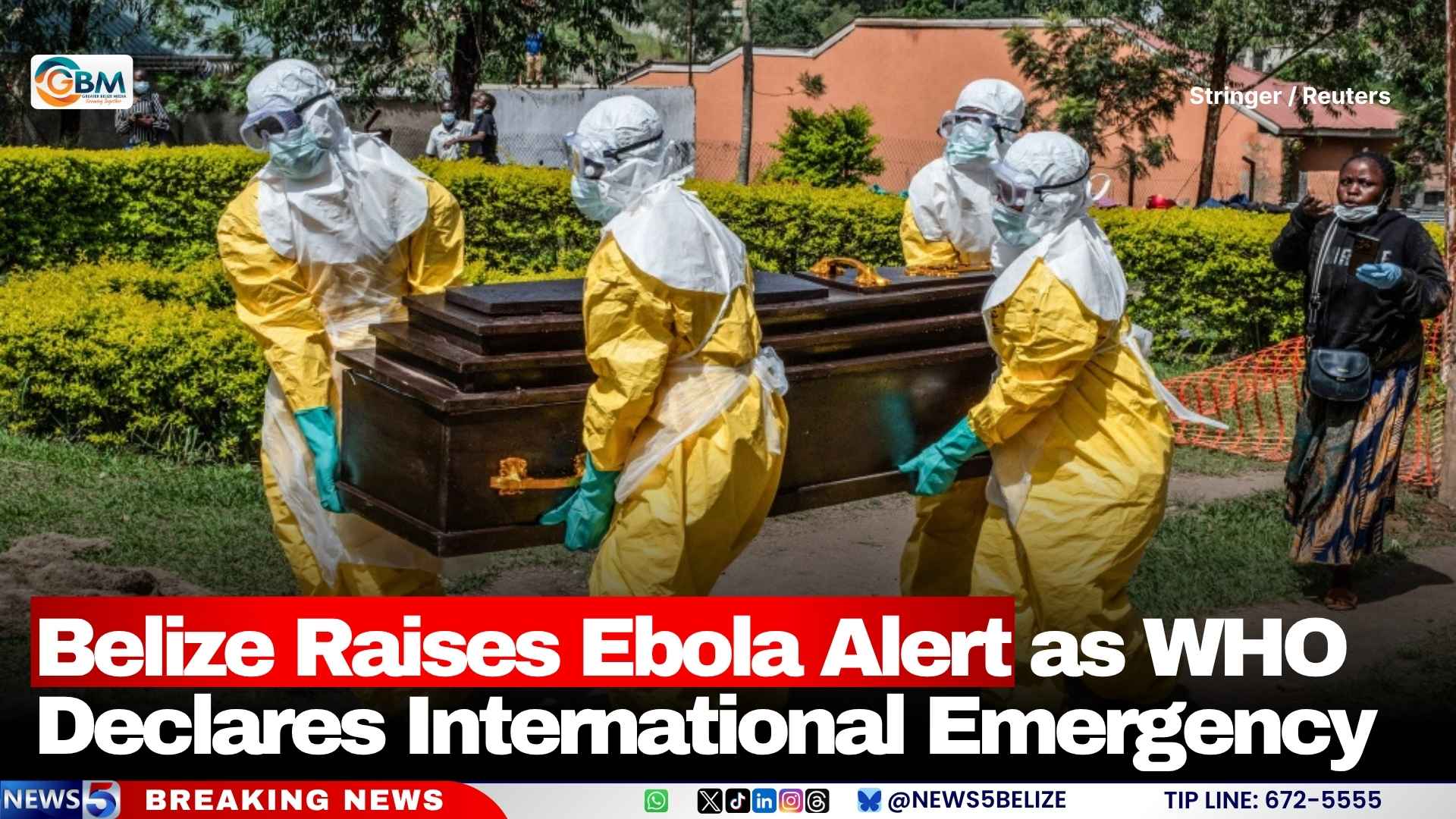
In response to the World Health Organization’s classification of the expanding Ebola outbreak in the Democratic Republic of the Congo (DRC) and Uganda as a Public Health Emergency of International Concern (PHEIC), Belize’s Ministry of Health and Wellness (MOHW) released an urgent public advisory on Thursday, May 30, 2026, activating enhanced national Ebola surveillance protocols. As of the advisory’s release, no suspected or confirmed Ebola cases have been detected in the Central American nation, but public health officials have moved quickly to scale up entry screening at every official port of entry across the country.
The ongoing outbreak is driven by the rare Bundibugyo Ebola strain, a variant for which no globally approved vaccine or targeted antiviral treatment is currently available. Congolese health officials first confirmed the outbreak’s presence on May 15, 2026. Just four days later, by May 19, official counts had already surpassed 500 suspected cases and 130 suspected deaths across affected regions. On May 17, WHO Director-General Tedros Adhanom Ghebreyesus formally designated the crisis a PHEIC — the highest level of global public health alarm defined by the International Health Regulations — stopping short of upgrading the classification to a full pandemic emergency. Following the cross-border spread of the virus into its territory, Uganda quickly moved to close its entire land border with the DRC to contain transmission.
In its official advisory, Belize’s MOHW emphasized that the current population-level risk of Ebola transmission within the country remains low, but stressed that proactive pre-emptive measures are critical to preventing an imported outbreak. The ministry has launched a coordinated cross-agency response, partnering with the Belize Airport Authority, national border management services, immigration departments, customs authorities, civil aviation regulators, major cruise line operators, and commercial airline partners to reinforce screening protocols and rapid response workflows at all international airports, land border crossings, and commercial seaports.
Travel officials are urging all incoming visitors to provide complete and accurate information about their recent travel history to border inspection agents. As a precautionary step, any traveler returning from the affected Central African regions is advised to complete a voluntary self-isolation period to monitor for potential symptoms. Any individual who has traveled to the outbreak zone and develops consistent symptoms is instructed to contact the MOHW’s dedicated 24/7 helpline at 0-800-MOH-CARE immediately, and to avoid close contact with other people while arranging for medical evaluation.
Ebola is an uncommon but frequently fatal viral pathogen that spreads primarily through direct contact with blood or other bodily fluids from an infected person, whether symptomatic or deceased. The virus’ incubation period ranges from 2 to 21 days after exposure, with early stage symptoms including high fever, extreme fatigue, muscle ache, headache, and sore throat. As the disease progresses, patients often develop vomiting, diarrhea, abdominal pain, unexplained hemorrhaging, and widespread rashes. Historically, the Bundibugyo strain has recorded a case fatality rate between 30% and 50% among confirmed infections.