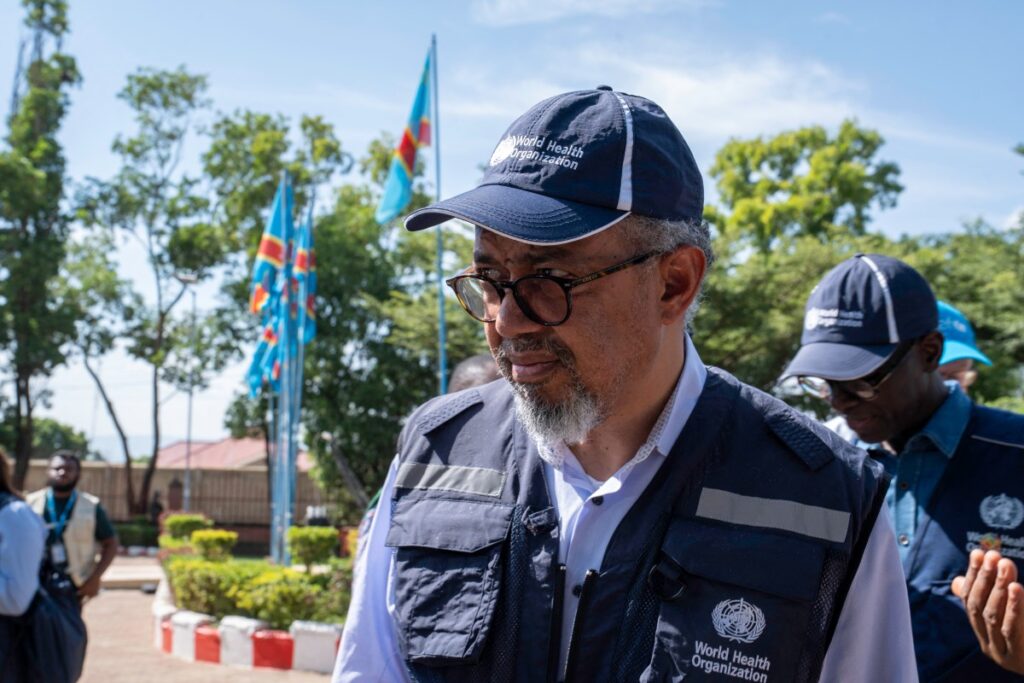
In a high-stakes visit aimed at accelerating the global response to one of Africa’s most pressing public health crises, World Health Organization Director-General Tedros Adhanom Ghebreyesus touched down Saturday in Bunia, the capital of Ituri province—eastern Democratic Republic of the Congo’s region worst impacted by the spiraling Ebola outbreak, an Agence France-Presse journalist on the ground confirmed.
Tedros had publicly signaled his upcoming trip in advance, stating his core goals were to extend support to affected communities and hear directly from people on the frontlines of the outbreak who have borne the brunt of the epidemic’s impact.
The highly transmissible hemorrhagic fever, which triggers severe internal bleeding and carries a high mortality rate, has already spread across three eastern provinces of the DRC and crossed the border into neighboring Uganda. Ugandan health authorities have logged nine confirmed infections to date, including one recorded fatality.
Data released Thursday by the Africa Centres for Disease Control and Prevention places the scale of the outbreak at a minimum of 1,077 suspected Ebola cases in the DRC since it was formally declared on May 15, with 246 confirmed deaths linked to the virus.
Speaking to reporters shortly after his arrival, Tedros emphasized that global health efforts are being coordinated under the leadership of the DRC national government, while noting that local community buy-in and leadership remain a critical, non-negotiable component of effective outbreak mitigation. “That’s why we are here: to discuss with the community, to assess how the response is progressing, and to address any unmet challenges that require additional support,” he explained.
However, the World Health Organization has issued a stark warning that the actual scope of the epidemic is almost certainly far larger than official counts indicate. Health officials believe the virus was circulating undetected in the region for some time before it was officially identified, and systemic weaknesses in local health infrastructure have hampered full surveillance.
The DRC, a vast Central African nation grappling with decades of chronic instability, faces particularly steep barriers to controlling the outbreak: its impoverished eastern region has been battered by 30 years of armed conflict, leaving the country with severely limited capacity to carry out the widespread laboratory testing needed to confirm suspected cases and track transmission chains.