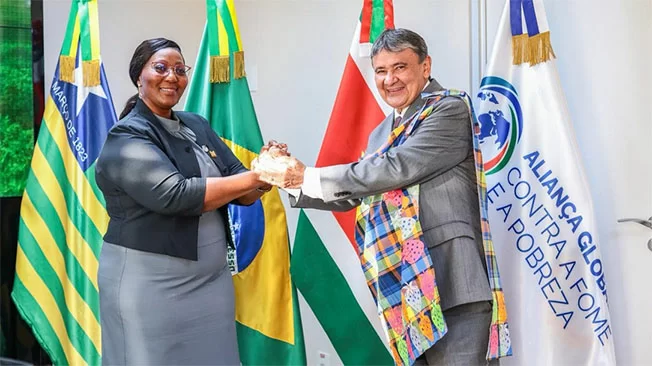
Against the backdrop of a state visit by Suriname’s President Jennifer Simons to Brazil, high-level bilateral talks between the two South American nations have centered on strengthening social protection cooperation, with Suriname actively exploring the adoption of key components of Brazil’s globally recognized Bolsa Família anti-poverty initiative. The discussions were held Tuesday between Suriname’s Minister of Social Affairs and Housing Diana Pokie and her Brazilian counterpart Wellington Dias, marking a key milestone in cross-border knowledge sharing for poverty alleviation.
Bolsa Família, first launched during the current administration of Brazilian President Luiz Inácio Lula da Silva’s earlier term, is widely regarded as one of the most successful conditional cash transfer programs in Latin America. The initiative combines direct financial aid to low-income households with mandatory requirements for children’s school attendance and family access to basic healthcare, a model that has lifted millions out of extreme poverty across Brazil.
During the bilateral meeting, officials focused on unpacking Brazil’s decades of expertise in three core areas of social policy: national social registration systems, conditional cash transfer frameworks, and integrated social assistance delivery mechanisms. Ahead of the presidential visit, working groups and designated focal points from both governments have already completed preliminary work on a Memorandum of Understanding (MOU) to formalize bilateral cooperation around the Bolsa Família adaptation project, according to Suriname’s Ministry of Social Affairs and Housing.
In remarks following the closed-door talks, Minister Pokie emphasized that the meeting represented a critical opportunity to exchange on-the-ground lessons and address shared social development challenges faced by both nations. “As governments, we share a collective responsibility to improve the quality of life for our populations, especially the most vulnerable groups within our societies,” Pokie said. She outlined the core priorities of Suriname’s ongoing social policy reform: expanding and strengthening national social protection systems, enhancing support services for at-risk low-income families, advancing social inclusion for people living with disabilities, and shoring up national food security and social safety net mechanisms.
Minister Dias characterized the talks as constructive, confirmed Brazil’s full commitment to deepening bilateral social policy cooperation, and extended an open acceptance of a future reciprocal visit to Suriname to advance joint work. Pokie expressed profound gratitude for Brazil’s willingness to share its decades of implementation expertise with Suriname, noting that the partnership builds on longstanding ties between the two nations. “We look forward to productive next steps and to further strengthening the bonds of friendship, solidarity, and cooperation between our two countries,” Pokie added.