When Prime Minister Godwin Friday’s New Democratic Party (NDP) swept into power in St. Vincent and the Grenadines last November, ending a quarter-century of Unity Labour Party rule, the incoming administration expected fiscal challenges. What it uncovered, however, was a public finance crisis far deeper than any public disclosures or opposition analysis had prepared it for.
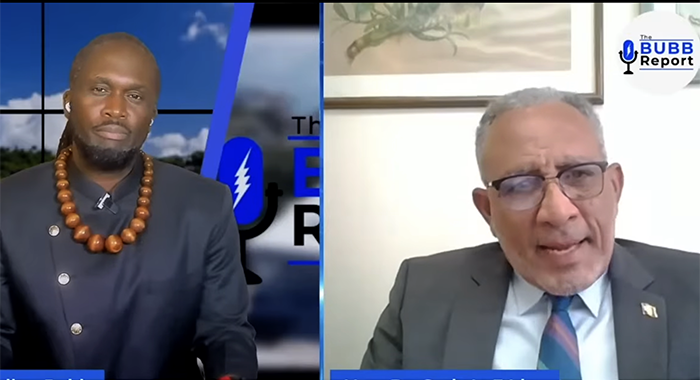
In a bombshell interview with Grenadian journalist Kellon Bubb on *The Bubb Report*, broadcast Sunday, Friday detailed the extraordinary fiscal reckoning his government is now navigating, framing the administration’s immediate priority as a urgent “course correction” to pull the country back from unsustainable debt levels.
Even after years of reviewing government budgets from the opposition benches, Friday said the true scale of the nation’s debt burden remained hidden until the NDP took office. “To be honest with you, I thought there was nothing about the economy that could surprise me,” he shared. “We knew that things were pretty difficult… but I was not quite ready for the depth of the crisis that we found ourselves in, in terms of the finances of the country.”
Long publicly pegged at a debt-to-GDP ratio around 90%, the actual figure clocked in at 113% — and projections show it will climb even higher in the near term. Friday described the country’s public finances as “very precarious”, noting that the government’s overdraft facility was completely maxed out, and the ballooning debt is already crippling the state’s ability to deliver policy programs and public services to citizens.
The incoming government’s discovery of the crisis overlapped with the existing national budget timeline, leaving little room to build a new fiscal plan from scratch. “We had to, essentially, tag on to the budget process that was there, because we didn’t have time to redo the entire thing ourselves, at the same time acknowledging that we are in really worse economic shape than we had thought,” Friday explained, adding that even the NDP’s sharpest opposition criticism fell short of the reality the party inherited.
Friday attributed the crisis to systemic fiscal recklessness from the previous administration, which he said disregarded long-standing fiscal guardrails in pursuit of short-term priorities. “We’ve been saying this all the time when we were in opposition: you can’t disregard the guardrails and simply say, ‘Well, I’m doing it in the best interest of the people,’” he said. “In the end, if you are reckless and you don’t pay attention… the very people that you say you want to help are the ones who are going to wind up paying the cost of it.”
To reverse the trajectory, Friday’s administration has committed to returning to the Eastern Caribbean Central Bank’s recommended 60% debt-to-GDP cap, a target that is far more challenging to reach today after years of unreported debt growth. “But we have to signal… that we want to turn it around,” he emphasized.
On the global stage, the prime minister laid out a clear plan for rules-based, collaborative engagement with international financial institutions including the International Monetary Fund. While Friday acknowledged that working with these bodies is unavoidable for a small nation facing fiscal crisis, he stressed that any partnership will be rooted in domestic priorities and democratic accountability.
He described the institutions’ policy advice as thoughtful and constructive, framing engagement as a collaborative rather than adversarial process designed to support the country’s social and development goals. At the same time, he noted, “They have their views, their positions, and they cannot be ignored… but we also have our own understanding of the needs of [the] country, of the people, and we are politicians as well. We have to listen to the voice of the people. That’s the nature of democracy.”
Friday outlined a multi-pronged strategy to reduce the debt burden, including pursuing debt swaps, seeking international debt forgiveness, and securing new concessional loans with favorable terms. But the prime minister stressed that sustainable economic growth is the only long-term solution to the nation’s fiscal woes.
External analysts project St. Vincent and the Grenadines’ growth will remain below 3% in the coming term, and Friday framed lifting growth above that threshold as his administration’s core economic test. The NDP won a landslide mandate in November’s election, taking 14 of 15 parliamentary seats, running on a promise to deliver improved living standards, security and opportunity to all Vincentians.
To drive that growth, the government is launching an aggressive push to attract foreign direct investment that aligns with national development priorities and creates local jobs, while unlocking untapped domestic private capital — a critical priority in a region that faces persistent capital scarcity. “Where we can have investment that fits with our own developmental goals, that creates jobs, that are responsible for our people, we invite and will court such investments,” Friday said. “You will see during the term of this government… a tremendous push in investments that will create jobs and business opportunities for people. That’s the way we get out of the debt.”
Ultimately, Friday said, growth must deliver tangible benefits for citizens: better-paying jobs, expanded business opportunities, and robust social programs, not just improved fiscal ratios. “We have to find mechanisms for our people to find work, better-paying jobs, to have business opportunities, and where social programmes are necessary… they are put in place,” he said.