A recent viral video capturing a violent student assault at a secondary school in Chaguanas has pushed school safety and disciplinary policy into the spotlight of Trinidad and Tobago’s parliamentary debate, prompting the nation’s top education official to reaffirm a hardline stance against campus violence.
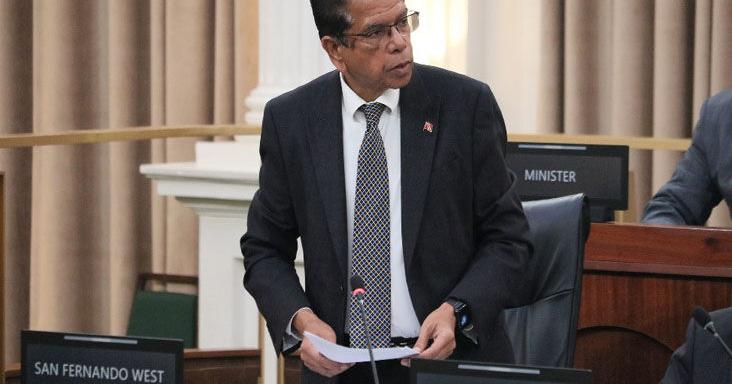
During Wednesday’s parliamentary sitting held at the Red House in Port of Spain, Education Minister Dr Michael Dowlath addressed questions from Opposition Member of Parliament Dr Nyan Gadsby-Dolly, who centered her query on the widely circulated footage of the attack on a male student earlier that week. Gadsby-Dolly pressed for clarity on two key points: whether the Trinidad and Tobago Police Service (TTPS) had been officially brought into the case, and what steps had been launched to hold the students responsible for the beating accountable.
Responding to the first set of questions, Dowlath confirmed that ministry officials have already received an initial incident briefing from Chaguanas South Secondary School, the campus where the assault took place. He confirmed that school administration has formally reached out to the Chaguanas Community Police unit, and the full investigation is currently underway under law enforcement oversight. For the implicated students, Dowlath noted that the school has already launched its internal disciplinary process, collecting written testimonies from both the involved students and independent witnesses. Parents of all implicated students have already been contacted and summoned to a meeting at the school, and the ministry has ordered the school to hold formal disciplinary hearings aligned with national education policy and the National School Code of Conduct, after which official disciplinary measures will be finalized. The ministry will maintain active oversight of the case to ensure the disciplinary process concludes properly and that the school continues full cooperation with the TTPS, Dowlath added.
Turning to the broader question of systemic responses to rising campus violence, bullying, and gang-related activity in secondary schools, Dowlath outlined a series of updated and expanded measures the ministry has rolled out to improve school safety. Most notably, the ministry has recently revised and strengthened the National School Code of Conduct, adding more explicit, clear provisions governing violent acts, in-person bullying, cyberbullying, gang-associated behavior, weapon possession, and other severe instances of misconduct. He repeated that a zero-tolerance framework remains in full effect for all serious violent acts that put student safety at risk.
To reinforce on-the-ground safety, the national Police in Schools Programme remains active across 51 of the nation’s highest-risk secondary schools, with supplementary police patrols and cross-agency partnership deployed when needed. The ministry’s Student Support Services Division continues to deliver targeted support for at-risk students, including professional counseling, behavioral intervention programs, psychosocial support, conflict resolution training, and external referrals for students requiring more intensive support. Individual schools also receive guidance and training on evidence-based behavioral management strategies, restorative justice practices, and timely conflict intervention to de-escalate tensions before they escalate into violence. Dowlath emphasized that the ministry maintains ongoing close collaboration with parents and local school communities to strengthen student oversight, improve disciplinary standards, and expand early intervention for at-risk youth. To close, he noted that the ministry continuously tracks data on student disciplinary actions and suspensions, using this data to refine intervention strategies and allocate support services where they are most needed.