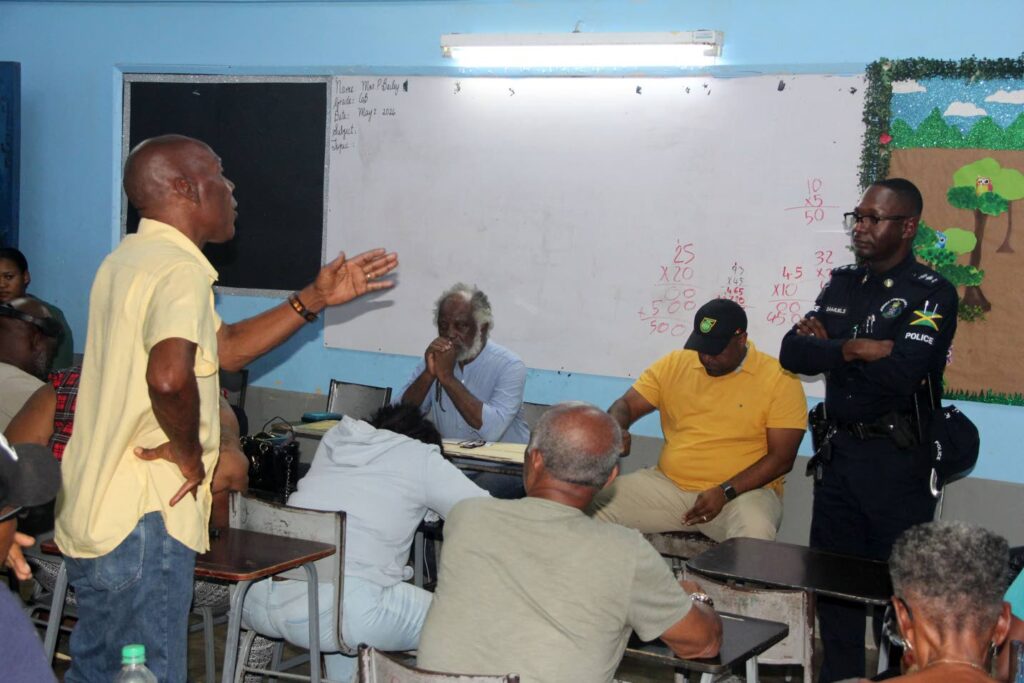
In the tense community of Granville, St James, Jamaica, a standoff has emerged between local law enforcement and residents following a string of controversial fatal shootings involving security forces. Senior Superintendent Eron Samuels, the commanding officer for the St James Police Constabulary, has drawn a hard line: while peaceful demonstrations, including a planned march this Sunday, remain permitted, no community event approvals will be issued until residents end their widespread road blockades.
Unrest has roiled Granville for weeks, sparked by back-to-back fatal police shootings that have left the community reeling. The most recent death came on May 17, 2026, when Latoya “Buju” Bulgin was shot and killed by a police officer while she was transporting people protesting an earlier killing. Seven days prior, 17-year-old Tjey Edwards—Bulgin’s cousin’s son—was shot dead by an officer during the wrap-up of a police operation in the area. These deaths come on top of three other fatal police shootings on New Year’s Day, which claimed the life of four-year-old Romaine Bowman and two adult men, leaving cumulative grief and anger simmering across the neighborhood.
In response to the killings, residents have erected repeated blockades on key access roads leading into and out of Granville. Last Monday’s demonstration was the most intense to date, forcing police and firefighters to spend days clearing barricades and extinguishing burning debris left by protesters. Speaking at a community meeting held Thursday evening at Granville Primary School, Samuels made his position clear to assembled residents: roadblocks are a non-negotiable red line that puts all event permits on hold.
“Blocking roads benefits no one, and that’s why I can’t approve any event permits right now,” Samuels told the crowd. He explained that ongoing blockades create a public safety hazard that makes hosting and attending community events unacceptably risky. “If roads are blocked anywhere in the area, all planned events get canceled immediately. The tension that comes with blockades means the space isn’t safe for organizers or attendees.”
Since blockades began, Samuels confirmed he has already been forced to reject permit applications for four upcoming community events. He stressed that residents cannot simultaneously maintain road blockades and expect approval for public gatherings: “You can’t have it both ways. Our priority is safety and security. Right now, our patrol resources are tied up responding to roadblocks instead of patrolling the neighborhood, monitoring public events, and keeping residents safe as they go about their daily lives. If we’re stuck playing cat-and-mouse with blockaders, we can’t do the work that supports the community.”
When pressed by residents about the string of recent fatal shootings, Samuels noted that all cases are currently active under investigation, and he is barred from commenting on ongoing probes. Still, he acknowledged the pain the community is feeling: “Any loss of life hurts everyone, on both sides. No one wants to see unnecessary death. We believe everyone should live out their full lives.”
Samuels also warned that blockades put ordinary residents at disproportionate risk, pointing to the community’s population of between 13,000 and 15,000 people. “If even one person needs emergency police or medical help and can’t get it because the road is blocked, that person could die,” he said. “A woman in labor might not get to the hospital in time, people can’t get to their jobs to earn a living. More harm comes from this action—it only makes a bad situation worse.”
The senior superintendent stressed that he is ready and willing to approve the planned Sunday peaceful march and upcoming funeral events honoring Bulgin, as long as residents commit to ending road blockades permanently. During the meeting, residents voiced sharp criticism of security forces’ conduct in the shootings. Bulgin’s own son spoke up to condemn police for failing to reach out to his family in the wake of her death, saying: “Everyone knows where Buju lives if they wanted to talk to us.”
For Samuels, a key priority right now is protecting the hard-won progress Granville has made over the past several years to reduce violence and stabilize the once-volatile neighborhood. “What we need to do now is rebuild the trust and relationship we had between police and this community,” he said. The Thursday meeting was also attended by prominent community activist O Dave Allen and Dwight Crawford, Deputy Mayor of Montego Bay.