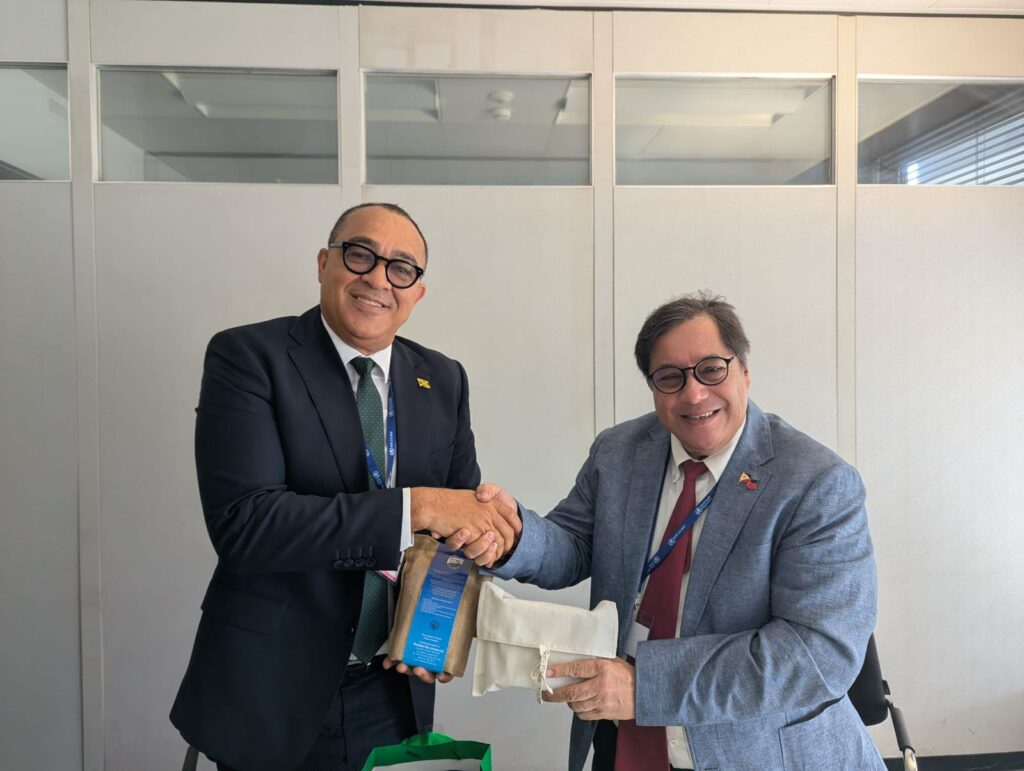
KINGSTON, Jamaica – As global health leaders gathered in Geneva for the 79th World Health Assembly (WHA), Jamaica’s Minister of Health and Wellness Dr Christopher Tufton leveraged the high-profile global forum to advance a pressing domestic priority: addressing crippling shortages of specialist nursing staff across the island’s public health system. On the sidelines of the assembly, Tufton held targeted bilateral negotiations and signed landmark memorandums of understanding (MOUs) with health ministers from Ghana, India, and the Philippines, laying out a multi-pronged framework to fill critical gaps and upskill local nursing workforces. Under the terms of these new agreements, imported specialist nurses will be recruited to fill urgent vacant posts across Jamaica, while Jamaican nursing professionals will also gain expanded access to remote specialized training from partner institutions. Outlining one key infrastructure investment tied to the deal, Tufton announced plans to launch a dedicated nursing simulation center in Jamaica, where local clinicians will complete hands-on training modules delivered remotely by international partners. This builds on ongoing diplomatic engagement: Tufton completed an official working visit to the Philippines last year to lay groundwork for the partnership, and a technical delegation from Manila is scheduled to travel to Jamaica in the coming month to finalize implementation details. Talks are also progressing with Apollo Hospitals, India’s largest private multi-specialty healthcare network, to facilitate recruitment of additional specialist clinical staff. A senior Apollo management team met with Jamaica’s health ministry earlier this month to advance negotiations, building on a 2002 joint communiqué between the two parties that has now moved to the active implementation stage for both nurse recruitment and local workforce training. In a May 12 sectoral budget address to Jamaica’s House of Representatives, Tufton detailed the severity of the country’s specialist nursing shortage, listing 12 high-need areas that require immediate staffing: critical and intensive care, oncology, paediatrics, accident and emergency, nephrology and renal dialysis, ophthalmology, neonatology, midwifery, psychiatry, burn care, and cardiothoracic care. The government is pursuing multiple parallel pathways to close the gap, beyond the new bilateral agreements with Ghana, India, and the Philippines. This year alone, 100 local Jamaican specialist nurses are on track to complete their required training and enter the workforce. More than 70 nurses have already completed interviews through a targeted diaspora recruitment drive, with successful candidates expected to begin assignments at public health facilities across the island over the coming quarter. Additionally, 48 nurses and doctors who received Barry Wint Memorial Scholarships will be deployed to understaffed public facilities once they complete their academic programs. To streamline all these international recruitment and training initiatives, Jamaica’s health ministry has launched a new dedicated International Recruitment Unit, which will act as the central coordinating body for all bilateral recruitment partnerships and diaspora hiring efforts. “This unit will focus on mitigating critical workforce shortages, particularly in specialised fields,” Tufton explained. “The unit will also assist in coordinating partnerships for training that involves cross border agreements.” Alongside workforce expansion, the ministry is also investing in local training infrastructure, upgrading in-house training facilities in partnership with the Kingston School of Nursing to expand both in-person and remote course offerings. Expanded hospital facilities across the island will also create additional clinical rotation spaces to support the training of new nursing staff. Parallel to Jamaica’s domestic workforce initiatives, WHA delegates took a major global public health action on Thursday, approving a landmark resolution formally recognizing steatotic liver disease (SLD) – a chronic condition previously known as non-alcoholic fatty liver disease – as a fast-growing contributor to the global noncommunicable disease (NCD) burden. The resolution notes that an estimated 1.7 billion people worldwide live with SLD, making it one of the fastest-increasing causes of chronic liver disease globally. SLD is closely linked to common metabolic conditions including obesity, type 2 diabetes, and cardiovascular disease, while alcohol-related liver damage remains a major secondary contributor to the overall global SLD burden. Without timely prevention and clinical intervention, SLD can progress to irreversible liver fibrosis, cirrhosis, and liver cancer, placing growing strain on health systems in both low- and high-income countries. The WHA resolution calls on all WHO member states to integrate SLD screening and management into national NCD control strategies, strengthen primary health care capacity to address the condition, improve population-level disease surveillance, and raise public awareness of SLD risk factors. It also urges governments to pursue cross-ministerial, multisectoral action to address shared NCD risk factors that drive SLD growth, including unhealthy diets, sedentary lifestyles, and harmful alcohol use. Finally, the resolution calls for expanded access to prevention, screening, diagnosis, and treatment services, with targeted outreach to high-risk populations including children and adolescents.