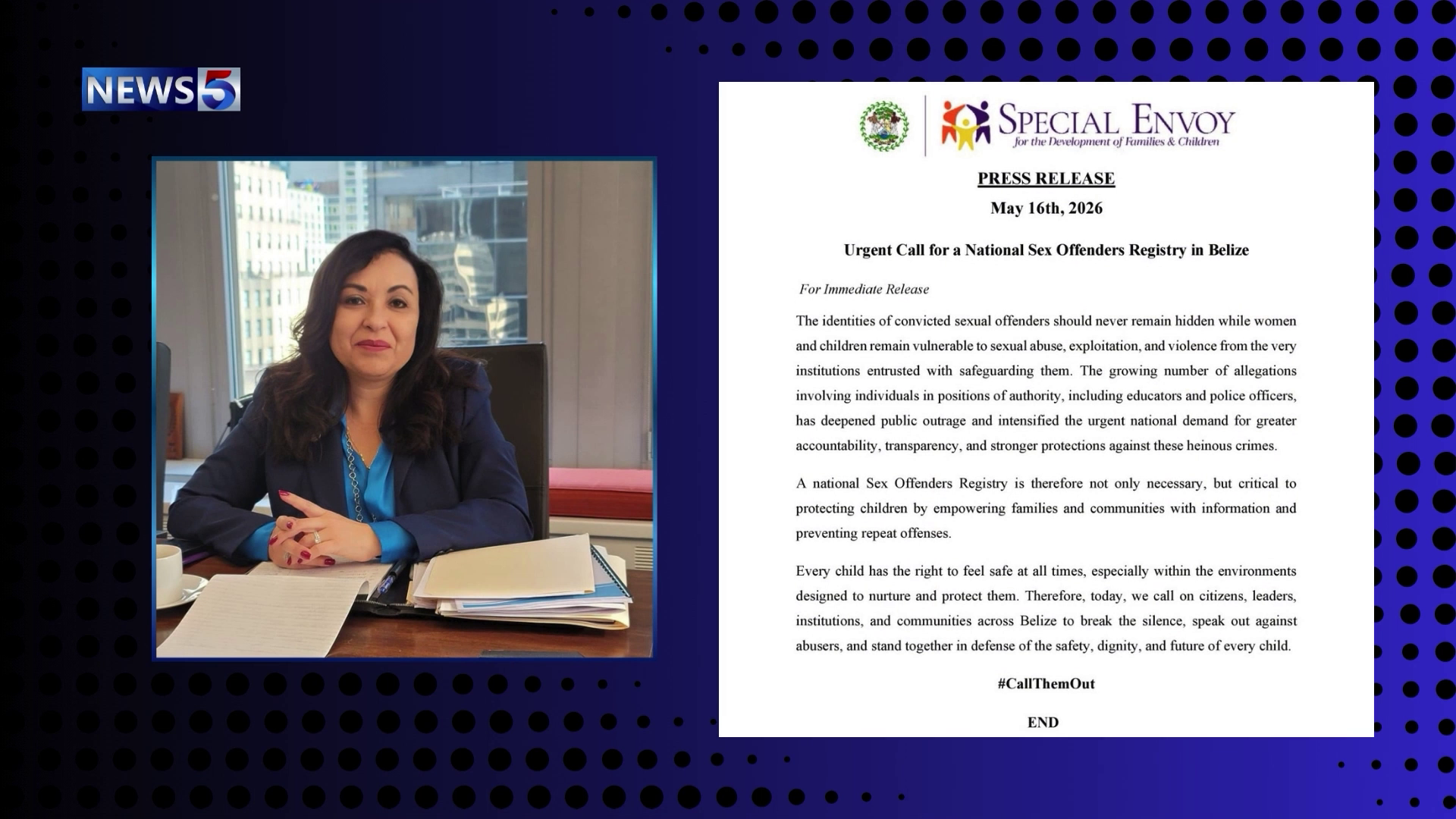
In a significant policy shift aimed at boosting community child protection, Belize’s top government body has thrown its full weight behind a proposal to turn the country’s existing private sex offender registry into a publicly accessible database. The initiative, led by Special Envoy for Families and Children Rossana Briceño, has cleared a key approval hurdle after winning unanimous support from Cabinet this week. Prime Minister John Briceño confirmed that the proposal is no longer in the preliminary planning stage: the Office of the Attorney General has already begun work to put the public registry into effect.
Speaking to reporters following Tuesday’s Cabinet session, the Prime Minister framed the move as a long-overdue measure that aligns with growing public demand for greater transparency around community safety. “I think it is something that the time has come,” he said, noting that while a registry has existed for years, it has remained entirely restricted to law enforcement and internal government use. When the proposal was brought to the full Cabinet for discussion, every member voiced immediate backing for the Special Envoy’s push. “On a serious note, it is something that is necessary,” the Prime Minister added, confirming that technical work on reporting frameworks for the new public system is already underway.
Currently, the registry is maintained jointly by the Ministry of Home Affairs and the Belize Police Department, but its records are not available to ordinary residents. Prime Minister Briceño explained that public access will add a critical extra layer of protection for children across the country. If residents are able to check whether a known sex offender lives in their neighborhood, they will be able to take extra precautions when they encounter that individual in public spaces such as local corner stores. This proactive transparency, he argued, will not only better protect vulnerable children and families but also strengthen accountability for convicted offenders.
This development marks a major milestone in ongoing efforts to strengthen child protection policies in Belize, responding to longstanding calls from child advocacy groups and community members for greater public access to information that impacts local safety.