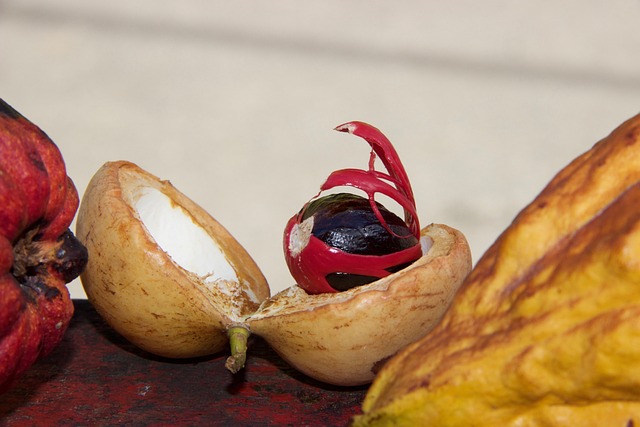
Grenada’s spice sector is poised for significant growth as agricultural authorities launch the second phase of a national replanting initiative, targeting large estates and commercial-scale producers with nearly half a million Eastern Caribbean dollars in dedicated funding.
The collaborative effort between the Ministry of Agriculture, Lands, and Forestry and the Grenada Co-operative Nutmeg Association (GCNA) builds on the first phase of the National Spice Replanting Programme, which was rolled out in the wake of Hurricane Beryl to support small-scale producers, household growers, local schools, and the Minor Spices Cooperative in Laura, St David. That initial round focused on expanding access to resources for smaller operations across the island; the new phase shifts focus to larger producers to create a holistic, industry-wide recovery.
Under the newly launched phase, eligible producers will receive a combination of direct financial assistance and specialized technical support to expand and rehabilitate their spice plantations. Farmers holding up to 20 acres of cultivation land can qualify for maximum grants of EC$20,000, while operations between 10 and 20 acres are eligible for up to EC$10,000 in support. Individual smallholders participating in the program will receive allocations between EC$3,000 and EC$5,000, tailored to the specific scope of their replanting and rehabilitation projects.
Speaking at the official launch on Tuesday, Chief Extension Officer Lauren St Louis explained that prioritizing large estates and commercial-scale farmers in this phase is a strategic decision to accelerate industry-wide recovery. “We need to revitalise our spice industry, so this programme is really to push that mandate to enable Grenada to get beyond pre-Beryl production to ensure that we remain the lead nation in spices,” St Louis said.
The initiative covers a wide range of Grenada’s iconic spice crops, including nutmeg, cocoa, ginger, cinnamon, pimento, vanilla, black pepper, and bay leaf, among other locally grown varieties. To boost the quality and market value of Grenada’s signature nutmeg output, program officials are encouraging participating farmers to cultivate specific high-performing varieties preferred by the GCNA: the Banda (or Mountain) Nutmeg, and the oval-shaped Popa Nutmeg, which is prized for its high essential oil content. The push for these varieties is designed to upgrade the country’s spice product portfolio, raise overall production quality, and increase the market value of Grenada nutmeg exports.
Senator Roderick St Clair, the government’s appointed farmers’ representative in the Senate, underscored that the inter-institutional partnership between the Ministry of Agriculture and GCNA is structured to deliver more than just funding — it prioritizes ongoing technical guidance to help producers meet long-term productivity goals. “The goal of this partnership is to ensure farmers receive the guidance and support necessary to implement the work required for successful farm rehabilitation and production,” St Clair noted. As part of the support structure, agricultural extension officers will be assigned to groups of 10 to 20 participating farmers via a centralized computerized work planning system, and all participating producers are required to commit to a mutually agreed work schedule and set of production targets.
Interested producers can apply for the program by submitting a formal proposal outlining their required level of support. All applications will undergo a joint assessment by the Ministry of Agriculture and GCNA, and approved applicants will receive funding in two separate disbursements. The second tranche of funding will only be released after producers meet pre-agreed production and replanting targets to ensure accountability for public investment.
Agricultural officials note that the targeted investment in large and mid-scale producers will complement the gains made in the first phase of the program, creating a robust foundation for the entire spice sector — one of Grenada’s most historically and economically important agricultural industries — to bounce back stronger from the damage caused by Hurricane Beryl and reclaim its position as a global leader in high-quality spice production.