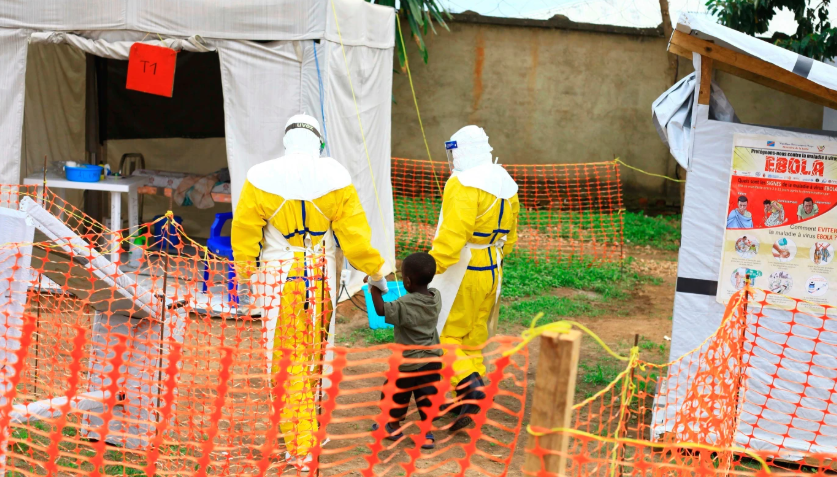
On Sunday, the World Health Organization (WHO) formally designated the ongoing Ebola outbreak, triggered by the rare Bundibugyo virus, across the Democratic Republic of the Congo (DRC) and neighboring Uganda as a Public Health Emergency of International Concern (PHEIC), a move that comes after the outbreak has already claimed 88 lives and sparked more than 300 suspected infections. In a clear distinction from the 2020 COVID-19 pandemic, global health leaders emphasized that the current outbreak does not meet the threshold for classification as a pandemic-level emergency, and explicitly advised against the implementation of international border closures to avoid unnecessary disruption to travel and trade.
In a post to the social platform X, WHO confirmed that a laboratory-verified case of Ebola has now been identified in Kinshasa, the DRC’s densely populated capital located roughly 620 miles from the outbreak’s original epicenter in the country’s eastern Ituri Province. The infected patient had a documented travel history to Ituri, raising concerns that the virus may have already begun spreading beyond its initial origin zone. Additional suspected cases have also been detected in North Kivu, the DRC’s most populous province, which shares a border with Ituri, further widening the scope of the potential outbreak.
First identified in late 2007, Ebola is a highly contagious pathogen that spreads through direct contact with infected bodily fluids, including blood, vomit, and semen. While infections are rare, the disease causes severe, often fatal illness with mortality rates that can exceed 50% depending on the variant and access to care.
For WHO, a PHEIC declaration is the highest level of global public health alert, designed to catalyze urgent action from donor nations and international aid agencies. The designation signals that the outbreak poses a serious global threat, carries a significant risk of cross-border spread, and demands a coordinated, unified international response to contain transmission. However, past global responses to similar emergency declarations have delivered inconsistent results. When WHO labeled the 2024 mpox outbreak across Central Africa a global emergency, public health experts widely criticized the response for failing to rapidly deliver critical supplies including diagnostic tests, antiviral treatments, and vaccines to affected communities.
What makes the current outbreak particularly challenging is the strain of virus involved: the Bundibugyo variant, a rare subtype of Ebola for which no specifically approved vaccines or therapeutics currently exist. While the DRC and Uganda have faced more than 20 separate Ebola outbreaks over the past decades, this is only the third recorded emergence of the Bundibugyo variant. To date, the vast majority of cases are concentrated in the DRC, with just two confirmed infections reported across the border in Uganda, per WHO data.
The first known Bundibugyo outbreak occurred in Uganda’s Bundibugyo District between 2007 and 2008, infecting 149 people and killing 37. The second detection was recorded in 2012 in the DRC’s Isiro region, where the outbreak caused 57 confirmed infections and 29 deaths.
Dr. Jean Kaseya, Director-General of the Africa Centres for Disease Control and Prevention (Africa CDC), noted Saturday that a large share of active infections are still circulating in community settings, particularly in Mongwalu, the town where the first cases were initially documented. This widespread community transmission has dramatically complicated containment efforts and contact tracing work, which are critical to stopping the virus from spreading further.
Compounding these challenges are persistent security and demographic pressures in the affected region. Decades of violent conflict with IS-backed militant groups in eastern DRC have left health infrastructure fragmented and unstable, while constant cross-border population movement driven by artisanal mining both within the DRC and across the border into Uganda makes it difficult to track and isolate infected individuals.
Officials first confirmed the emergence of the outbreak in Ituri Province, which borders both Uganda and South Sudan, on Friday. By Saturday, the Africa CDC had reported 336 suspected cases and 87 deaths across the DRC.
Speaking on the outbreak, WHO Director-General Tedros Adhanom Ghebreyesus acknowledged that major uncertainties remain about the true scale of transmission. “There are significant uncertainties to the true number of infected persons and geographic spread associated with this event at the present time,” he said. “In addition, there is limited understanding of the epidemiological links with known or suspected cases.”