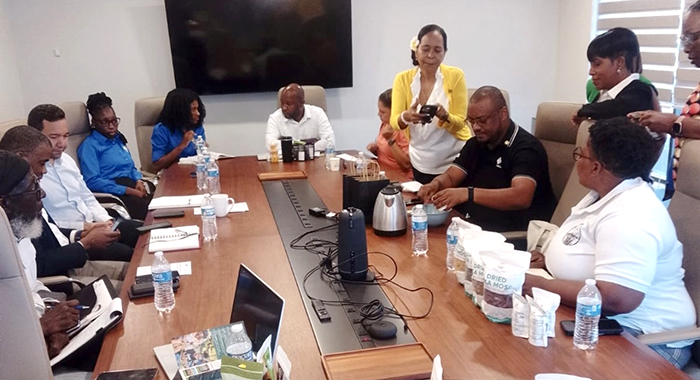
After two decades of trade restrictions barring its core marine product from European markets, the Sea Moss Association of St. Vincent and the Grenadines (SMASVG) is actively engaging with European Union stakeholders to clear a path for re-entry, positioning its sustainable, value-added sea moss goods for a successful comeback.
The push for market access gained a high-profile platform earlier this month, when SMASVG joined official EU 50th anniversary celebrations held in Barbados from May 7 to 9. Following the event, Ronita Ollivierre, a leading member of the association, framed the opportunity as transformative for both the national sea moss sector and the broader St. Vincent and the Grenadines economy.
This showcase was organized under the umbrella of the EU-Caribbean Food Security Programme, led by the International Trade Centre (ITC) and partner organizations. The event centered on elevating sustainable, artisanal goods tied to three key global development priorities: food security, growth of the blue economy, and value-added product innovation.
At the heart of SMASVG’s exhibition was dried sea moss, the sector’s primary export-focused product. The association highlighted that its dried sea moss meets strict international quality benchmarks, backed by rigorous laboratory testing and controlled small-batch production practices tailored to meet European consumer demands. Beyond raw and dried products, SMASVG showcased the sector’s growing innovation and diversification through a wide range of value-added offerings, including sea moss-infused food and beverages, skincare and cosmetic goods, wellness supplements, and early-stage development of sea moss-based ingredients for pharmaceutical applications.
The exhibition featured seven local Vincentian sea moss enterprises — Miss Cassandra’s, Tash’s Dusk til Dawn, Marslyn’s, Mark’s Produce, Seamoss Boss Canouan, Pure Canouan Seamoss, Ocean Remedies, and Nature’s Pride — illustrating the full strength and maturity of SVG’s sea moss value chain, from sustainable raw material harvesting through to finished, market-ready consumer products.
Attendees were also invited to take part in an interactive mobile sea moss experience, which included product tastings, live demonstrations, and educational discussions focused on the cultivation, uses, and health benefits of wild-harvested and processed sea moss. A post-event press release noted that public reaction to the showcase was overwhelmingly positive, with Barbadian residents, international travelers, and members of the Vincentian diaspora all expressing strong interest in the products and the interactive tasting experience.
Diplomatic delegations and international representatives in attendance also praised the exhibition, commending the high quality, professional presentation, innovative product lines, and distinct artisanal identity of SVG’s sea moss sector. Cross-stakeholder discussions at the event extended far beyond basic raw material production, covering topics including circular economy integration, end-to-end value chain development, and small business entrepreneurship, all of which reinforced St. Vincent and the Grenadines’ reputation as a regional leader in sustainable, value-added marine resource development.
The multi-day program tied to the showcase included a public marketplace and product display at the Barbados Film Festival, structured business-to-business site visits with regional and EU-based distributors, and Europe Day programming focused on advancing equitable, sustainable global food systems.
Cindy Eugene, a program representative with the International Trade Centre, emphasized the organization’s support for SMASVG’s market access goals, noting that sea moss perfectly aligns with the core values the EU-Caribbean Food Security Programme works to advance: sustainability, innovation, and strengthened regional food security.
William Castro Rodriguez, an ITC program officer, added that this cross-regional engagement is designed to build tangible, long-term connections between Caribbean small-scale producers and European consumer markets. He pointed to SVG’s sea moss sector as a model example of how tropical natural resources can be developed to unlock significant value-added economic potential for small island developing states.