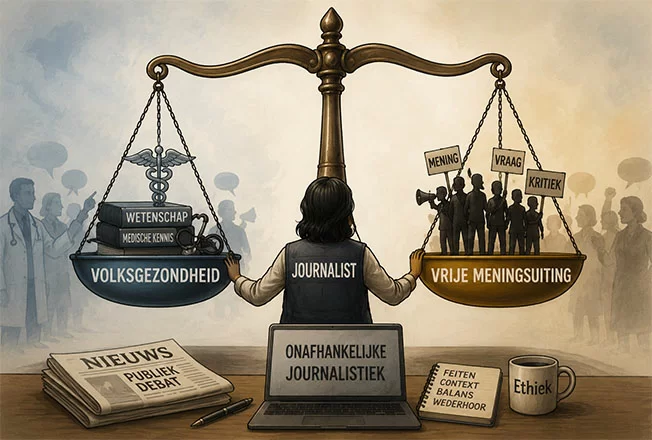
Freedom of speech is not designed only to shield ideas that already enjoy widespread public acceptance. It is the unpopular, heterodox perspectives that most need legal and cultural protection, after all; without this protection, free speech becomes little more than the freedom to repeat what everyone already agrees with.
This week, a sharp and illuminating debate has emerged in Suriname following the publication of a reader submission on local news platform Starnieuws. Written by contributor Karel Donk, the piece was a response to an upcoming national HIV testing campaign. In his contribution, Donk publicly questioned the established scientific link between HIV and AIDS, and urged readers to think carefully before agreeing to get tested.
The reaction from the medical community was swift and indignant. Multiple doctors, including clinicians who work directly in the HIV/AIDS treatment sector, condemned the publication. They argue that giving space to this unsubstantiated perspective puts public health at direct risk, and have criticized Starnieuws for platforming a claim that contradicts decades of established medical consensus.
This criticism is not unfounded. Medical professionals bear daily responsibility for patient lives, and they evaluate any such publication through the lens of rigorous scientific evidence and years of clinical experience. It is entirely natural that concern arises when claims directly contradict universally accepted medical understanding.
Yet it is precisely here that the fundamental debate over free speech begins. When a news outlet opens its pages to reader-submitted opinion pieces, it does not automatically endorse every view it publishes. Starnieuws made the decision to run Donk’s essay because a meaningful commitment to free speech requires making space for controversial, dissenting, even unpopular perspectives — as long as those contributions remain within established editorial guidelines. The outlet did not hide or suppress the medical community’s pushback: it published doctors’ critical responses in full, allowing readers to weigh competing perspectives against one another.
This is exactly how an open, democratic society is supposed to function. It does not ban dissenting views ahead of publication; instead, it brings conflicting ideas into public debate, where they can be challenged with evidence, facts and counterarguments. In recent years, calls to censor unpopular perspectives have grown steadily louder. Any view that deviates from dominant consensus is quickly labeled disinformation, conspiracy thinking or dangerous. Sometimes that label is justified.
But there is a critical line between publishing a controversial perspective as part of open debate, and actively seeking to cause harm. Speech that calls for violence, spreads hatred, or deliberately disseminates lies with malicious intent is a separate category entirely from what occurred in this case.
Added context is important here: HIV testing in Suriname is not legally mandated. It remains a voluntary choice for every citizen, who retains full responsibility for seeking out information, consulting medical professionals, and making their own decisions.
The true strength of a free society is not measured by its ability to silence dissenting voices, but by its ability to refute those voices publicly with evidence. Science is not strengthened by censorship; it grows stronger through open debate, transparent evidence-gathering and public scrutiny. That is precisely why freedom of expression must be protected and cherished. This is not because every unpopular opinion is correct, but because a free society that eliminates space for open debate gradually becomes a society ruled by fear, where self-censorship dictates what can and cannot be said.
A striking detail in this controversy is how many other media outlets have only repeated the doctors’ angry condemnation, without addressing the full original context: that Starnieuws intentionally created space for public debate, and that its decision to run the controversial piece was a deliberate editorial choice to fuel broader public discussion. When only the doctors’ criticism, with its harsh condemnation of Starnieuws, is published without the full original context, there is a serious risk that Starnieuws will be misrepresented as willfully spreading disinformation, when the outlet actually opened the door to debate and published critical counter perspectives.
At the same time, it is well within any other outlet’s rights to judge the doctors’ reaction as newsworthy. When medical professionals warn that public health may be endangered, that is inherently a societally relevant news story. It is appropriate and healthy for media outlets to hold each other accountable, but they have an obligation to be honest about the full context and intentions of their peer organizations. Without that commitment to context, we do not get a debate about ideas — we get a blanket moral condemnation of the outlet that opened space for discussion.
Freedom of speech does not mean every opinion is equally correct, or equally rooted in fact. It means that all ideas deserve to be publicly discussed, criticized and refuted, without an immediate call for censorship and silence. The strength of a democratic society lies not in banning controversial opinions, but in its ability to counter them openly with evidence and argument. A society where people are afraid to publish, to debate, to deviate from consensus for fear of public condemnation is ultimately far more dangerous than a single controversial reader submission.