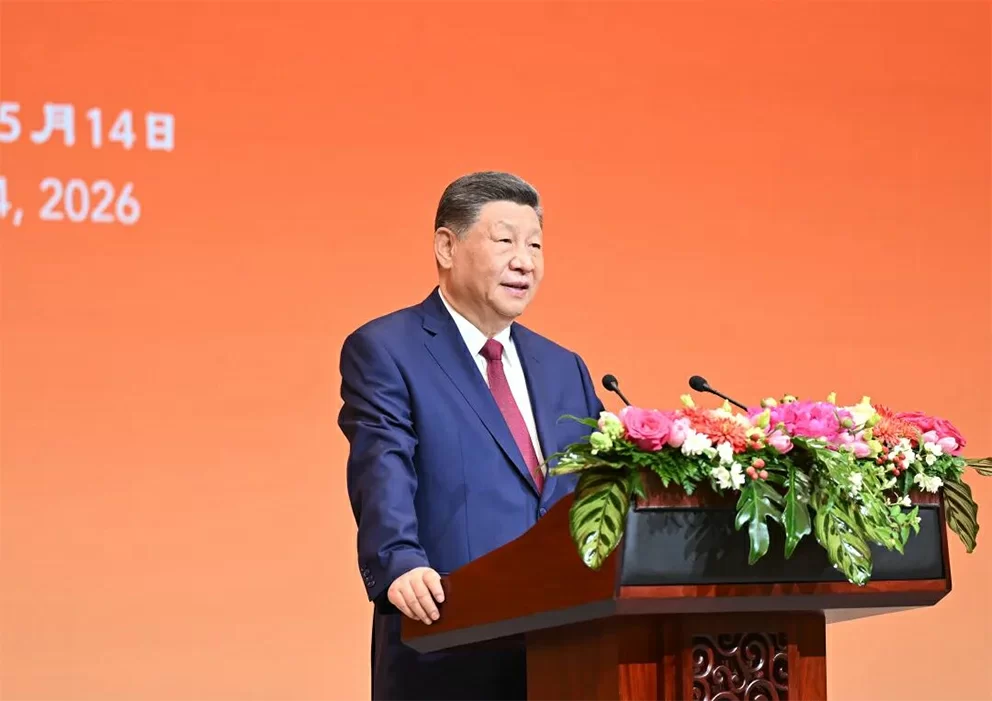
On May 14, during U.S. President Donald Trump’s two-day state visit to China, Chinese President Xi Jinping held high-level bilateral talks with his American counterpart, laying out core principles for stable China-U.S. relations and addressing pressing global and regional issues. Xi opened the discussion by emphasizing the far-reaching significance of the bilateral relationship, noting that it shapes the well-being of more than 1.7 billion people across both nations, and reverberates across the entire globe, touching the interests of nearly 8 billion people worldwide.
Xi underlined that mutual respect for core interests and commitment to peaceful collaboration are non-negotiable foundations for maintaining long-term stability between the world’s two largest powers, and called on both countries to uphold shared responsibility to keep bilateral ties on a steady, constructive trajectory. By the end of the talks, Trump was scheduled to depart China and return to Washington the same day.
A key point of global economic relevance raised during the meeting was the security of the Strait of Hormuz, a critical chokepoint for global energy supplies. Both leaders agreed on the urgent necessity of keeping the strategic waterway open to ensure unobstructed flow of global energy trade. Trump confirmed that China has explicitly opposed the militarization of the strait and the imposition of any transit tariffs, a position that comes as escalating tensions between the U.S. and Iran have severely disrupted shipping through the route, threatening global energy security and pushing fuel market volatility upward.
Currently, the situation in the region remains highly tense. Iran has implemented strict shipping regulations through the strait, requiring all commercial vessels to obtain pre-approval before transiting the waterway. In response to what the U.S. frames as an Iranian blockade, Washington has redirected 70 commercial vessels and disabled four ships to counter the restrictions. Recent incidents have further amplified friction: a commercial vessel was seized off the coast of the United Arab Emirates, and an Indian cargo ship was sunk in an suspected attack involving drones or missiles.
One of the most sensitive core issues addressed in the talks was the question of Taiwan, which Xi identified as the most consequential and sensitive topic in China-U.S. relations. Xi explicitly warned that misunderstandings or missteps on the Taiwan question could cause severe damage to bilateral ties and even lead to open conflict. China reaffirmed that full U.S. respect for the one-China principle is a fundamental precondition for any continued productive cooperation between the two countries. For his part, Trump maintained the longstanding U.S. policy of strategic ambiguity, acknowledging Taiwan as part of China while stopping short of supporting Taiwanese military independence.
Despite the unresolved tensions on sensitive issues, both leaders reaffirmed that the China-U.S. relationship is the most important bilateral partnership in the world today. The two sides also discussed expanding economic cooperation, including improved market access for U.S. businesses operating in China and attracting increased Chinese investment into U.S. industrial sectors. According to Chinese official readouts, recent negotiating rounds held in South Korea have already yielded what Beijing describes as “balanced and positive” outcomes for both parties.