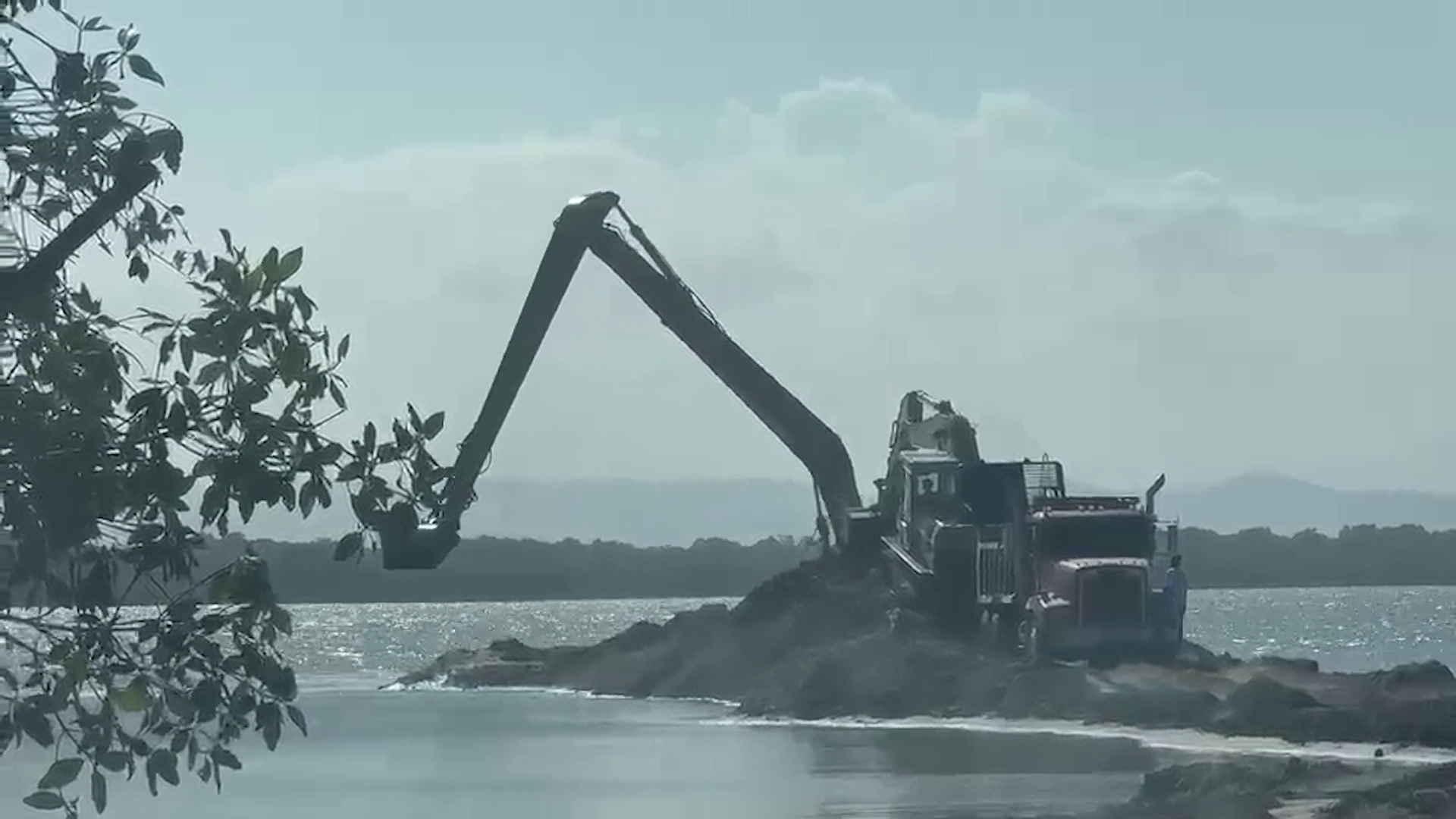
A shadowy unregulated dredging operation is stirring up controversy and environmental concern in Belize’s ecologically sensitive Placencia Lagoon, with community leaders, marine researchers, and environmental advocates demanding urgent answers from government authorities as the unauthorized work continues. The unmarked, unsanctioned activity began earlier this week, and to date no public entity or private contractor has stepped forward to claim responsibility, leaving local stakeholders and conservation groups in the dark about the project’s scope, purpose and potential long-term damage to the lagoon’s fragile ecosystem. For local communities that rely on the lagoon’s natural resources for fishing and tourism, the operation also poses a direct safety risk: local boat operators have confirmed the dredge site is left unmarked after dark, turning a frequently used vital waterway into a hidden navigation hazard. Dr. Marisa Tellez, executive director of the Placencia-based Crocodile Research Coalition, emphasized that the dredging is targeting one of the most ecologically significant areas of the entire lagoon, a site that was only recently documented as a critical feeding habitat for the region’s vulnerable manatee population. Just two years ago, Tellez and co-researcher Dr. Eric Ramos, a manatee specialist, published peer-reviewed research identifying the area as an active feeding hotspot, where up to 20 Antillean manatees gather at once to feed on a previously undocumented species of seagrass that is unique to the site. Belize’s manatee population is already classified as vulnerable, facing ongoing population decline from widespread habitat disruption and unregulated coastal development that has steadily eroded their critical feeding and breeding grounds across the country. Tellez also noted that the contractor believed to be carrying out the dredging has a documented history of illegal unpermitted dredging activity in other coastal areas of Belize, adding that any large-scale dredging work, which carries major irreversible environmental risks, requires formal public consultation and transparent permitting before work can begin. “What benefits the environment benefits our local communities too,” Tellez explained. “Here in Placencia, all of our livelihoods are tied to the health of the lagoon – from tourism to fishing, we cannot survive if we destroy this ecosystem.” The lack of transparency surrounding the operation has sparked widespread frustration among local environmental groups, who say authorities have failed to respond to repeated requests for clarity. Shane Young, executive director of the Southern Environmental Association, told reporters that his organization submitted formal inquiries to relevant government agencies shortly after community members first reported the dredging, requesting information on any issued permits, the identity of the developer, and the stated purpose of the work. As of the latest updates, Young says authorities have yet to release any formal information to the public, despite confirming receipt of the request. “Community members on the ground have been sending us updates constantly, and the dredging is still actively ongoing as we speak,” Young said. “We don’t even know if this is for land reclamation, a new causeway, or another development – we deserve basic answers about what is happening in our backyard.” When contacted by local outlet News Five, Belize’s Department of Environment confirmed that it plans to deploy an inspection team to the site on the following day, with a formal public statement to follow after the assessment is completed. Environmental advocates and community members have pledged to continue pressing for full transparency and accountability, and have vowed to push for immediate halts to the operation if it is found to be operating without the required permits or threatening the protected manatee habitat. News Five will continue to follow developments in this ongoing story as more information becomes available.