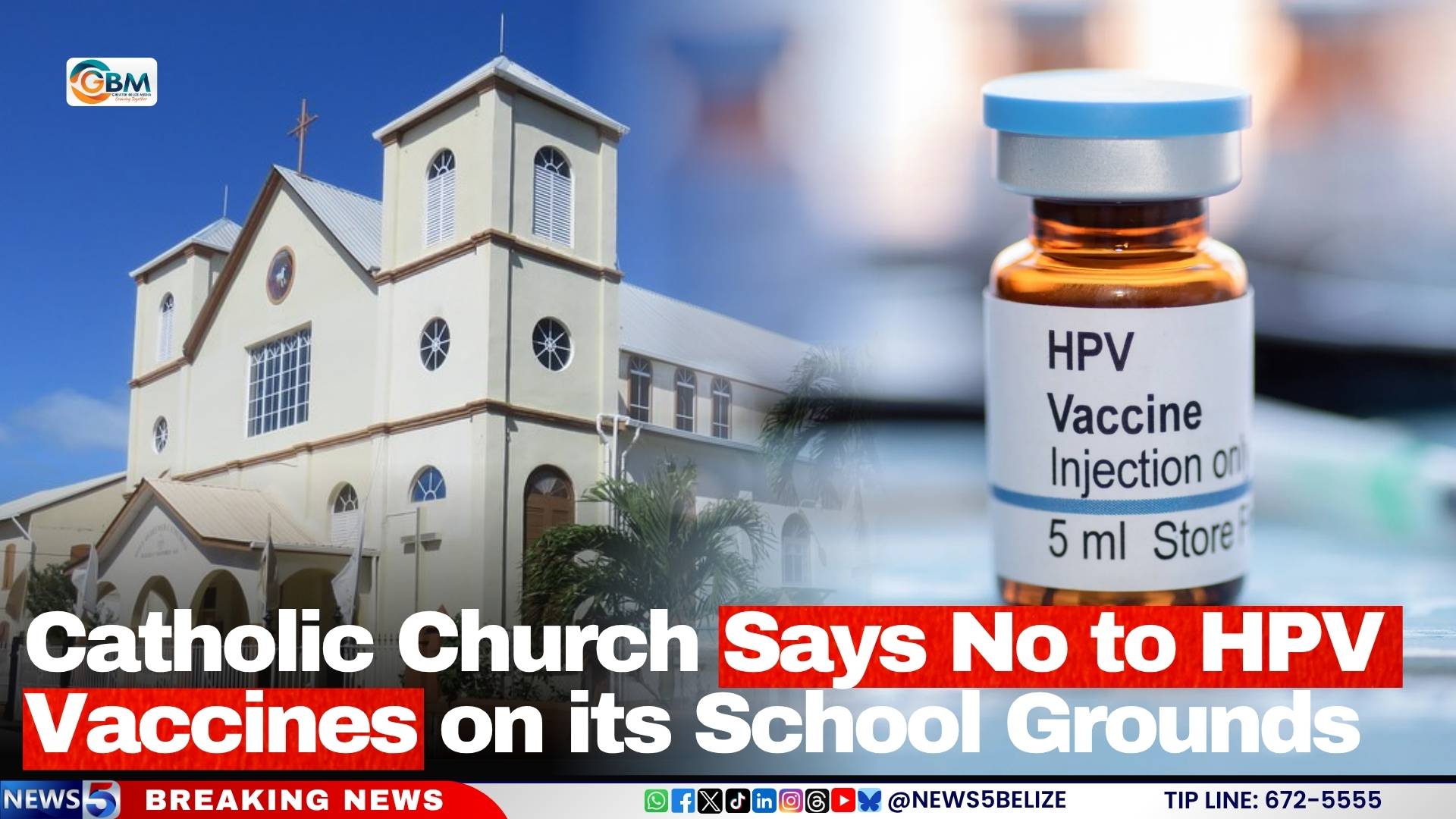
In a formal public announcement dated May 12, 2026, the Catholic Diocese of Belize has reaffirmed its longstanding ban on human papillomavirus (HPV) vaccination initiatives across all of its school properties, drawing a firm line that blocks public health officials and medical teams from carrying out on-campus immunization drives. The policy was communicated via an official letter released last Tuesday, with diocesan leaders noting the restriction traces back to the tenure of former Bishop Dorick Wright and remains the binding guidance for all Catholic educational institutions in the country today. Notably, the Church’s statement did not provide a clear public explanation for its continued opposition to on-campus HPV vaccination programs.
Public records show that the global Vatican leadership and the United States Conference of Catholic Bishops (USCCB) have never issued a formal official ban or specific negative stance on HPV vaccination. In fact, the Vatican has taken a broadly pro-immunization position since 2020, when it formally issued a statement of moral acceptance for COVID-19 vaccines. A 2021 Vatican document from its Archives Office clarified that any vaccine clinically verified as safe and effective may be used in good conscience, and that receiving such vaccines does not amount to formal complicity with abortion, a common unsubstantiated concern linked to early cell lines used in some vaccine research. Contrary to lingering misinformation, all HPV vaccines currently in global circulation do not rely on cell lines derived from aborted fetal tissue; they are manufactured using modern recombinant DNA technology, a distinct, ethically uncontroversial production process.
The public policy clash has prompted a response from Belize’s Office of the Special Envoy for the Development of Families and Children, which emphasized in an official statement that while the government respects the right of individual and institutional groups to hold personal concerns about immunization, safeguarding children from a preventable life-threatening cancer must be treated as a top national priority.
National HPV immunization campaigns in Belize have operated for several years, targeting primarily Standard Four elementary students, with additional catch-up dosing offered to older students in Standards Five and Six who missed their initial scheduled doses. Global and U.S. public health agencies uniformly stress the life-saving importance of timely HPV vaccination. The U.S. Centers for Disease Control and Prevention (CDC) reports that roughly 13 million people, including adolescents, contract HPV annually worldwide. The virus is the leading preventable cause of multiple aggressive cancers, including cervical, vaginal, and vulvar cancers in women, as well as penile cancer in men. The CDC notes that administering the vaccine during preadolescence provides maximum protection, long before young people may be exposed to the virus through sexual activity.
The Pan American Health Organization (PAHO) echoes this guidance, confirming that HPV vaccination administered between the ages of 9 and 14 delivers the highest level of protection for girls before they become sexually active and face potential exposure to the virus. PAHO also adds that high vaccination coverage among girls delivers a secondary public health benefit, significantly reducing HPV infection rates among unvaccinated boys through herd immunity. The diocese’s ban has placed thousands of elementary students at increased risk of preventable cancer, public health experts warn, as on-campus vaccination programs are one of the most effective avenues to reach high immunization coverage among school-aged children, particularly in low- and middle-income countries like Belize.