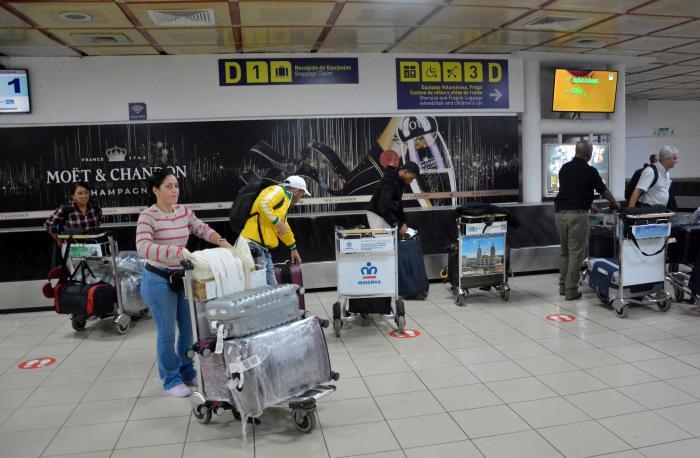
On May 6, 2026, Cuban officials announced the publication and phased implementation of three landmark pieces of legislation that fundamentally reshape the country’s decades-old immigration framework. Laws 171, 172 and 173, which update rules governing immigration, foreign national residency and Cuban citizenship, introduce a series of user-centric changes designed to align the country’s migration policies with modern global trends and address longstanding concerns of Cubans both at home and abroad.
Colonel Mario Méndez Mayedo, head of the Ministry of the Interior’s Directorate of Identification, Immigration, and Foreigners Affairs, outlined the scope of the reform at an official press conference. The overhaul represents a massive expansion and update of outdated legal language: the core Immigration Act has grown from just 25 articles to 170, the Aliens Act from 25 articles to 91, and the new Citizenship Act marks the first time Cuba has codified citizenship rules into a standalone law. Supporting regulatory frameworks have also expanded dramatically, with the Immigration Regulations now containing 362 articles and Aliens Regulations 200 articles. This expansion reflects the complexity of modern migration issues and the broad inter-agency consensus built over years of drafting, which included input from 37 government bodies.
Méndez Mayedo noted that the legislative process was “lengthy and very complex,” with continuous consultation with the Ministry of Foreign Affairs and Cuban consulates worldwide to collect feedback and concerns from the country’s large diaspora community. After being approved by the Cuban National Assembly in July 2024, the laws are now set to enter into force after a 180-day transition period for most provisions. However, one high-priority section — the new immigration status for foreign investors and business actors — took effect immediately upon publication via a separate decree-law, tied to ongoing updates to Cuba’s economic model.
The most transformative change for Cuban citizens living overseas is the elimination of the controversial 24-month limit on continuous stays outside the country, replaced by a new legal concept of “effective migratory residence.” Under the new rules, Cubans may remain abroad for any length of time they choose, with no automatic loss of residency status. To retain effective migratory residence, individuals only need to have spent a cumulative 180 days in Cuba over the previous 12-month period. Those who do not meet this threshold can still retain their status by proving ongoing formal ties to the country, including immediate family relationships to Cuban residents, active paid employment, registered investments, property ownership, domestic bank accounts, compliance with tax obligations, or other holdings of movable or immovable assets in Cuba. Cubans residing in the country who must stay abroad for extended periods for work, medical treatment, study or other approved reasons also qualify to retain their effective residence status with proper documentation.
“There is no time limit for being outside Cuba. Cubans can remain abroad for as long as they need, as long as they require, as long as they want,” Méndez Mayedo emphasized. This change will phase out the existing category of “emigrant,” which will gradually shrink as most Cubans living overseas are reclassified to the more flexible and beneficial status of “resident abroad.” Beyond benefiting individuals, the new effective residency framework will also produce more accurate data on Cuba’s actual resident population, supporting more informed public policy and government decision-making.
Another major reform addresses widespread concerns over property rights for Cuban citizens living overseas, a top issue during preliminary public and parliamentary debates. Article 31 of the new Immigration Law explicitly enshrines that all Cuban citizens residing abroad hold the constitutional right to own, use, and freely dispose of property located in Cuba, in alignment with Article 58 of the Cuban constitution. Méndez Mayedo confirmed that this explicit protection was included to directly resolve longstanding anxieties among the diaspora over their domestic assets.
For foreign nationals seeking to live in Cuba, the new laws introduce far more flexible residency pathways and expand eligibility for both temporary and permanent status. Previously, permanent residency was largely limited to spouses of Cuban citizens; now, multiple additional categories qualify, including parents of Cuban-born citizens who reside in Cuba, foreign nationals who have lived in Cuba for more than five years with proven deep social and economic ties, skilled professionals with advanced degrees, international recognition or expertise in science, sports, culture or the arts endorsed by Cuban state agencies, foreign individuals holding significant assets or domestic bank accounts in Cuba, and foreign families with established employment, economic or long-term survival ties to the country. The laws also create a formal regulatory framework for humanitarian protection for vulnerable groups that previously lacked clear immigration status, including victims of armed conflicts, people in crisis situations, and insolvent tourists. “This has been happening, but without a regulatory framework; now we are including it in the Law,” Méndez Mayedo explained.
In closing, the senior official framed the reform as the culmination of extensive public and parliamentary debate, designed to balance the interests of all relevant stakeholders while prioritizing the most beneficial outcomes for Cuban citizens. “Today we are implementing a new immigration system in the Republic of Cuba. This is the greatest demonstration of the fulfillment of the political decision to keep immigration regulations up to date,” he said. The full text of the three laws, along with the immediate decree-law for investors and accompanying financial regulations, are published in Ordinary Official Gazette No. 39 and Extraordinary Official Gazette No. 60 respectively.