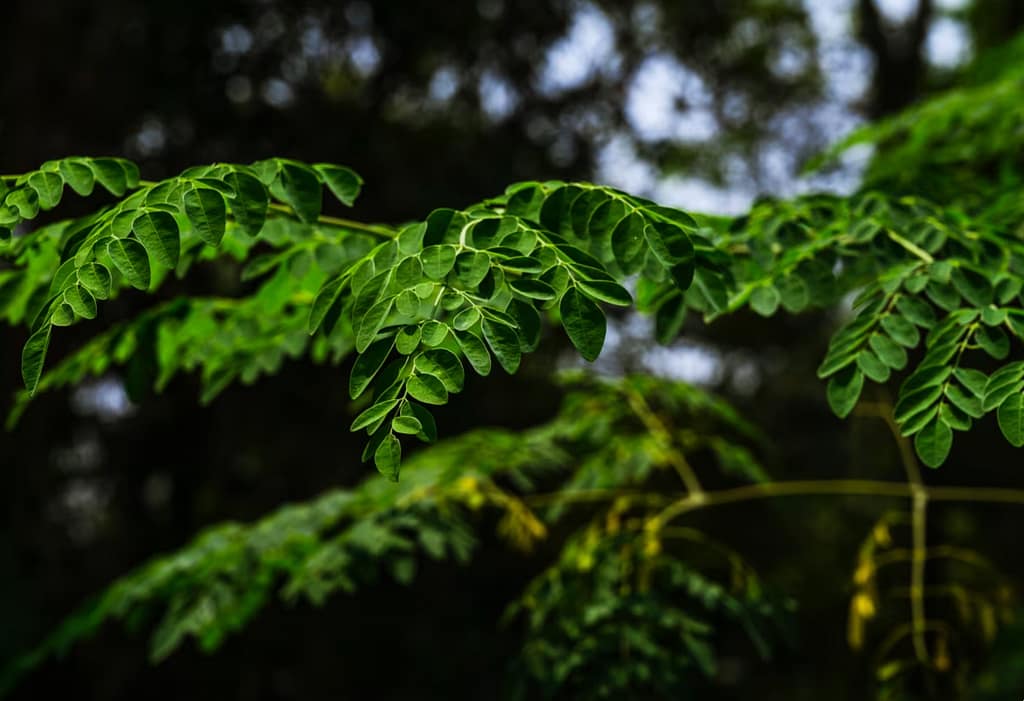
For thousands of years, the fast-growing moringa tree — widely nicknamed the “miracle tree” for its dense nutritional profile and long-documented healing properties — has been used across civilizations to clean contaminated water. Now, a new joint study by researchers from Brazil and the United Kingdom has uncovered another groundbreaking application: extracts from the tree’s seeds can filter out nearly 99% of harmful PVC microplastics from tap water, matching the efficiency of traditional chemical water treatment methods while offering far more sustainable benefits.
Published in April, the research builds on a decade of work led by Adriano Gonçalves dos Reis, a professor at São Paulo State University’s Institute of Science and Technology. Historical records show ancient Greek, Roman, and Egyptian societies already used moringa to purify water, but Gonçalves dos Reis and his team set out to test whether the plant’s natural coagulant properties — which cause small suspended particles to clump together for easy filtering — could work on microplastics, one of the modern era’s most pressing environmental contaminants.
Microplastics, defined as plastic fragments smaller than 1 micrometer (roughly 1/25,000 of an inch), have permeated every corner of the global environment, from the deepest ocean trenches to the highest mountain peaks. A 2024 analysis found microplastics in 83% of tested tap water supplies worldwide, and the tiny particles have already been detected in human organs including the brain, reproductive systems, and cardiovascular tissue. While researchers are still working to map the full health impacts of microplastic exposure on humans, animal studies have linked the particles to reproductive damage and hormonal disruption.
For their experiment, the research team focused on PVC microplastics — one of the most common and hazardous types of microplastic found in drinking water — with an average size of 18.8 micrometers, about one-quarter the thickness of a human hair. When moringa seed extract was added to standard filtration systems, the researchers measured a 98.5% removal rate of PVC microplastics from tap water.
This efficiency is on par with aluminum sulfate (commonly called alum), the conventional chemical coagulant widely used in municipal water treatment facilities. Strikingly, the team also found moringa seed extract outperformed alum in more alkaline water conditions, a common trait of many natural water sources.
Beyond comparable effectiveness, moringa offers major advantages over traditional chemical treatments. Unlike alum, which relies on aluminum (a metal linked to neurodegenerative disease when present in high concentrations and requires environmentally destructive mining to produce), moringa seeds are a renewable, fully biodegradable resource. They also produce far less toxic sludge waste and carry minimal toxicity risks for human consumption.
Matthew Campen, a distinguished professor of pharmaceutical sciences at the University of New Mexico Health Sciences Center who was not involved in the study, called the finding a promising step forward. “Using a natural product to replace an aluminum-based filtration system may offer a cheaper and more sustainable solution to removal of PVC microplastics,” he explained, noting that the approach would also eliminate the environmental harm tied to aluminum mining.
Still, the method has important limitations that require further research. The study found one moringa seed can treat approximately 10 liters of water, meaning large urban water treatment facilities processing millions of liters daily would require massive quantities of seeds to adopt the technique. Additionally, increased use of organic seed extract could leave higher levels of organic residue in treated water, which would require additional processing to remove.
Gonçalves dos Reis noted that the technique is already well-suited for small rural communities or remote regions where access to chemical coagulants like alum is limited. For wider use, however, more research is needed to answer key questions: how moringa seed extract breaks down after use, what becomes of the captured microplastics, how scalable the method is for large operations, and whether it remains cost-effective at scale.
Campen added that future tests will also need to confirm whether moringa can effectively remove other types of microplastics, as well as nanoplastics — the even smaller particles, roughly 1/1000 the width of a human hair, that are most likely to penetrate human organs and bloodstream.
Gonçalves dos Reis says his team is already moving forward with this research, and he is confident moringa seeds will prove effective across a wide range of plastic contaminants. For experts like Campen, developing scalable solutions for microplastic contamination could not come soon enough: global microplastic and nanoplastic exposure levels continue to rise, a trend that experts expect will persist for decades to come.