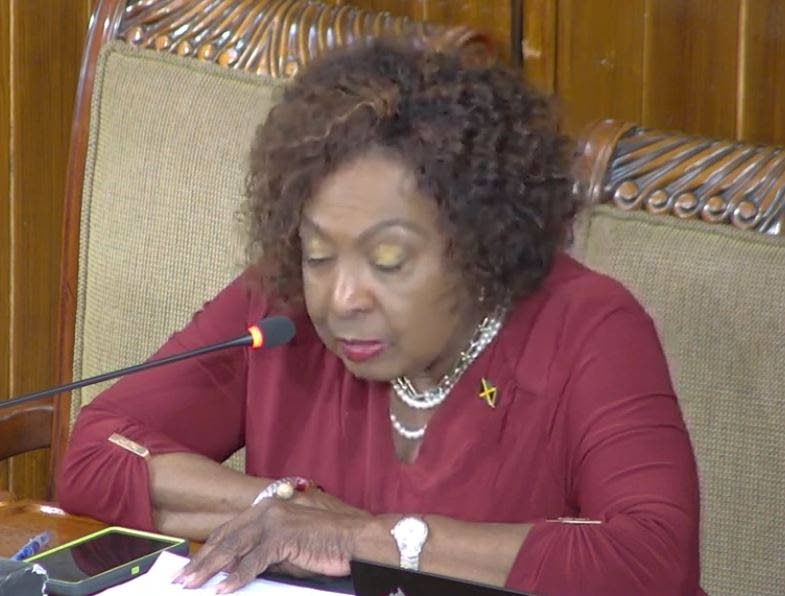
A public debate over the legal standing of Jamaica’s Rastafari community has intensified, after Culture Minister Olivia Grange reaffirmed the government’s position that Rastafarians already hold full equal rights under existing national law, pushing back against fresh demands from Rastafari community leaders for targeted, explicit legislation.
Grange laid out the administration’s stance Thursday during proceedings of the joint select committee tasked with reviewing the government’s Green Paper for Jamaica’s National Policy on Culture, Entertainment and the Creative Economy. She pushed back against what she described as a misleading public narrative that has emerged in recent discourse, claiming Rastafarians are denied formal recognition and equal legal protection in the country.
“Recent commentary in local press has raised questions about whether the government recognizes Rastafari, and whether community members hold the same rights as followers of other religious groups,” Grange told the committee. “I want to place on official record that they do, in fact, have the same rights as any other religious group in Jamaica.”
The minister emphasized that equal protections for Rastafari believers are already enshrined in Jamaica’s national Charter of Rights, and added that the current administration has done more to advance and support the Rastafari community than any preceding government in the nation’s history. As evidence of the government’s commitment, she cited the $176-million public contribution to the Coral Gardens Benevolent Fund, a initiative created after the state issued a formal apology for the 1963 Coral Gardens atrocity, a violent state-led crackdown targeting Rastafarians that left multiple community members dead.
Grange’s remarks came just days after the Rastafari Mansions and Organizations (RMO), a leading collective of Rastafari groups, publicly criticized the government for exaggerating existing legal protections and renewed calls for a dedicated, comprehensive Rastafari Rights and Justice Act. The organization argues systemic discrimination against the community remains embedded in Jamaican law and government practice.
The debate gained new momentum after neighboring St. Kitts and Nevis passed legislation granting formal legal recognition to Rastafari, including explicit provisions safeguarding sacramental rights, cultural identity, and economic concessions for the community. The move sparked direct comparisons to Jamaica’s legal framework and amplified RMO’s demands for explicit constitutional recognition in Jamaica.
In a public statement released April 21, the RMO argued that broad constitutional guarantees of religious freedom do not go far enough to grant formal recognition to Rastafari as both a distinct religious faith and an indigenous Jamaican cultural group. Without explicit, targeted legal protections, the organization says, systemic discrimination and inconsistent enforcement of existing rights persist across key public sectors, including law enforcement, education, employment, and healthcare.
The group also levied additional criticism against the government, accusing authorities of failing to deliver adequate support to Rastafari communities impacted by Hurricane Melissa. The RMO claims disaster relief efforts did not accommodate the community’s unique dietary, cultural, and health needs.
Further, the organization pointed to recent court cases involving cannabis, known as ganja to Rastafarians who use it sacramentally. The RMO argues that even after amendments to Jamaica’s Dangerous Drugs Act, protections for Rastafari sacramental use of cannabis are still unevenly applied by authorities.
Despite rejecting the RMO’s core claim that existing protections are insufficient, Grange signaled the Jamaican government remains open to broad, inclusive dialogue about the Rastafari community’s place in the nation’s legal and cultural landscape.
“I invite full discussion on Rastafari as a religion, to examine the history of what has been done in this country, to chart a path forward toward even greater embrace and recognition of the importance of Rastafari to Jamaica,” Grange said Thursday.