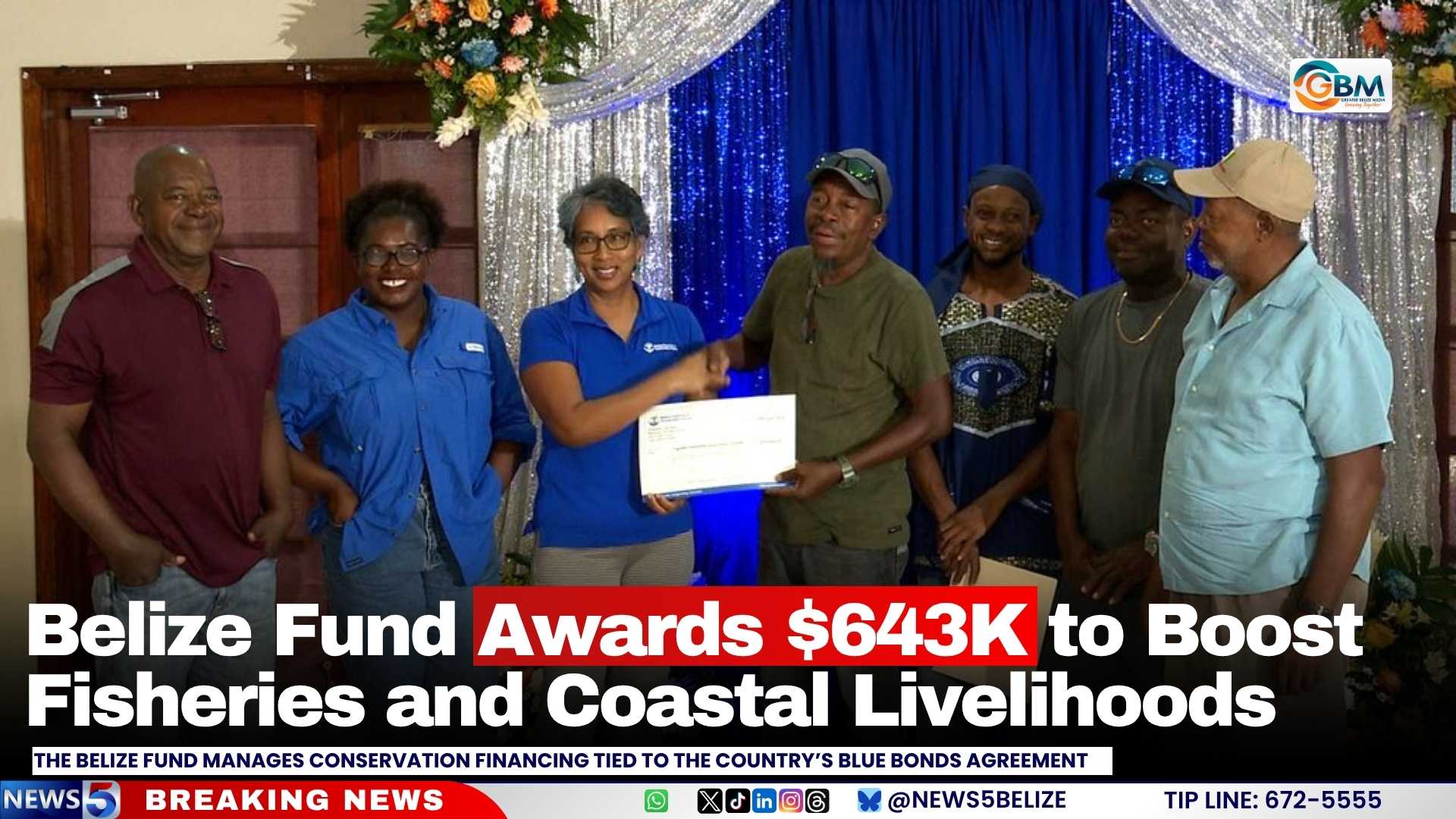
Situated along Central America’s Caribbean coast, Belize has long built its identity and economic foundation around its rich marine ecosystems and vibrant coastal communities. In a major push to balance environmental stewardship with inclusive economic growth, the Belize Fund for a Sustainable Future has announced BZ$643,000 in grant funding for four local projects centered on strengthening sustainable fisheries, empowering coastal households, and expanding the nation’s growing blue economy.
The single largest award, a BZ$500,000 grant, has been allocated to the Turneffe Atoll Sustainability Association. Turneffe Atoll, one of the most biologically significant coral atolls in the Caribbean, faces ongoing pressure from overfishing, unregulated activity, and climate change. The association will use the funding to upgrade fisheries management across the atoll through three core strategies: enhanced on-water enforcement of sustainable fishing rules, community-focused education for local fishers and stakeholders, and advanced data-driven planning that aligns catch limits with ecosystem health.
Three smaller grants will direct support directly to community-led groups and local small enterprises, ensuring that benefits from conservation reach the people who rely on Belize’s marine resources most. Barranco Botanics, a local craft enterprise, will receive just over BZ$43,000 to scale up production of natural marine-based soaps crafted from locally harvested seaweed, creating new income streams that value sustainable marine extraction over industrial overexploitation.
The Wabafu Fishermen Association will put its BZ$50,000 grant toward strengthening the organization’s internal governance and rolling out training programs to help members adopt verified sustainable fishing practices that qualify for premium market access. Meanwhile, Yugadan Fisherfolks Association Limited will use its nearly BZ$50,000 award to expand skills training and alternative livelihood opportunities for small-scale fishers based in the coastal community of Hopkins.
Leandra Cho-Ricketts, executive director of the Belize Fund for a Sustainable Future, emphasized that targeted sustainable financing remains an indispensable tool for protecting Belize’s irreplaceable marine resources while lifting up the coastal communities that have stewarded these waters for generations. “Conservation cannot succeed if it leaves the people who depend on these oceans behind,” Cho-Ricketts noted. “These investments prove that environmental protection and economic opportunity can go hand in hand.”
Founded in 2022, the Belize Fund operates as the national managing body for conservation financing tied to Belize’s landmark Blue Bonds agreement, a global model for debt-for-nature swaps that restructures national debt in exchange for binding commitments to marine protection and climate resilience. To date, the fund has directed hundreds of thousands of dollars to community-led projects that deliver both measurable environmental outcomes and long-term economic benefits for Belize’s coastal population, aligning with national goals to build a climate-resilient blue economy that works for all.